
Body pillows for people who dislike scratchy seams and noisy fabrics
How to find a body pillow with a soft, quiet cover by checking seams, zipper placement, fabric weave, and using a trial policy to test at home.
By Cove editorial team · Updated October 27, 2026 · 7 min read · Editorial standards

Key takeaways
- Seam placement matters as much as fabric type—a seam running along the hugging edge of a pillow will press into your arm or chest.
- Some pillow covers produce an audible rustle when compressed or shifted; checking the fabric construction before buying helps avoid this.
- A smooth hand feel and a cool first touch are different properties—smooth describes texture, cool describes how the fabric draws heat away from skin.
- Washing can change how a new cover feels, so read care instructions and plan a test wash before your first full night.
- A generous return or trial policy lets you settle any remaining uncertainty in your own bed, with your own sheets.
A body pillow cover that feels scratchy, noisy, or stiff against your skin is worth examining carefully before you buy. The details that matter most are seam placement, zipper position, fabric construction, and surface sound when you move. Getting these right helps you sleep without the cover pulling your attention away from rest.
Name the textures and sounds you want to avoid
Being specific about what bothers you makes shopping much easier. Common complaints fall into a few clear groups:
- **Surface friction:** a rough or pilling finish that catches skin or body hair
- **Seam pressure:** a raised ridge pressing into the arm, chest, or knee at the main contact point
- **Label irritation:** a care label sewn into an edge that brushes skin all night
- **Rustling or crinkling:** an audible sound each time you shift position
- **Stiffness:** a cover that feels board-like rather than supple when you first lie down
Knowing which of these is your main concern lets you focus your research. Someone bothered by noise should look closely at fabric construction. Someone bothered by seams should ask exactly where the seams are placed on the finished product. Both concerns are valid, and both are checkable before you commit.
For a broader look at how construction choices affect everyday feel, the guide on knit vs woven body-pillow covers goes into more detail on why the build of the fabric matters beyond the fiber name alone. It also explains why two covers made from the same fiber can behave very differently once you are lying on them.
Check seams, zipper placement and labels
On a crescent body pillow, the inner curve is the surface that presses against your chest or stomach when you hug it. If the main seam runs along that edge, it will be in direct contact with your skin for most of the night. A flat-felled seam—where the allowance is folded and stitched down—creates a much lower profile than an open overlocked seam.
Zipper placement is equally worth checking. A zipper that sits along the flat outer back panel stays out of the way. One that runs along the edge you rest against can dig in, especially if the pull or stopper is made of metal.
Labels are a smaller but consistent irritant for some people. Look for covers where care information is printed directly onto the fabric rather than sewn in as a separate woven label. If a label is present, check where it is positioned relative to the main sleeping surface.
Use this checklist before placing an order:
- [ ] Confirm where the main seam runs on the finished pillow (inner curve, outer edge, or spine)
- [ ] Check whether seams are flat-felled, bound, or exposed overlocked
- [ ] Find out where the zipper is positioned and what the pull is made from
- [ ] Look for printed labels rather than sewn-in care tags
- [ ] Ask whether the cover has any interior stitching that could show through a thin fabric
- [ ] Verify the cover is removable so it can be laundered independently from the fill
The guide on how to read the labels on a body pillow and its cover explains what the care symbols on those labels actually mean, which is useful once you have the pillow in hand.
Distinguish a smooth feel from a cool first touch
These two properties are often described together but are not the same thing.
**Smooth** describes surface texture—whether the fabric feels even and soft against your fingertips rather than rough or pilled. Fiber type and weave construction both affect smoothness. Cellulose-based fibers such as Tencel lyocell tend to have a naturally smooth hand feel. Tightly woven polyester can feel smooth at first but may generate static or feel less breathable over time.
**First-touch coolness** describes how quickly a fabric draws heat away from your skin on initial contact.3 Some fabrics feel noticeably cooler for the first few seconds because of how they conduct heat. That sensation fades as the fabric warms to your body temperature. A smooth cover is not automatically a cool one, and a cool-touch cover is not automatically the quietest or softest in long-term use.
The table below summarizes how these properties map to different fabric types:
| Property | Knit cellulose (e.g., lyocell) | Woven cotton | Woven synthetic |
|---|---|---|---|
| Surface smoothness | Generally high | Medium, varies by thread count | Varies widely |
| Noise when compressed | Low (stretch absorbs movement) | Low to medium | Medium to high |
| First-touch coolness | Moderate | Low to moderate | Can be high, fades quickly |
| Seam profile risk | Lower (stretches over seam) | Medium | Medium to high |
For people who already sleep warm, breathable bedding is a separate consideration from surface smoothness.3 Keeping those two questions distinct helps you avoid choosing a cover based on a property you may not actually need.
The Cove Classic uses a removable cover in a Tencel lyocell blend, and the cover zips off for washing—which means you can handle it and assess the texture before committing to the full pillow setup.
Test the pillow with your usual sheets
How a cover feels on its own, held in your hands, is not always how it feels on the bed. The interaction between the pillow cover and your sheets can create friction, bunching, or noise that you would not notice in isolation.
A few things to check during a real-world test:
**Sound when shifting:** Lie on the pillow in your usual sleep position and move the way you normally would during the night. Some covers that feel silent when handled create a faint rustle when compressed between your body and the sheet.
**Friction with your top sheet:** If your sheet is made from a crisp woven cotton and your pillow cover has a similar structure, they may catch on each other when you turn over. A knit cover with stretch tends to move more freely against most sheet fabrics.
**Seam contact at rest:** Once you are lying still in your preferred position, check where the seams and zipper land. A seam that seemed far from your body when you first lay down may shift to a contact point after a few minutes of natural movement.
**Fill movement noise:** The fill inside the pillow can also generate sound, independent of the cover. Shredded fills shift as you move; some do this quietly and some do not.1 If you can, give the pillow a few firm compressions and listen before your first full night.
**Cover-to-sheet grip:** Some sleepers find a pillow that grips the sheet slightly is easier to position; others find it causes the pillow to pull and bunch. Try a few position changes to see how the two surfaces interact under your weight.
For help stopping the pillow from moving around during the night once you have found a position that works, see how to stop a body pillow slipping out of place.
Use return policies to resolve uncertainty
Even thorough pre-purchase research leaves some uncertainty, because fabric feel is personal and pillows vary. A return or trial policy is the most practical tool for resolving what product descriptions cannot.
Before you order, check:
1. How long the trial or return window is 2. Whether the cover must remain unwashed to be eligible for return 3. What condition the pillow needs to be in (original packaging, cover attached, etc.) 4. Who covers return shipping, and whether a packing checklist is provided 5. Whether partial returns are possible if you want to keep the insert but not the cover
If washing the cover voids the return, plan your test wash for the final days of the trial window rather than immediately. That way you have most of the trial period to assess the cover in its original state, and still get to see how it washes before the window closes.2 Memory foam fill in particular can break down if not cleaned correctly, so check the care instructions carefully before the first wash.1
The Cove Classic and Cove Mini both come with a 100-night trial, and each cover is removable and machine washable on cold—so you can test the feel, wash it, and reassess without rushing. If you do need to return, the returning a body pillow: a practical packing checklist guide covers the logistics step by step.
Sensory preferences around fabric are real and worth prioritizing. A pillow that works for your sleep position but keeps pulling your attention because of how it feels or sounds is not doing its job. Working through these checks—texture, seams, sound, and a real in-bed trial—gives you a clear basis for a decision you can trust.
More in this series: start with the body pillow buying guide, where to put a body pillow during the day and how to pack a body pillow for a trip.
From Cove


Questions
Yes. Tightly woven synthetic covers, and some blended fabrics with a high-thread-count weave, can produce a faint rustling or crinkling sound when you shift position or compress them. The noise comes from fibers sliding against each other under pressure. Knit covers tend to be quieter because the looped construction stretches rather than slides. If noise is a concern, handle the fabric before buying—scrunch it in your hand and listen. If you are ordering online, check whether the cover material is described as knit or woven, and look at the return policy so you can test it properly at home.
First, find out where the seams are on the finished pillow. On a crescent or curved body pillow, the main seam typically runs along the outer edge, the inner curve, or both. The inner curve is the side that presses against your chest or stomach, so a raised or rough seam there is most likely to cause irritation. Look for flat-felled seams or covered seams rather than exposed raw edges. Also check where the zipper sits—a zipper placed along a flat back panel is less likely to contact skin than one positioned on an edge you rest against. Reading the product description closely, or contacting the brand before ordering, can answer these questions before you commit.
It can, in both directions. Some covers soften noticeably after a first wash as the fibers relax and any finishing treatments wash out. Others can feel slightly stiffer if washed too hot or tumble-dried on high heat. Shredded memory foam fill can break down if it is not cleaned correctly, so always check the manufacturer's care label before washing.[^1] For removable covers, a cold machine wash with a gentle detergent is a common starting point, but follow the specific instructions on your cover's label. If you want to know how a cover will feel long-term, do a test wash early in your trial period so you still have time to return it if the result is not what you expected.
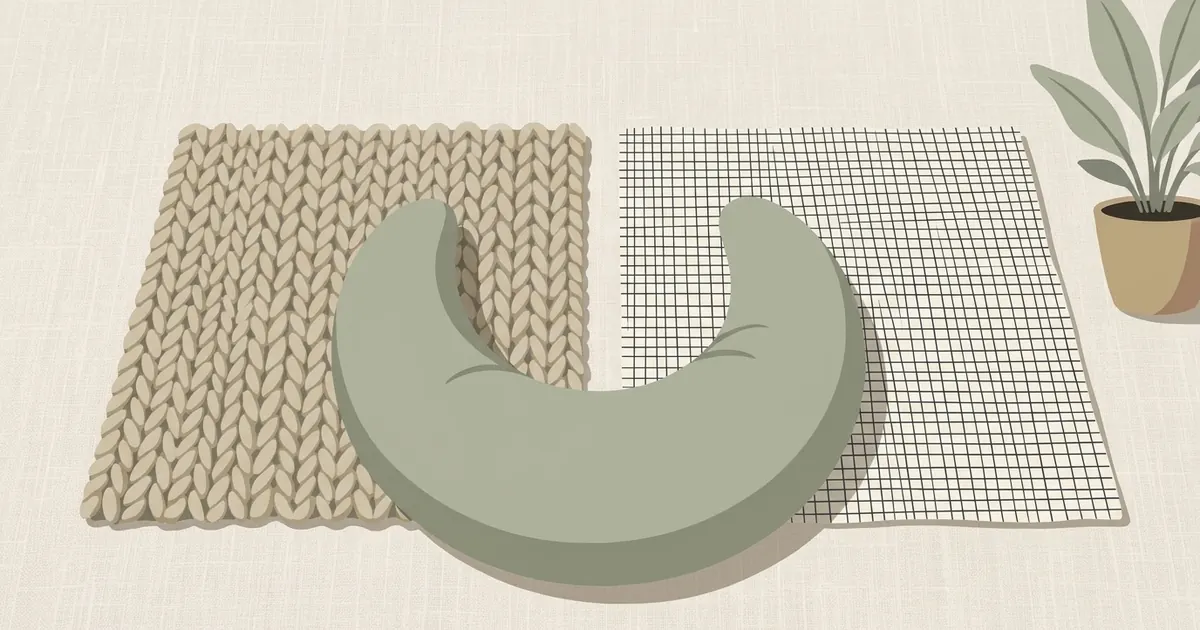
Yes. Woven fabrics have a defined structure where threads cross at right angles, which can create a slightly firmer or crisper hand feel. Knit fabrics have a looped structure that tends to feel softer and to move more freely against skin. The fiber itself also matters—natural cellulose fibers such as Tencel lyocell are often described as smooth, while untreated polyester can feel coarser. For more on how weave construction affects everyday use, see our guide on knit vs woven body-pillow covers.
Begin with the fabric type and construction: look for a knit or semi-knit cover rather than a stiff woven one, and check that the fiber is a smooth natural or cellulose-based blend. Then check seam and zipper placement so you know they will not press against the areas where you rest. Finally, confirm the return or trial policy before you buy. Trying the pillow in your own bed, with your usual sheets, is the most reliable way to judge whether the surface and sound meet your needs.
Sources
- How to wash pillows, Sleep Foundation. Accessed October 27, 2026.
- How to wash pillows, Sleep Foundation. Accessed October 27, 2026.
- Why do I get so hot when I sleep?, Sleep Foundation. Accessed October 27, 2026.
About the author
The Cove editorial team is the group at Cove that writes our guides. We write them from published guidance and our own product testing, and link every source. About the team
Related guides
 Body pillow buying guide
How to choose a body pillow: shape first, then length, fill and cover. What each choice changes for side sleepers, and why a 100 night trial helps.
 Knit vs woven body-pillow covers: why the construction matters
Knit and woven covers behave differently on curved pillows. Learn how construction affects stretch, fit, and care before your 30 day trial period ends.
 Does thread count matter for a body-pillow cover?
Thread count on a body pillow cover in 5 steps: when the number applies, what it measures, how to compare covers, and what to check alongside it.


