
Two duvets and a body pillow: a shared-bed setup guide
Set up two separate duvets with a body pillow on any queen or king bed.
By Cove editorial team · Updated October 27, 2026 · 6 min read · Editorial standards

Key takeaways
- Place the body pillow on the bare mattress before laying the duvets so you can see exactly how much space each sleeper has.
- Two duvets do not need to be the same size; each person can choose a width that suits their side of the bed.
- Each duvet should be able to shift and bunch without catching on the body pillow, so leave a small gap between them.
- Check that both sleepers can sit up and step out of bed without having to move the body pillow out of the way first.
- Making the bed each morning is simpler with two duvets because you straighten each side independently.
Using two duvets with a body pillow on a shared bed works in layers: mattress, then body pillow, then each person's duvet on top. Every sleeper gets their own thermal zone and freedom of movement, and the body pillow stays in place without disrupting either duvet. The setup works on a queen or king and needs no special hardware.
Sketch each sleeper's duvet and pillow space
Before you buy or reposition anything, lie on the bed and note where each person naturally occupies space. Mark the center of the mattress mentally, then think about how wide each duvet needs to be to cover one side without constantly sliding onto the other person's half.
On a standard queen bed (60 in [152 cm] wide), two twin-size duvets (roughly 66 in [168 cm] each) give each sleeper a little overflow without excessive overlap in the middle. On a king (76 in [193 cm]), two full-size duvets work in a similar way. Neither pairing is a rule — the point is that each duvet should feel as though it belongs to one person and can move independently without pulling the other away.
Once you have a rough picture of duvet territory, think about where the body pillow lives within that space. If only one sleeper uses it, it occupies part of their half. If both might use it at different times, a center position is possible, though the outer-edge placement is usually more practical and leaves the other sleeper's space undisturbed.
For guidance on matching a pillow's dimensions to your body and to your share of the bed, see What size body pillow do I need.
Place the body pillow before adding bedding
Lay the body pillow on the bare mattress first. This step matters because once the duvets are on, it becomes harder to judge whether the pillow has enough room to shift as you move during the night.
A crescent body pillow like The Cove Classic — about 52 in (132 cm) along the curve — is long enough to support the torso and knees at the same time when you lie on your side. 1 Orient the curve to follow the line of one sleeper's body, with the open side of the crescent facing inward toward the mattress center or outward toward the edge, depending on which position feels more natural.
If you place it along the outer edge, leave at least 4–6 in (10–15 cm) between the pillow and the mattress edge so it does not migrate off during the night. If you place it down the middle of the bed, be aware that it will sit between the two duvets and may create a gap unless each duvet is wide enough to bridge it comfortably.
Side sleeping is the most common sleep position among adults 2, and placing the body pillow on the mattress before the duvets go on makes it easier to confirm your lying position is actually comfortable before you commit to the full setup.
Allow each duvet to move independently
The main functional difference between one shared duvet and two separate ones is that neither person pulls the other's covers away when they turn over during the night. This is the arrangement sometimes called the Scandinavian method in popular home and sleep writing, though the term is informal rather than a formally designated standard.
For this independence to work properly, the two duvets should not be tucked under the mattress or under each other. They should lie flat, free to shift. When one person turns, their duvet moves with them and the other duvet stays in place.
The body pillow interacts with this system in one main way: if it sits between the two duvets rather than under one of them, it can act as a natural divider that keeps each duvet on its own side. Some people find that helpful; others prefer the pillow fully under one duvet for added warmth. Try both positions over a few nights before settling on one.
If warmth management is a concern for one sleeper, breathable bedding materials and a cooler room help. Most sleep experts suggest a bedroom temperature of around 65–68°F (18–20°C) for comfortable sleep 3, and heavy or insulating bedding materials can work against that even in a well-cooled room. 4
For more on keeping a duvet from catching on or bunching around a body pillow overnight, see How to keep your duvet from tangling around a body pillow.
Check the edges and access out of bed
A two-duvet setup changes how the edges of the bed function. With a single shared duvet, the overhang is continuous across the foot and both sides. With two duvets, there is a seam down the middle and each duvet hangs off its own side. That seam is also where a centrally placed body pillow will sit, so it is worth checking this area carefully before you declare the setup finished.
Before you finalize the arrangement, go through this checklist:
- [ ] Each sleeper can reach their duvet without crossing the center of the bed
- [ ] The body pillow does not block either person's path to the edge of the mattress
- [ ] Both sleepers can sit up and swing their legs off their own side without lifting or moving the body pillow
- [ ] The duvets hang far enough over each edge that they do not slide off when someone shifts in the night
- [ ] Neither duvet overlaps the other by more than a few inches in the center
- [ ] If the body pillow sits at the outer edge, there is still enough mattress surface remaining to step down safely
- [ ] The center gap between the two duvets does not expose either sleeper's torso when both are lying still
The exit point matters most if one sleeper uses a crescent pillow along their outer edge. The pillow is long enough that it can narrow the strip of mattress available for sitting up and stepping out. Test the exit with the full setup in place before you settle on the final position.
Make the bed without adding unnecessary layers
One practical side effect of a two-duvet arrangement is that making the bed each morning is faster and requires no coordination. Each person straightens their own duvet independently, which removes the pulling and tucking that comes with a single shared one.
A few consistent habits help keep the whole setup tidy over time.
**Keep the body pillow in a consistent position.** If it lives at the outer edge of one side, return it there every morning. Consistency means neither duvet gets gradually bunched or trapped underneath it over days of use.
**Use a cover on the body pillow.** A removable, washable cover keeps the pillow cleaner and makes it easier to smooth the duvet over the top without the pillow's surface gripping the fabric. The Cove Classic comes with a zip-off cover in a Tencel lyocell blend that is machine washable cold, which keeps the care routine simple. 1
**Avoid over-layering.** Two duvets plus a body pillow plus a top sheet and a decorative blanket adds up quickly to a bed that takes ten minutes to sort out each morning. If each sleeper has a duvet chosen for their own warmth preference, a top sheet is optional. Fewer layers means less to straighten and less material competing for space with the body pillow.
**Match the pillow to the context.** If you or your partner travels frequently and wants the same independent setup in a hotel room or on a couch, The Cove Mini packs into a suitcase and works as a knee or back pillow on a narrower bed. See Recreating your body-pillow setup in a hotel for specifics on adapting the arrangement when you do not control the bedding.
For a broader look at side-sleeping habits and how a body pillow fits into them, The complete guide to sleeping on your side covers positioning, pillow height, and common adjustments that carry over directly into a two-duvet shared-bed setup.
More in this series: start with the body pillow buying guide, how to stop a body pillow slipping out of place and how to turn over comfortably with a body pillow.
From Cove


Questions
Yes. The body pillow sits on the mattress beneath the duvets rather than between them. Each duvet covers one sleeper, and the body pillow stays in place on whichever side needs it. The main thing to check is that the duvets are not so wide that they overlap heavily in the middle, which can trap the pillow and make it hard to reposition during the night.
No. Each sleeper can use a duvet sized for their own needs. A common approach is to give each person a twin or full-size duvet on a queen or king bed, which keeps both duvets within their own half without much overlap. If one sleeper runs warm, they may prefer a thinner or narrower duvet regardless of what the other person uses.
The most practical position is along the outer edge of the sleeper who uses it. Placed there, it does not cut into the other person's space and is easy to hug or tuck between the knees without crossing to the middle of the bed. If the pillow is a crescent shape, orient the curve so it follows the sleeper's body from shoulder to knee rather than pointing across the mattress.
A body pillow placed at the outer edge of one side is unlikely to affect the other sleeper's duvet at all. A pillow sitting between two duvets in the center of the bed is more likely to create a gap. If that is where you prefer the pillow, consider slightly oversizing each duvet by one step so the gap in the middle does not leave either sleeper exposed to cold air.
Position it far enough from the edge that it has something to lean against, either the sleeper or the mattress perimeter. A crescent pillow can also be tucked so the bottom end sits between the mattress and the bed frame, which anchors it while you sleep. For more detail, see the guide on how to stop a body pillow slipping out of place.
Sources
- Side sleeping, Sleep Foundation. Accessed October 27, 2026.
- What is the best sleeping position?, Sleep Foundation. Accessed October 27, 2026.
- The best temperature for sleep, Sleep Foundation. Accessed October 27, 2026.
- Why do I get so hot when I sleep?, Sleep Foundation. Accessed October 27, 2026.
About the author
The Cove editorial team is the group at Cove that writes our guides. We write them from published guidance and our own product testing, and link every source. About the team
Related guides
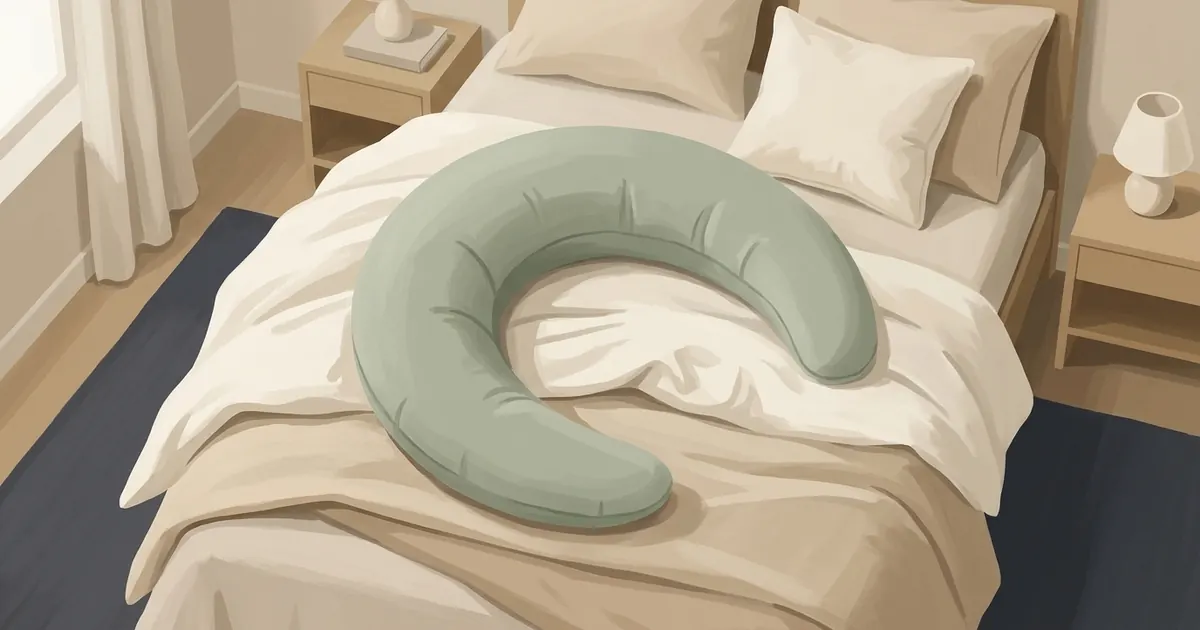 How to keep your duvet from tangling around a body pillow
Duvet tangling around your body pillow? Fix it in 5 steps: find where it catches, layer above or below, leave slack for turning, and check the cover fit.
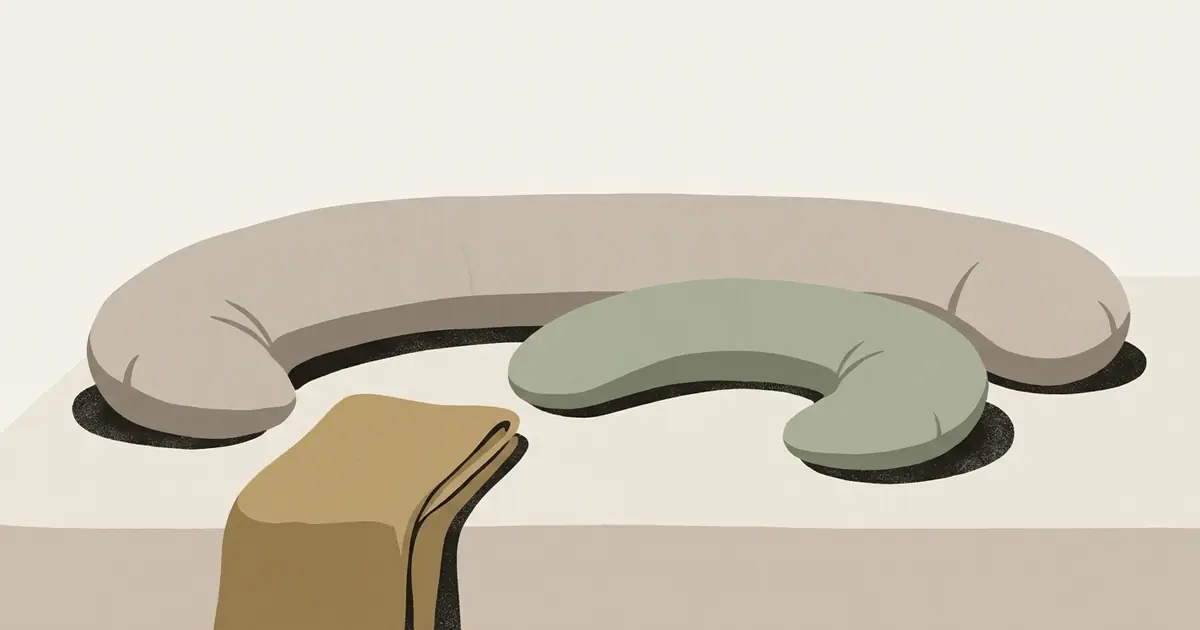 What size body pillow do I need
What size body pillow you need depends on your height and bed. A 52 inch crescent suits most adults from 5 ft to 6 ft 4 in; 36 inches suits smaller frames.
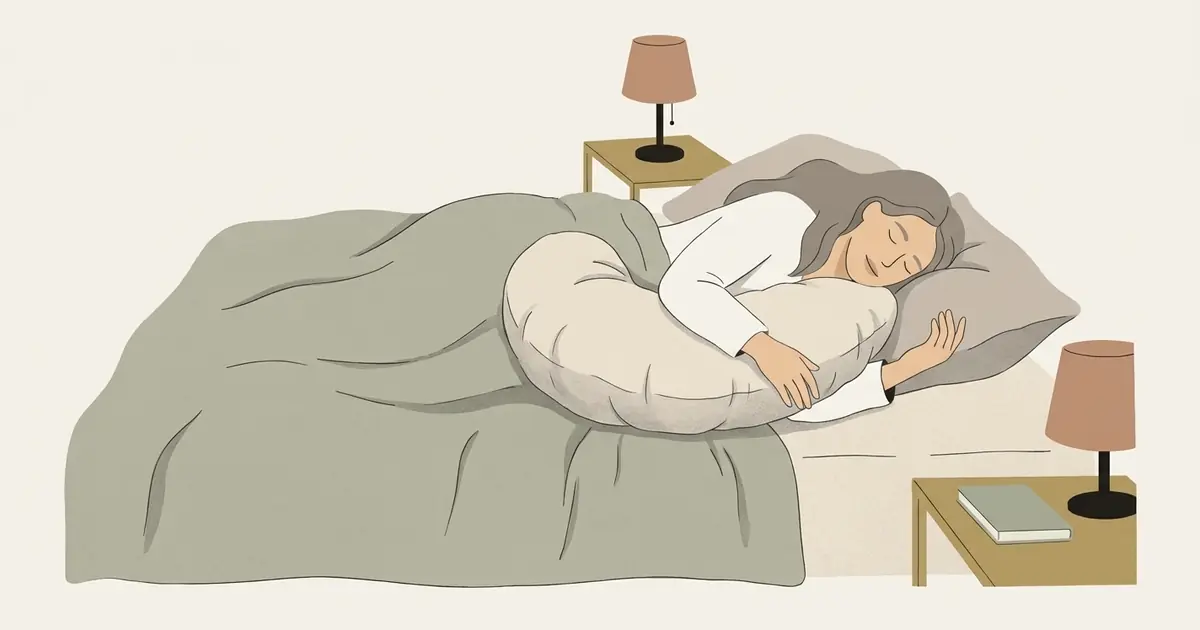 The complete guide to sleeping on your side
How to sleep on your side: line up your head, shoulders and hips, choose the right pillow height, and support your knees and back. Five fixes in 3 minutes.


