
Memory foam vs polyester body pillows
Memory foam vs polyester body pillows: support, weight, warmth, washing and lifespan compared, with the 1 to 2 years the Sleep Foundation gives a pillow.
By Cove editorial team · Updated October 26, 2026 · 5 min read · Editorial standards

Key takeaways
- Shredded memory foam is more supportive and adjustable, but heavier.
- Polyester fibre is lighter, softer and often machine washable, but flattens sooner.
- Solid memory foam keeps a fixed shape and should not be machine washed.
- For side sleepers, the knee end needs to stay thick all night; that favours foam.
- Check the care label before buying; it tells you how cleaning will work.
Memory foam and polyester body pillows suit different sleepers. Shredded memory foam is more supportive and often adjustable, so the knee end stays thick all night, but it is heavier. Polyester fibre is lighter, softer and often machine washable, but it flattens sooner. Solid memory foam keeps its shape and should not be machine washed1.
The three fills
Most body pillows use one of three fills, and each behaves differently under the weight of a knee or an arm.
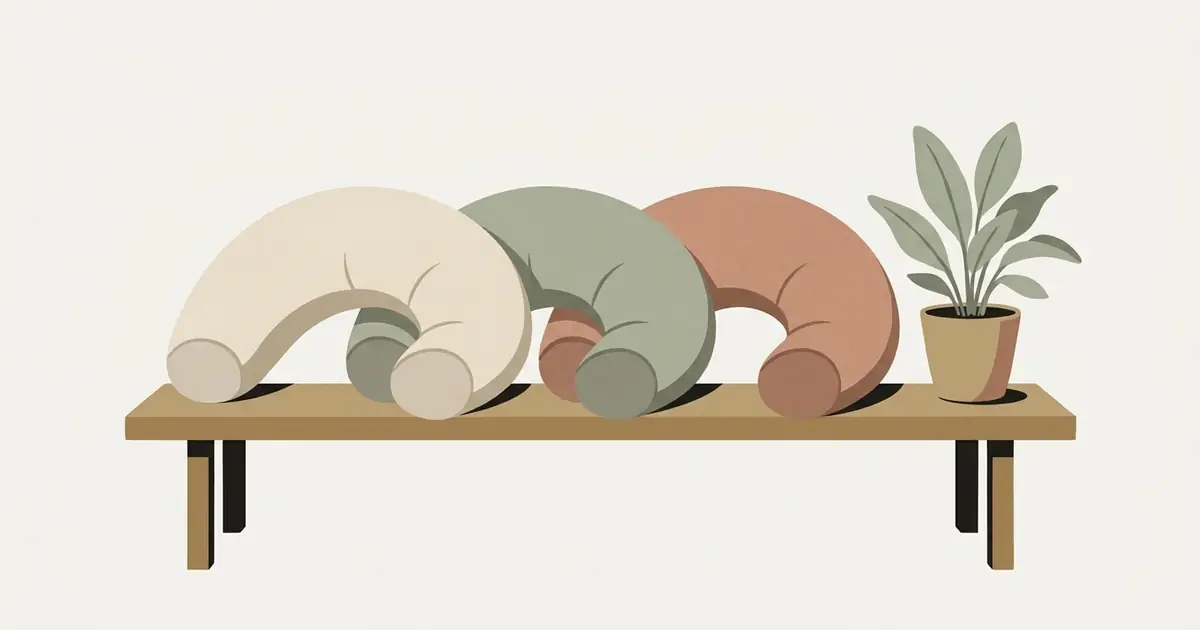
**Shredded memory foam** is foam cut into small pieces. It molds to your body slowly and springs back, and because it is loose, you can often add or remove some through a zip. It is heavier than fibre.
**Polyester fibre** is the soft, fluffy fill in most standard pillows. It is light, springy at first and usually cheap. Over time it compresses and clumps.
**Solid memory foam** is one shaped block. It gives firm, even support but cannot be adjusted, and a full-length block is heavy and awkward to clean.
Side by side
| Shredded memory foam | Polyester fibre | Solid memory foam | |
|---|---|---|---|
| Support under the knee | Firm, holds overnight | Soft, compresses | Firm, fixed |
| Adjustable | Often, through a zip | Rarely | No |
| Weight at full length | Heavier | Light | Heaviest |
| Washing | Often hand wash; check label1 | Often machine wash1 | Spot clean only1 |
| Feel | Slow molding | Springy, soft | Dense |
| Lifespan | Holds shape longer | Flattens sooner | Long, until it cracks |
Support: what side sleepers need
The main job of a body pillow is holding your top knee level with your hip. The Sleep Foundation notes a pillow between the knees may take strain off the lower back2. That only works if the knee end is still thick at 3 a.m.
Polyester compresses under the weight of a leg over a few hours, so the knee slowly drops. Shredded foam compresses less and recovers between nights. Solid foam does not compress much at all, which some people find too firm between the knees.
If you are choosing a body pillow to help with hip or lower back comfort, foam usually does the job more reliably. See how to sleep on your side without hip pain.
Warmth
Memory foam molds closely to the body, which can feel warmer than fibre. Shredded foam has more air between the pieces than a solid block, which helps. Polyester feels lighter and airier at first.
The cover and the room matter more than most people expect. The Sleep Foundation puts the best bedroom temperature at around 65 to 68 °F3, and explains that bedding, sleepwear and the room can all make you hot at night4. A breathable cover on any fill will feel cooler than a thick plush one.
Weight and handling
A full-length shredded foam pillow is noticeably heavier than a polyester one. That has pros and cons:
- Heavier pillows stay where you put them and do not slide off the bed.
- Lighter pillows are easier to lift when making the bed, moving rooms or washing.
- Very heavy pillows are hard to wrestle into a cover.
If you have wrist, hand or shoulder problems, weight may decide it for you.
Adjustability
Adjustable fill is one of the main advantages of shredded foam. Bodies differ: wide hips need a thicker knee section, broad shoulders need a fuller chest section. With an inner zip you can move or remove fill until it fits.
1. Sleep on it for 3 nights as it arrives. 2. If your top knee is pushed higher than your hip, remove a handful from the knee end. 3. If the knee still drops, move fill from the middle to the end. 4. Keep any fill you remove in a bag in case you want it back.
Polyester and solid foam pillows rarely offer this.
Washing and care
This is where polyester often wins. The Sleep Foundation says many pillows can be machine washed on a gentle cycle, and that solid memory foam should not be, because it can crack or degrade1. Shredded memory foam can often be hand washed following the maker's instructions1.
In practice, most people wash the cover often and the insert rarely. A removable, machine washable cover makes either fill easy to live with. Our guide on how to wash a body pillow and its cover has step by step instructions for each fill.
Lifespan
The Sleep Foundation generally suggests replacing pillows every 1 to 2 years, while well-made pillows can last up to 5 years with proper care1. Polyester usually reaches the end of its life sooner, because the fibres compress and clump. Shredded foam can be topped up or fluffed to extend its life.
Which suits you
| You are | Consider |
|---|---|
| A side sleeper with hip or back ache | Shredded memory foam |
| A light sleeper who runs warm | Polyester, with a breathable cover |
| Someone who wants machine washing | Polyester, by the label |
| Someone who wants it to stay put | Shredded memory foam |
| Someone who wants a fixed firm shape | Solid memory foam |
Other things to check
- Smell on arrival: foam can have a smell when new. Airing it in a ventilated room for a day or two usually helps.
- Allergies: if you react to particular materials, read the full materials list on the label.
- Noise: some fills rustle when you move. Shredded foam is usually quiet.
What Cove uses
The Cove Pregnancy Pillow and The Cove Pregnancy Pillow Mini use a shredded gel memory foam fill, adjustable through an inner zip. The cover is machine washable cold and the fill airs out on its own. We make no claim that the gel changes temperature.
For the full set of choices, including shape and length, see the body pillow buying guide and what size body pillow you need.
From Cove


Questions
For side sleepers who want the knee end to stay supportive, shredded memory foam usually holds up better. Polyester suits people who want a light, soft pillow that is easy to wash.
Memory foam can feel warmer than fibre because it molds closely to the body. Shredded foam has more air gaps than a solid block. The cover fabric and room temperature also make a big difference.
The Sleep Foundation says solid memory foam should not be machine washed. Shredded memory foam often can be washed, by hand or as the label says.
Fibre fill compresses and clumps with use and washing. Fluffing it daily and drying it with dryer balls helps, but it will eventually need replacing.
The pillow has an inner zip so you can remove or add fill. It lets you make the knee section thinner or thicker without buying a new pillow.
Sources
- How to wash pillows, Sleep Foundation. Accessed October 26, 2026.
- What is the best sleeping position?, Sleep Foundation. Accessed October 26, 2026.
- The best temperature for sleep, Sleep Foundation. Accessed October 26, 2026.
- Why do I get so hot when I sleep?, Sleep Foundation. Accessed October 26, 2026.
About the author
The Cove editorial team is the group at Cove that writes our guides. We write them from published guidance and our own product testing, and link every source. About the team
Related guides
 Body pillow buying guide
How to choose a body pillow: shape first, then length, fill and cover. What each choice changes for side sleepers, and why a 100 night trial helps.
 What size body pillow do I need
What size body pillow you need depends on your height and bed. A 52 inch crescent suits most adults from 5 ft to 6 ft 4 in; 36 inches suits smaller frames.

