
Draft: this guide is waiting for review by a qualified reviewer and is not published yet.
A pelvic-health appointment for pregnancy sleep: how to prepare
Getting ready for a pelvic health physiotherapy visit? This checklist covers what to bring and ask, including sleep advice given after 28 weeks.
By Cove editorial team · Updated October 27, 2026 · 7 min read · Editorial standards

Key takeaways
- Write down every task and position that hurts or wakes you before your appointment.
- Bring your current care notes, any instructions from your doctor or midwife, and a list of medications.
- A simple sketch of your bed setup gives the physiotherapist a clear picture of how you are sleeping.
- Ask for specific changes to try, a timeframe to review them, and clear guidance on when to get in touch again.
- Keep a brief written record of the advice you receive so you can refer back to it at home.
When pelvic or back discomfort disrupts your sleep during pregnancy, a pelvic-health physiotherapist can assess what is happening and suggest practical changes. Clear notes on your symptoms, care history, and sleeping setup make the session more productive. About twenty minutes of preparation means you spend the appointment working through solutions rather than trying to recall details.
Describe the tasks and positions that are difficult
Before your appointment, write down every movement or position that causes pain, wakes you during the night, or makes it hard to settle. Be specific about where the discomfort is, when it happens, and roughly how long it lasts.
Pregnancy-related pelvic girdle pain (PGP) can cause discomfort over the pubic bone at the front, across one or both sides of the lower back, in the perineal area, and sometimes spreading to the thighs.1 Some people also feel or hear a clicking or grinding sensation in the pelvic area.1 Pain is often worse when turning over in bed, standing on one leg, or moving the legs apart.1 Writing these details down before you arrive means you are less likely to forget them under time pressure.
Note whether symptoms are worse on one side than the other, whether they have changed or worsened over recent weeks, and whether anything makes them better — a particular pillow arrangement, for example. Also note when the symptoms first appeared and whether they came on gradually or after a specific event.
Daytime triggers are worth recording too, because they often reflect the same joint or muscle issue that disrupts your sleep. Going up and down stairs, standing for long periods, getting out of a car, and carrying heavy bags can all aggravate the joints and tissues that cause night waking.1 If you can describe a typical day alongside a typical night, the physiotherapist has a fuller picture to work from.
Finally, note whether your sleep difficulty is purely about pain or whether other factors are involved. Needing to get up frequently to urinate is common in later pregnancy as the baby's head presses on the bladder.3 Strange or vivid dreams are also normal during pregnancy.2 A physiotherapist focused on pelvic joint problems will want to know if multiple things are disrupting your sleep, even if they can address only some of them directly.
Bring your care history and current instructions
Bring any written notes from previous appointments with your midwife, doctor, or another physiotherapist. If you have already been given exercises or movement instructions, bring those too so the physiotherapist can see what you are already doing and avoid duplicating or contradicting existing advice.
Prepare a list of any medications or supplements you are currently taking. If you have had a previous pregnancy with pelvic pain, mention it along with what treatment you received and whether it helped.1 A history of lower back or pelvic girdle pain before pregnancy, or any previous pelvic injury, is also relevant background.1
If your midwife or doctor has already given you specific sleep guidance — for example, advice to sleep on your side and avoid going to sleep on your back after 28 weeks2 — bring that with you or note it down so the physiotherapist can build on it rather than give conflicting information.
Think of bringing your care history as helping the physiotherapist avoid repeating ground that has already been covered. It also means any exercises or positioning advice they give can be tailored to what has and has not worked for you before.
Use a simple sketch of your bed setup
A hand-drawn diagram takes two minutes and is often more informative than a written description alone. Draw an outline of the bed from above and mark where you currently place pillows: under the bump, between the knees, behind the back, or under the head. Note the approximate size and type of each pillow if you know it.
If you use a full-length body pillow — such as The Cove Pregnancy Pillow, a crescent-shaped pillow about 52 inches [132 cm] along the curve with an adjustable shredded gel memory foam fill — note how you position it relative to your body and whether you tuck it behind your back or only in front. This level of detail helps the physiotherapist suggest specific adjustments rather than general ones.
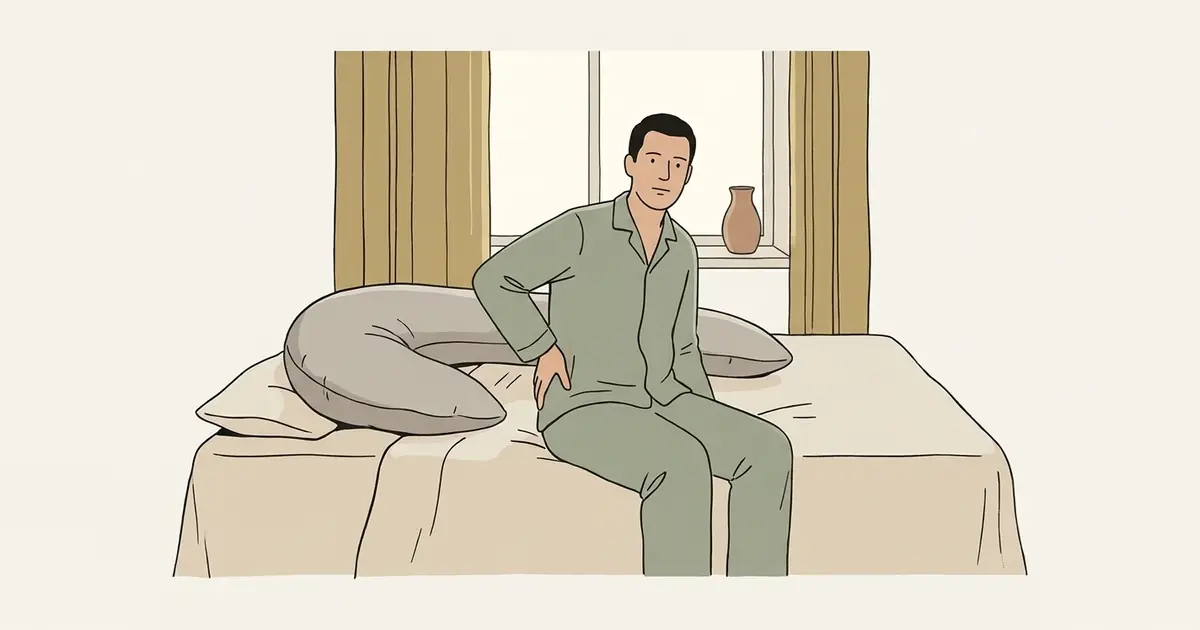
Also note your mattress type (firm, medium, or soft) and the approximate height of the bed from the floor. Getting in and out of a high bed can aggravate pelvic symptoms,1 and a physiotherapist may have practical suggestions for managing that transition — such as sitting on the edge before swinging both legs down together rather than stepping down one leg at a time.1
Here is a preparation checklist to work through before the day of your appointment:
- [ ] List every position or movement that causes pain or wakes you, noting the exact location of the pain
- [ ] Note whether symptoms are worse on a particular side or at a particular time of night
- [ ] Write down daytime activities that also trigger discomfort
- [ ] Draw an overhead sketch of your bed with current pillow positions marked
- [ ] Note your mattress type and the approximate height of the bed from the floor
- [ ] Bring written notes or instructions from previous maternity or physiotherapy appointments
- [ ] Prepare a list of all current medications and supplements
- [ ] Note any previous pregnancy involving pelvic pain and what treatment helped or did not help
- [ ] Write down any questions you want answered before the session ends
Ask what changes to try and how to review them
At the end of the assessment, ask for specific, actionable guidance rather than general advice. For sleep, this might mean a different pillow position, a change to how you turn over in bed, an exercise to do before lying down, or a recommendation about mattress support.
Physiotherapy for PGP may include exercises to strengthen the pelvic floor, stomach, back, and hip muscles, and may involve a pelvic support belt if appropriate.1 Ask which exercises apply to your situation, how many times a day to do them, and what to watch for if they seem to make things worse rather than better. Ask too whether there are movements or positions you should actively avoid, since reducing load on aggravated joints is often as important as adding strengthening work.1
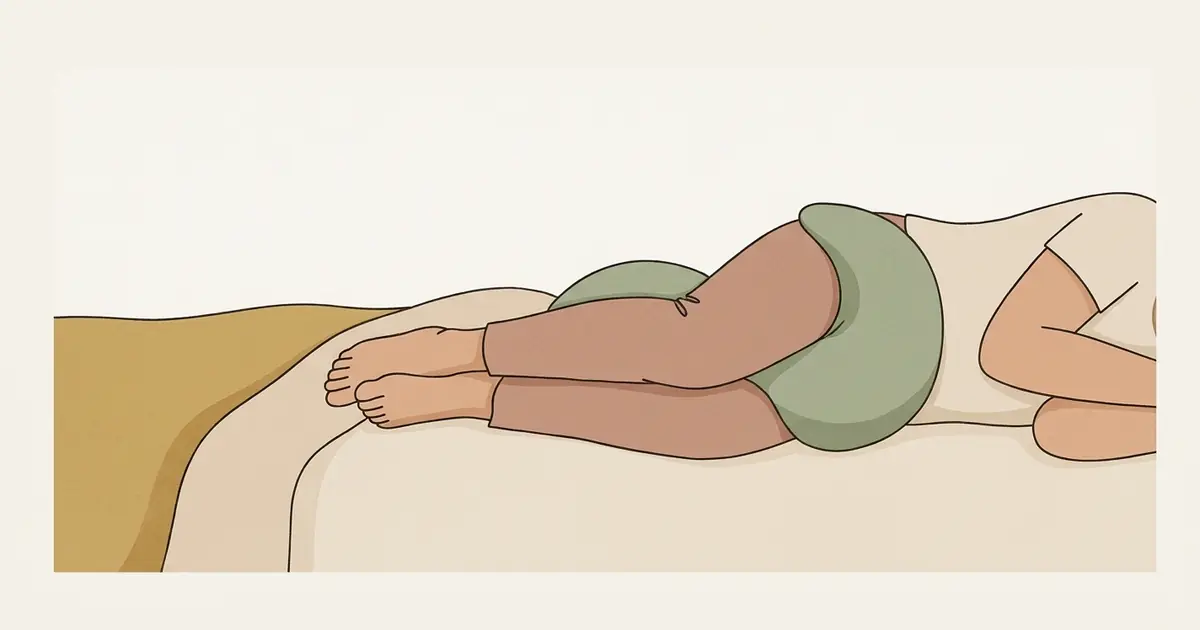
For pillow positioning, placing a pillow between your knees is a commonly suggested approach for side sleepers.2 The guide to sleeping on your side without hip pain explains how knee and hip alignment interact during the night, and the pillow between knees guide covers the practical detail of where and how to position one. If you want a single pillow that supports the bump, knees, and back simultaneously, a crescent body pillow is designed for that purpose and allows you to adjust the fill to suit your preferred firmness.
Ask about timelines too. Most pelvic symptoms during pregnancy do not resolve completely until after the baby is born, but treatment from an experienced practitioner can ease symptoms in the meantime.1 Knowing this in advance helps you set realistic expectations rather than concluding that advice has not worked simply because some discomfort continues.
Also ask what to avoid in daily life. Prolonged sitting or standing, carrying heavy loads, and repeated stair climbing can worsen PGP.1 If any of these are unavoidable in your routine, ask specifically about strategies that reduce the load — for example, sitting down to get dressed, putting equal weight on each leg when standing, or keeping your knees together when getting in and out of a car.1
Clarify when to contact the team again
Before you leave, confirm exactly who to contact if your symptoms change and what would warrant getting in touch sooner rather than waiting for a scheduled review. Ask whether you should return if a recommended exercise or position change makes things worse, or if a new symptom appears.
Establish whether a change in symptoms should go to the physiotherapy team directly or first to your midwife or doctor. If your pain is causing you considerable distress, let your doctor or midwife know, as you may need additional support alongside physiotherapy.1 The physiotherapist may also be able to advise on coping with the emotional impact of persistent pain and suggest relaxation techniques that can help you settle at night.1
In the days after the appointment, keep a short record of what you tried, whether it helped, and how your sleep changed. A structured pregnancy sleep diary makes this straightforward and gives you concrete material for any follow-up session. Arriving at a review with a week of logged observations is considerably more useful than trying to reconstruct how things went from memory.
If you travel or need support away from home, The Cove Pregnancy Pillow Mini follows the same crescent design in a smaller form that packs into a suitcase — useful if your physiotherapist recommends continuing consistent pillow support while you are away from your usual setup.
For broader context on side sleeping during pregnancy, the complete guide to sleeping on your side covers positions, support options, and common discomforts in one place.
More in this series: start with Sleeping during pregnancy and sleep trackers during pregnancy: useful patterns and important limits.
From Cove


Questions
Tell them which positions you fall asleep in, how often you wake and why, and whether turning over or getting out of bed causes pain. Describe any clicking or grinding sensations in the pelvic area, where exactly the pain is, and what makes it better or worse.[^1] Mention whether the problem is worse on one side, and note any activities during the day — such as climbing stairs or standing on one leg — that also trigger discomfort.[^1] The more specific you are, the easier it is for the physiotherapist to identify what is driving your sleep difficulties.
Photos can be useful, particularly if your bed has an unusual configuration or you use several pillows in a specific arrangement. Measurements are rarely necessary, but noting your mattress height and whether you sleep on a firm or soft surface can help the physiotherapist picture your setup. A simple hand-drawn sketch showing where pillows sit — under your bump, between your knees, behind your back — is usually enough to guide a practical conversation about adjustments.
Bring something to write with, or ask permission to record the audio on your phone. Jot down each recommendation as a separate point rather than in running text so you can check things off at home. If the physiotherapist demonstrates an exercise or position, note the key steps immediately after. Before you leave, read your notes back to confirm you have understood each instruction correctly. Keeping a brief daily log of what you tried and how your sleep changed will also help at any follow-up appointment.
Contact your midwife or doctor if pelvic pain makes it hard to move around, hurts when turning over in bed, or is painful on stairs.[^1] Early referral to a physiotherapy service that specialises in obstetric pelvic joint problems is recommended because getting diagnosed as early as possible can help keep pain to a minimum and avoid long-term discomfort.[^1] You do not need to wait until the pain is severe.
Yes. The safest position is on your side, either left or right.[^2] After 28 weeks, falling asleep on your back has been linked to a higher risk of stillbirth, so side sleeping is recommended from that point.[^2] If you wake up on your back, simply turn onto your side and go back to sleep.[^2] Supporting your bump with a pillow and placing one between your knees may help you stay comfortable.[^2]
Referral routes and what an individual assessment includes vary by location and provider, so it is best to ask your midwife or doctor what to expect in your area. In general, physiotherapy for pregnancy-related pelvic girdle pain aims to relieve or ease pain, improve muscle function, and improve pelvic joint position and stability.[^1] This may include exercises to strengthen relevant muscles and, if necessary, equipment such as a pelvic support belt.[^1] The physiotherapist may also advise on coping with the emotional impact of persistent pain and suggest relaxation techniques.[^1]
Sources
- Pelvic pain in pregnancy, NHS. Accessed October 27, 2026.
- Tiredness and sleep problems in pregnancy, NHS. Accessed October 27, 2026.
- Common health problems in pregnancy, NHS. Accessed October 27, 2026.
About the author
The Cove editorial team is the group at Cove that writes our guides. We write them from published guidance and our own product testing, and link every source. About the team
Related guides
 A pregnancy sleep diary to take to your next appointment
Follow 3 steps to log sleep timing, awakenings, and symptoms over a few nights so your doctor or midwife has something concrete to work with.
 How to sleep on your side without hip pain
Side sleeping hip pain often starts with the top knee dropping. A pillow between the knees eases hip pressure. Four setup steps and a 100 night trial.
 Should you sleep with a pillow between your knees
Sleeping with a pillow between your knees can relieve hip pressure and keep your legs level. Who it helps, how thick it should be, and 3 options.


