
Draft: this guide is waiting for review by a qualified reviewer and is not published yet.
Sleeping during pregnancy, trimester by trimester
Sleeping during pregnancy, trimester by trimester: why to move to your side by 28 weeks, what the NHS and ACOG advise, and how pillows help week to week.
By Cove editorial team · Updated October 26, 2026 · 7 min read · Editorial standards

Key takeaways
- Early on, sleep in whatever position is comfortable.
- ACOG suggests side sleeping in the second and third trimesters.
- The NHS says to fall asleep on your side, left or right, after 28 weeks.
- Pillows between the knees and under the bump, or a full-length body pillow, can help.
- Do not worry if you wake on your back; turn onto your side.
Sleeping during pregnancy changes as the weeks go on. Early on, any comfortable position is fine. ACOG suggests side sleeping in the second and third trimesters2, and the NHS advises falling asleep on your side, left or right, after 28 weeks1. Pillows between the knees and under the bump, or a full-length body pillow, make that easier.
The one rule that matters most
The clearest advice is about the back later in pregnancy. The NHS says research suggests going to sleep on your back after 28 weeks of pregnancy can increase the risk of stillbirth, and that the safest position to fall asleep in is on your side, either left or right1. It also says not to worry if you wake up on your back; turn onto your side.
ACOG explains that lying on your back in the second and third trimesters can put pressure on the blood vessel that takes blood to your uterus, which can make you feel dizzy and may reduce blood flow to your fetus2.
First trimester: weeks 1 to 13
Sleep in whatever position is comfortable. Many people feel very tired in early pregnancy, and some find their usual position no longer feels right because of breast tenderness or nausea.
- Back, side and stomach are all generally fine at this stage. Ask your midwife or doctor if you are unsure.
- If you already sleep on your side, now is a good time to get comfortable with a pillow between the knees.
- Keep the room cool. The Sleep Foundation suggests around 65 to 68 °F for most people5.
Second trimester: weeks 14 to 27
As the bump grows, stomach sleeping becomes uncomfortable for most people. ACOG suggests sleeping on your side during the second and third trimesters may be best, with one or both knees bent2.
This is when many people start using pillows. ACOG suggests a pillow between your knees and another under your belly, or a full-length body pillow2. Our guide on when to start using a pregnancy pillow covers timing.
Third trimester: weeks 28 to 40
From 28 weeks, the NHS advice to fall asleep on your side applies1. That includes naps during the day. Settling on your side at the start of sleep is the key moment, because that is the position you tend to stay in longest.
Common third trimester problems include back ache, heartburn, needing the toilet often, and finding it hard to get comfortable. The sections below cover each.
Which side
The NHS says either side is safe to fall asleep on1. The Sleep Foundation describes the left side with legs slightly curled as often considered the best position in pregnancy, saying it helps blood flow to the heart, kidneys and uterus3. If the left side is uncomfortable, the right side is still advised over the back.
More in why sleeping on your left side is recommended in pregnancy.
Pillow setups by trimester
| Stage | Setup | Why |
|---|---|---|
| First trimester | Your usual pillow, plus one between the knees if side sleeping | Comfort and habit |
| Second trimester | Pillow between the knees and one under the bump | ACOG suggestion2 |
| Third trimester | Full-length body pillow, or knee, bump and back pillows | Staying on your side all night |
| After the birth | Pillow behind the back or around the waist when sitting | Support for feeding and rest |
Positions in detail are in how to use a pregnancy pillow: 5 positions.
Back ache
Back ache is common in pregnancy. The NHS suggests keeping your back straight and well supported when sitting, looking for maternity support pillows, getting enough rest, having a massage or a warm bath, and using a mattress that supports you properly4. It says you can put a piece of hardboard under a soft mattress to make it firmer if necessary4.
At night, a pillow behind your back stops you rolling onto it, and one between the knees keeps your pelvis level.
Feeling hot at night
Many people find they run warmer in pregnancy. A cooler room, lighter bedding and breathable sleepwear help. See how to sleep cool while pregnant and night sweats during pregnancy.
Heartburn
Heartburn often gets worse later in pregnancy. Eating smaller meals earlier in the evening and propping your upper body slightly can help [source needed]. Ask your midwife or pharmacist about remedies that are suitable in pregnancy.
Getting up in the night
Needing the toilet is common, especially early and late in pregnancy. Keep a low light on the route, and get up slowly, rolling onto your side first and pushing up with your arms. Getting back to sleep is easier if you return to your side straight away.
Regular body pillow or pregnancy pillow
You do not need a product labelled as a pregnancy pillow. Any long pillow that sits between the knees and under the bump can work. Our comparison of a pregnancy pillow vs a regular body pillow explains the shapes.
The Cove Pregnancy Pillow is a 52 inch crescent: one tip between the knees, the curve under the bump. Its shredded memory foam fill adjusts through an inner zip. Our pregnancy pillow page has more.
We are still confirming with the manufacturer that our cooling hub is suitable for use in pregnancy, so we suggest The Cove Pregnancy Pillow until that is confirmed.
After the birth
Pillows stay useful. The NHS suggests getting comfortable before a feed, using pillows or cushions if necessary, with relaxed shoulders and arms6. See using your pregnancy pillow after the baby arrives. Never put a pillow in a baby's sleep space.
Naps and daytime rest
The NHS advice to fall asleep on your side after 28 weeks is about going to sleep, so it applies whenever you nap, not only at night [source needed]. If you rest on the sofa, lie on your side with a cushion between your knees, or sit upright and supported rather than lying flat on your back.
Restless legs and cramps
Some people notice restless legs or leg cramps at night in pregnancy [source needed]. Gentle calf stretches before bed may help, and you should mention them to your midwife, who can check for causes and suggest what is suitable.
Sharing a bed
A growing bump, extra pillows and more trips to the toilet change the bed for both of you. A few things help:
- Sleep on the side of the bed nearest the bathroom.
- Use separate blankets, so you can keep yours lighter.
- Choose a pillow shape that does not take your partner's side; a crescent uses less width than a U.
- Agree that the partner sleeps elsewhere for a night if you both need rest.
Your mattress
The NHS suggests a mattress that supports you properly for back ache in pregnancy4. If yours sags, a firm board under it is a short-term fix the NHS mentions4. A topper can soften a very firm mattress for side sleeping.
What to keep by the bed
1. Water. 2. A low night light for trips to the toilet. 3. A spare pillow cover and sleepwear. 4. Your maternity unit's phone number. 5. Any remedies your midwife or pharmacist has suggested.
Common worries
- I woke on my back. The NHS says not to worry; turn onto your side1.
- I cannot sleep on my left. The right side is also advised over the back1.
- I need a special pillow. You do not; ACOG suggests pillows between the knees and under the belly, or a full-length body pillow2.
- I am sleeping badly. Many people do in pregnancy; mention it to your midwife if it is affecting your days.
When to speak to your midwife or doctor
- Pain that keeps you awake, or new or severe pain.
- Feeling breathless, dizzy or faint when lying down.
- Itching, especially on the hands and feet. The NHS lists reporting itching to your midwife among its stillbirth prevention steps1.
- Any change in your baby's movements. Contact your maternity unit straight away rather than waiting.
A simple bedtime routine
Routines help when sleep is broken. Going to bed and getting up at similar times, even after a poor night, keeps your body clock steadier [source needed]. A short wind-down, such as a warm shower, a few pages of a book and dimmed lights, signals that sleep is coming. If you lie awake for a long time, get up for a few minutes, keep the lights low, and come back to bed when you feel sleepy.
1. Eat your evening meal a few hours before bed. 2. Keep the room cool and dark. 3. Settle on your side with a pillow between your knees and one under your bump. 4. Put a pillow behind your back if you tend to roll. 5. If you wake on your back, turn onto your side and settle again.
This guide is waiting for review by a qualified reviewer. Follow the advice of your own midwife or doctor.
Guides in this series
- When to start using a pregnancy pillow
- How to use a pregnancy pillow: 5 positions
- How to sleep cool while pregnant
- Why sleeping on your left side is recommended in pregnancy
- Night sweats during pregnancy: what helps
- Pregnancy pillow vs regular body pillow
- Using your pregnancy pillow after the baby arrives
From Cove

Questions
The NHS says research suggests going to sleep on your back after 28 weeks can increase the risk of stillbirth, and advises falling asleep on your side. ACOG suggests side sleeping in the second and third trimesters.
The NHS says the safest position to fall asleep in is on your side, either left or right. Many sources describe the left side as preferred, but both sides are advised over the back.
The NHS says not to worry if you wake up on your back. Turn onto your side and go back to sleep.
No. ACOG suggests a pillow between the knees and another under the belly, or a full-length body pillow. Any of these can work.
Many people find it comfortable early on, and it becomes impractical as the bump grows. Ask your midwife or doctor if you have questions about your own pregnancy.
Sources
- Reducing the risk of stillbirth, NHS. Accessed October 26, 2026.
- Can I sleep on my back when I'm pregnant?, ACOG. Accessed October 26, 2026.
- Pregnancy and sleep, Sleep Foundation. Accessed October 26, 2026.
- Back pain in pregnancy, NHS. Accessed October 26, 2026.
- The best temperature for sleep, Sleep Foundation. Accessed October 26, 2026.
- Breastfeeding: positioning and attachment, NHS. Accessed October 26, 2026.
About the author
The Cove editorial team is the group at Cove that writes our guides. We write them from published guidance and our own product testing, and link every source. About the team
Related guides
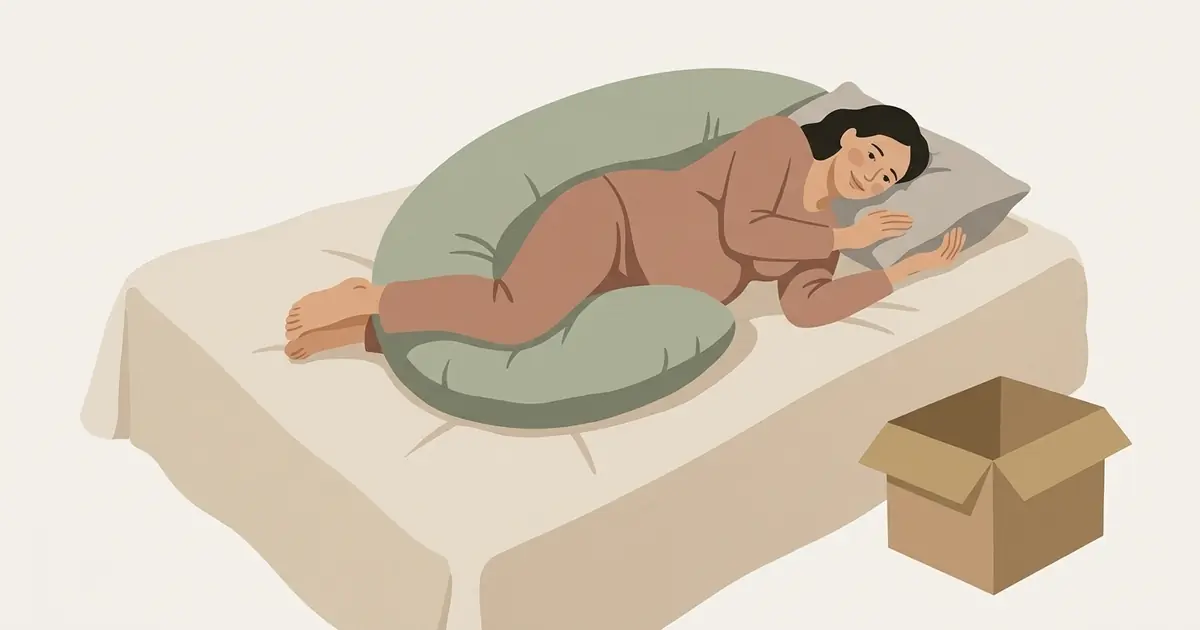 When to start using a pregnancy pillow
: there is no set week, but side sleeping is typically advised from the second trimester and from 28 weeks.
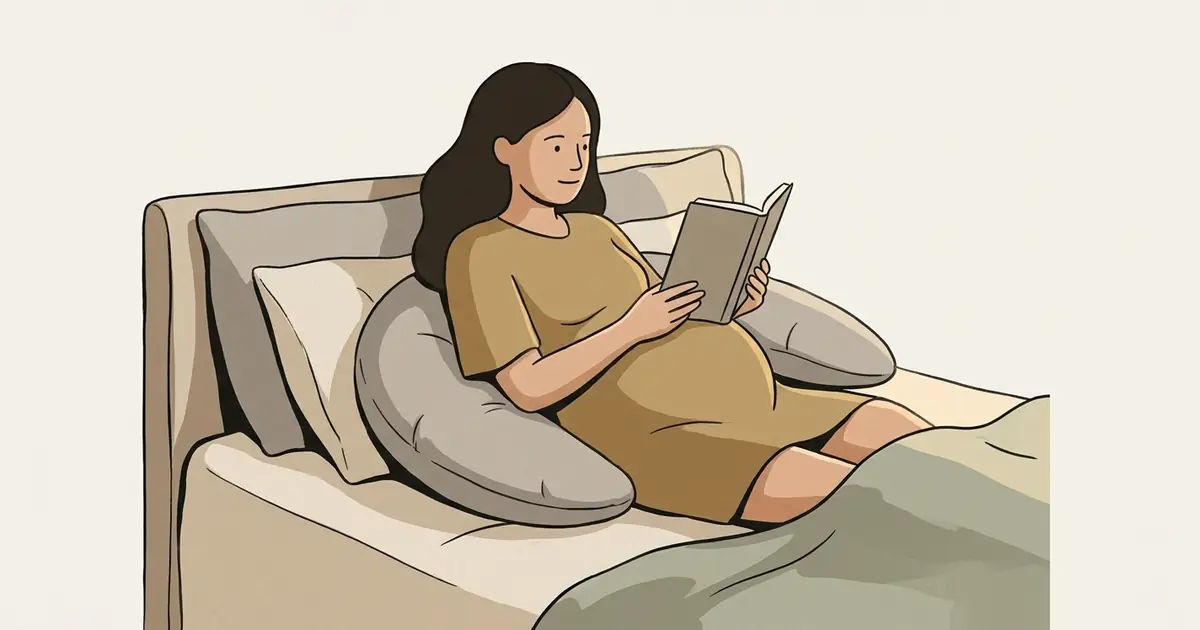 How to use a pregnancy pillow: 5 positions
How to use a pregnancy pillow in 5 positions from about 20 weeks: between the knees, under the bump, behind the back, reclined, and on the lap after birth.
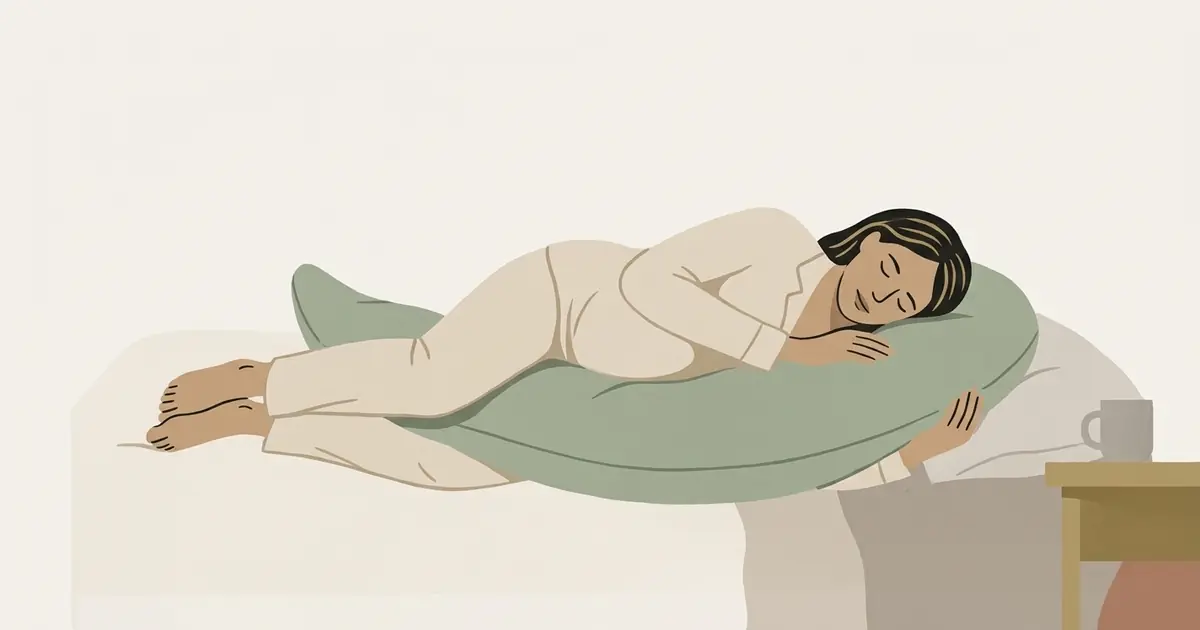 Why sleeping on your left side is recommended in pregnancy
Why sleeping on your left side is advised in pregnancy, what the NHS and ACOG say from 28 weeks, and 5 tips for staying on your side all night.


