
Draft: this guide is waiting for review by a qualified reviewer and is not published yet.
How to sleep cool while pregnant
How to sleep cool while pregnant: a cool room, breathable layers, water by the bed and a light pillow cover.
By Cove editorial team · Updated October 26, 2026 · 5 min read · Editorial standards

Key takeaways
- The Sleep Foundation suggests a bedroom around 65 to 68 °F for most people.
- Layers you can push off beat one heavy duvet.
- Breathable sleepwear and sheets help sweat evaporate.
- Keep water by the bed.
- Soaking night sweats, or feeling unwell, are reasons to call your midwife or GP.
To sleep cool while pregnant, keep the bedroom at around 65 to 68 °F, which the Sleep Foundation suggests for most people1. Use thin layers you can push off, breathable sleepwear and sheets, and keep water by the bed. Fall asleep on your side, as the NHS advises after 28 weeks4, with a breathable pillow cover.
Why you might feel hot
Many people say they feel warmer in pregnancy [source needed]. The Sleep Foundation explains that many things can make people hot at night, including the room, bedding and sleepwear2. Some of those are easy to change.
If feeling hot comes with a fever, chills or feeling unwell, contact your midwife or GP rather than changing the bedding.
Change 1: cool the room
The Sleep Foundation puts the best temperature for sleep at around 65 °F (18.3 °C), with most doctors recommending 65 to 68 °F1. It explains that the body's temperature naturally drops during sleep, and a cooler room makes it easier to fall and stay asleep1.
- Set the thermostat in that range if you can.
- Open a window if it is safe and quiet.
- Close curtains or blinds during the day to keep the sun out.
- Use a fan to move air around the room.
Change 2: layers, not one heavy duvet
A single thick duvet is either on or off. Two thin layers let you adjust through the night without waking fully.
| Layer | Use |
|---|---|
| Flat cotton or linen sheet | Always on |
| Light blanket | Add on cooler nights |
| Lightweight duvet | Only in the coldest weeks |
Change 3: breathable fabrics
Cotton, linen and other breathable fabrics let sweat evaporate. Heavy synthetic fabrics tend to trap heat [source needed]. Choose loose sleepwear, or less of it.
Pillow covers matter if you hug a body pillow, because it sits against your front all night. A thin, breathable cover feels cooler than thick plush.
Change 4: water and a cool-down routine
- Keep a glass or bottle of water by the bed.
- Have a lukewarm shower before bed rather than a hot bath.
- Keep a cool, damp flannel in a bowl by the bed for your face and wrists.
- Avoid big meals late in the evening.
Change 5: position and pillows
The NHS advises falling asleep on your side after 28 weeks, left or right4. Pillows between the knees and under the bump help you stay there. A pillow also adds a warm surface against your body, so use a breathable cover and do not pile on more pillows than you need.
The Cove Pregnancy Pillow has a cover that zips off and machine washes cold, so it is easy to keep fresh. We make no cooling claim for its fill.
We are still confirming with the manufacturer that our cooling hub is suitable for use in pregnancy, so we do not suggest a cooled pillow here until that is confirmed. See our pregnancy pillow page for updates.
What not to do
- Do not use ice packs directly against your skin.
- Do not sleep under a fan pointed straight at you all night if it leaves you chilled or dry [source needed].
- Do not take any medicine to cool down without checking it is suitable in pregnancy.
Night sweats
The NHS describes night sweats as sweating so much that your night clothes and bedding are soaking wet, even though where you are sleeping is cool3. That is different from feeling warm. If it happens regularly, wakes you up or worries you, the NHS suggests seeing a GP3. More in night sweats during pregnancy.
A cool bedroom checklist
1. Thermostat at 65 to 68 °F, or as close as you can get. 2. Curtains closed during the day. 3. Two thin layers on the bed. 4. Breathable sleepwear. 5. Water by the bed. 6. A breathable pillow cover, with a spare for wash day.
Season by season
| Season | Room | Bed | Extra |
|---|---|---|---|
| Summer | Curtains closed by day, window open at night if safe | Flat sheet only | Fan moving air around the room |
| Spring and autumn | Thermostat at 65 to 68 °F | Sheet plus light blanket | Layers you can push off |
| Winter | Heating set lower at night | Sheet, blanket, light duvet | Remove a layer if you wake hot |
Cooling a hot room fast
If you wake hot and the room is warm, a few quick steps help without fully waking. Push off the top layer, sip water, and turn your pillow to the cooler side. Wipe your face and wrists with a cool, damp flannel. If you share a bed, ask your partner to take the side nearer the radiator or the sunny window.
Sleepwear
Loose, light sleepwear lets air move. Many people find a cotton nightdress or loose shorts and a vest cooler than full-length pyjamas. Keep a second set by the bed so you can change if you get sweaty.
Daytime habits that help at night
Keep drinking water through the day, not just at bedtime, so you are not making up for it at night. Spend the hottest part of a summer day somewhere cool if you can. Air the bedroom in the morning, then close the curtains before the sun reaches the window.
Partners
If your partner prefers a warmer bed, use separate blankets on each side. A thin sheet for you and a heavier blanket for them is a simple compromise.
Read next
This guide is waiting for review by a qualified reviewer.
From Cove

Questions
Many people feel warmer in pregnancy [source needed]. Ask your midwife if it worries you, especially with a fever or feeling unwell.
The Sleep Foundation suggests around 65 to 68 °F for most people.
A fan that moves air around the room is a common way to keep cool. Keep it out of reach and away from bedding.
We are still confirming with the manufacturer that our cooling hub is suitable for use in pregnancy. Until then, choose an unpowered pillow with a breathable cover.
If you have a fever, feel unwell, or have night sweats that soak your bedding, contact your midwife or GP.
Sources
- The best temperature for sleep, Sleep Foundation. Accessed October 26, 2026.
- Why do I get so hot when I sleep?, Sleep Foundation. Accessed October 26, 2026.
- Night sweats, NHS. Accessed October 26, 2026.
- Reducing the risk of stillbirth, NHS. Accessed October 26, 2026.
About the author
The Cove editorial team is the group at Cove that writes our guides. We write them from published guidance and our own product testing, and link every source. About the team
Related guides
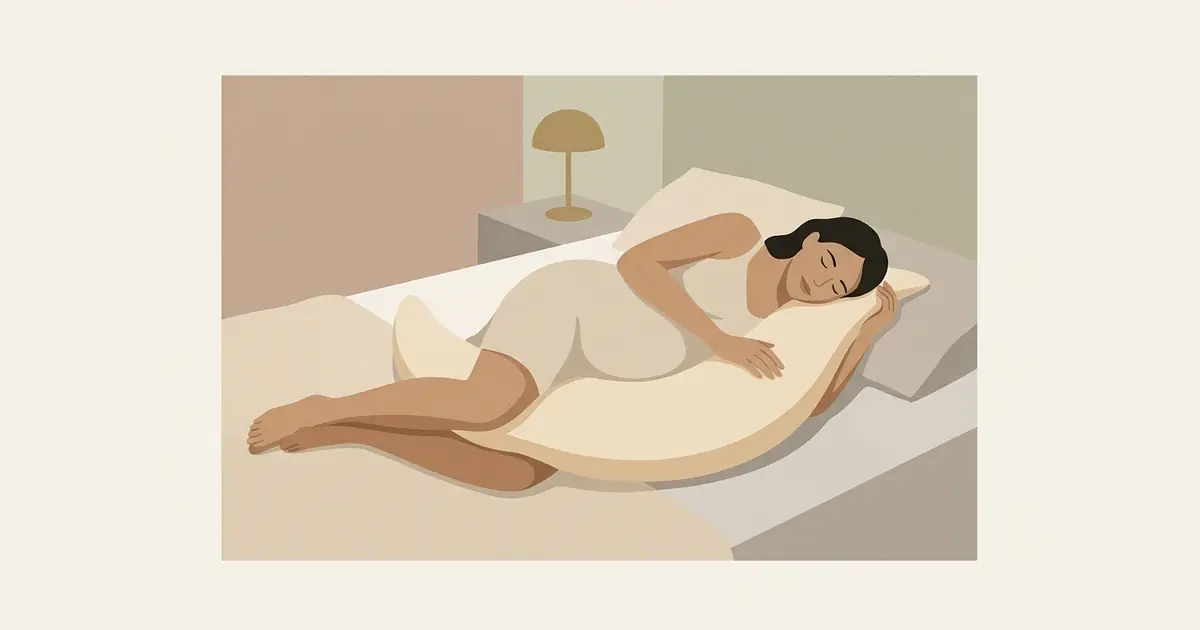 Sleeping during pregnancy, trimester by trimester
: why to move to your side by 28 weeks, what the NHS and ACOG advise, and how pillows help week to week.
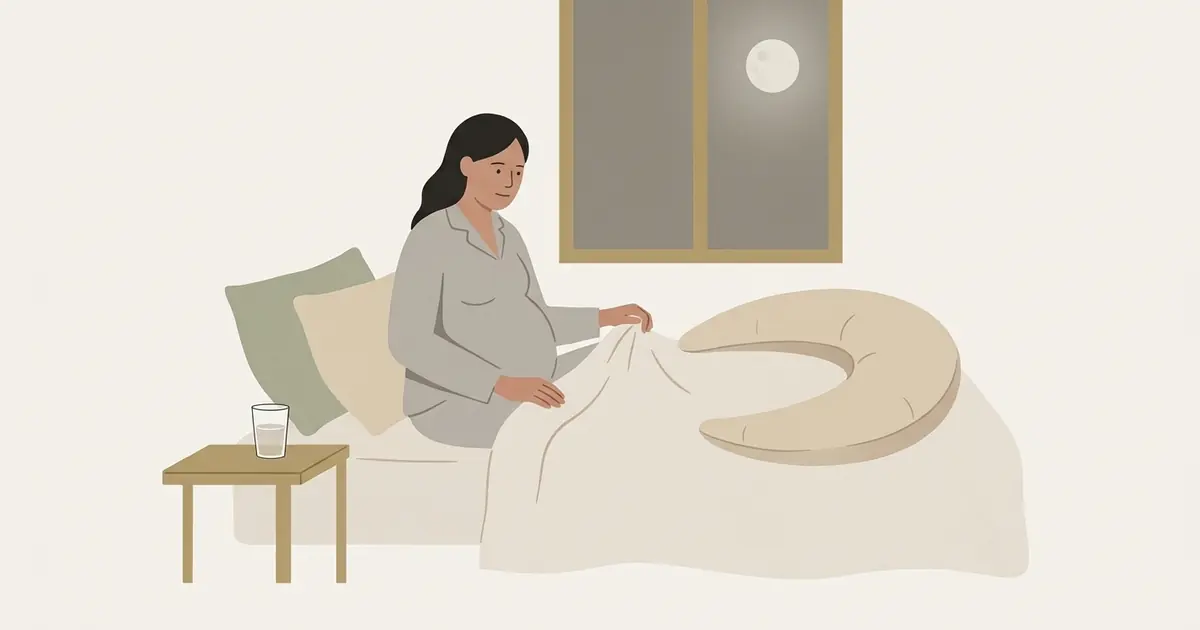 Night sweats during pregnancy: what helps
Night sweats during pregnancy: what the NHS counts as night sweats, when to see a GP, and 6 options for changing bedding, sleepwear and the bedroom.
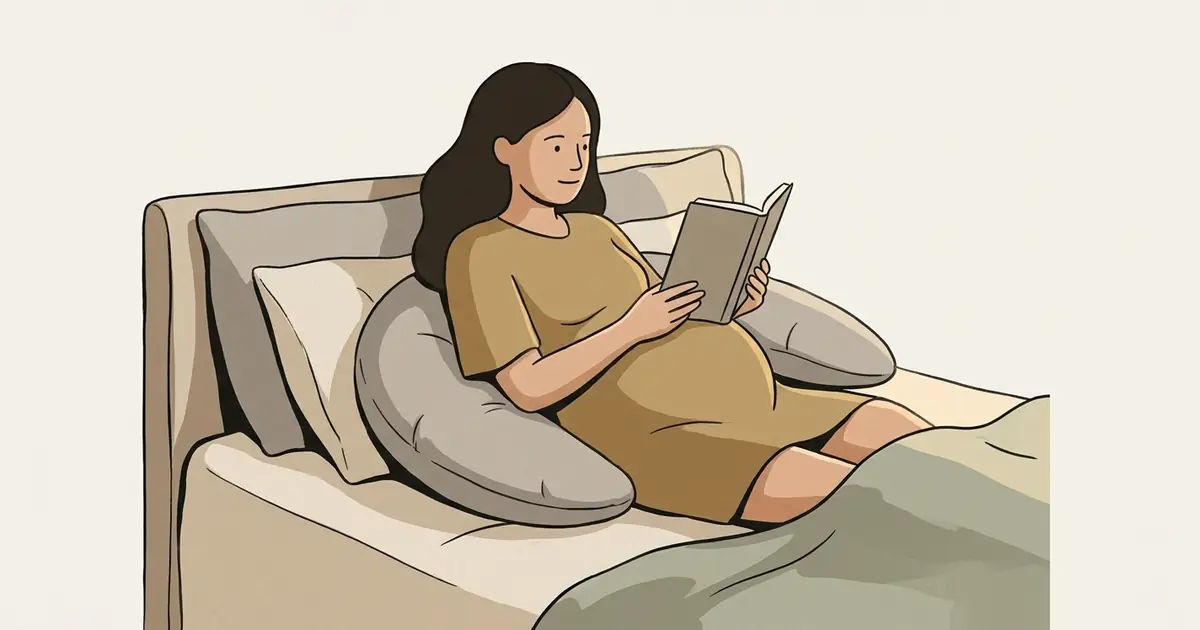 How to use a pregnancy pillow: 5 positions
How to use a pregnancy pillow in 5 positions from about 20 weeks: between the knees, under the bump, behind the back, reclined, and on the lap after birth.


