
Draft: this guide is waiting for review by a qualified reviewer and is not published yet.
How to use a pregnancy pillow: 5 positions
How to use a pregnancy pillow in 5 positions from about 20 weeks: between the knees, under the bump, behind the back, reclined, and on the lap after birth.
By Cove editorial team · Updated October 26, 2026 · 4 min read · Editorial standards

Key takeaways
- Position 1: between the knees, to keep the pelvis level on your side.
- Position 2: under the bump, to take its weight.
- Position 3: behind the back, to stop you rolling onto it.
- Position 4: reclined, for reading or heartburn.
- Position 5: around the waist after the birth, for sitting up.
To use a pregnancy pillow, lie on your side with one part between your knees and another under your bump. ACOG suggests this, or a full-length body pillow1. Three more positions help: behind your back to stop rolling, behind you when reclined, and around your waist after the birth. The NHS advises falling asleep on your side after 28 weeks2.
Before you start
These positions assume a long pillow, such as a crescent or straight body pillow. Separate pillows can do the same jobs. The NHS says the safest position to fall asleep in after 28 weeks is on your side, left or right2, so positions 1 to 3 are for sleep and 4 and 5 are for resting awake.
Position 1: between the knees
1. Lie on your side with both knees bent. 2. Place one end of the pillow between your knees, reaching down toward the ankles if you can. 3. Check your top knee sits level with your top hip.
This keeps the pelvis level and can ease hip and lower back ache. ACOG suggests keeping one or both knees bent with a pillow between them1.
Position 2: under the bump
1. From position 1, let the curve or middle of the pillow run up in front of you. 2. Tuck it gently under your bump so it takes some of the weight. 3. Rest your top arm on the pillow at chest height.
ACOG suggests a pillow under the belly as well as between the knees1. If the pillow is too thick under the bump, it can push you toward your back; adjust the fill or move it lower.
Position 3: behind the back
1. With the pillow in front of you, bring the far tip around behind your back. 2. Or add a second pillow lengthways behind you. 3. Settle so you lean very slightly into the front support.
This makes rolling onto your back harder. The NHS says not to worry if you do wake on your back; turn onto your side2.
Position 4: reclined
1. Sit up in bed against the headboard. 2. Wrap the pillow behind your lower back, with the tips at your sides. 3. Add a pillow under your knees if that is comfortable.
This is useful for reading or resting, and for heartburn after a meal [source needed]. For sleep later in pregnancy, return to your side.
Position 5: around the waist after the birth
1. Sit up, with the pillow around your waist and the tips forward. 2. Use it to rest your arms, keeping your shoulders relaxed.
The NHS suggests getting comfortable before a feed and using pillows or cushions if necessary, with relaxed shoulders and arms4. Do not fall asleep with a baby on a pillow, and never put a pillow in a baby's sleep space. More in using your pregnancy pillow after the baby arrives.
The five positions at a glance
| Position | For | When |
|---|---|---|
| Between the knees | Hips and lower back | Sleep, from any week |
| Under the bump | Bump weight | Sleep, second and third trimester |
| Behind the back | Staying on your side | Sleep, especially after 28 weeks |
| Reclined | Reading, resting | Awake |
| Around the waist | Arms and back | After the birth, awake |
Common problems
- Pillow slides away: use a longer pillow you can hug, so your arms hold it in place.
- Too hot: use a breathable cover and a cooler room. See how to sleep cool while pregnant.
- Pushed onto your back: the bump section is too thick. Move it lower or remove some fill.
- Partner has no room: a crescent takes less space than a U shape.
Back ache
The NHS suggests maternity support pillows, enough rest, and a mattress that supports you properly for back ache in pregnancy3. Positions 1 and 3 together often help most at night.
Turning over
Turning from one side to the other with a big pillow is awkward. Bring your knees together, roll onto your back briefly with the pillow, and continue over to the other side, taking the pillow with you. Or keep a second pillow ready on the other side.
Adjusting the fill
If your pillow has an inner zip, a few small changes make a big difference:
1. Knee end too thick, pushing your top knee above your hip: remove a handful of fill. 2. Knee end too thin, so the knee still drops: move fill from the middle toward the tip. 3. Bump section too firm: remove some fill from the middle. 4. Pillow flattening by morning: fluff it each day by shaking it end to end.
Keep any fill you remove in a bag, because what feels right at 20 weeks may change by 34.
Getting in and out of bed
Later in pregnancy, getting up is easier from your side. Bend your knees, push the pillow slightly away, and push up with your arms as you swing your legs down. Reverse it to get back in, and pull the pillow back into place once you are on your side.
Which pillow
Any long pillow can do positions 1 to 4. A crescent does positions 1 to 3 in one piece. The Cove Pregnancy Pillow is 52 inches tip to tip, with an adjustable shredded memory foam fill. See the pregnancy pillow page.
Getting started
When to start is in when to start using a pregnancy pillow. The full picture is in sleeping during pregnancy, trimester by trimester. This guide is waiting for review by a qualified reviewer.
From Cove

Questions
On your side, with one part between your knees and another under your bump. ACOG suggests this setup, or a full-length body pillow.
Usually in front, between the knees and under the bump. Some people add a section behind the back to stop rolling.
Yes. Wrapped behind the lower back, it supports you when reading or resting in bed.
Ask your midwife or doctor about sleeping propped up. Later in pregnancy the NHS advises falling asleep on your side.
Yes, for support when sitting up. Never put it in a baby's sleep space.
Sources
- Can I sleep on my back when I'm pregnant?, ACOG. Accessed October 26, 2026.
- Reducing the risk of stillbirth, NHS. Accessed October 26, 2026.
- Back pain in pregnancy, NHS. Accessed October 26, 2026.
- Breastfeeding: positioning and attachment, NHS. Accessed October 26, 2026.
About the author
The Cove editorial team is the group at Cove that writes our guides. We write them from published guidance and our own product testing, and link every source. About the team
Related guides
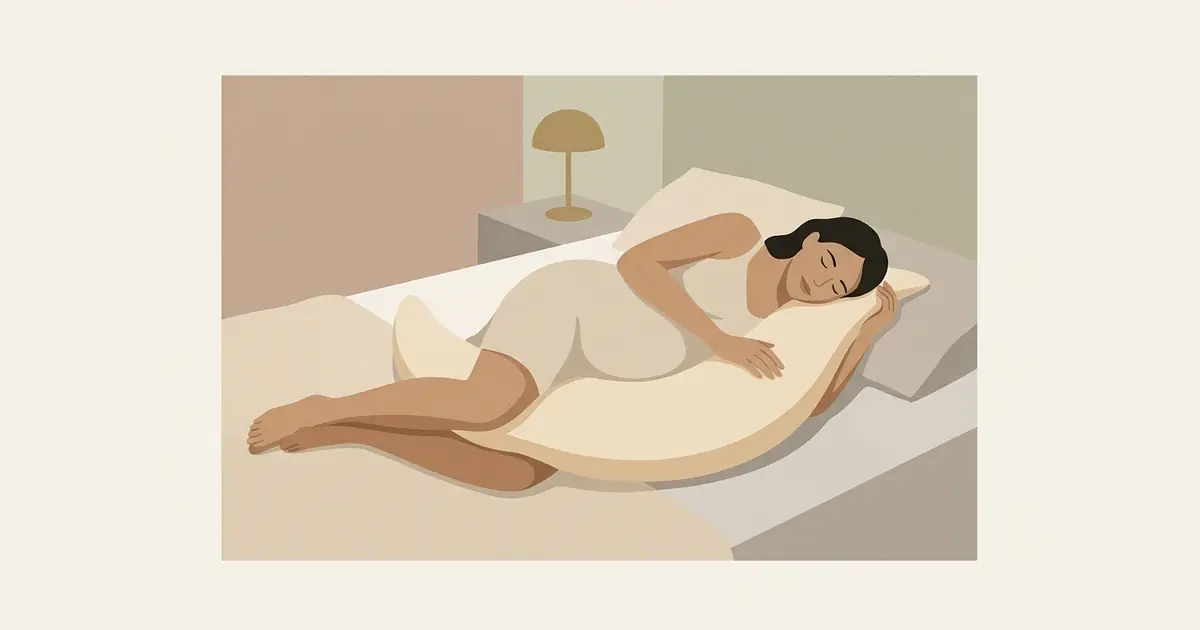 Sleeping during pregnancy, trimester by trimester
: why to move to your side by 28 weeks, what the NHS and ACOG advise, and how pillows help week to week.
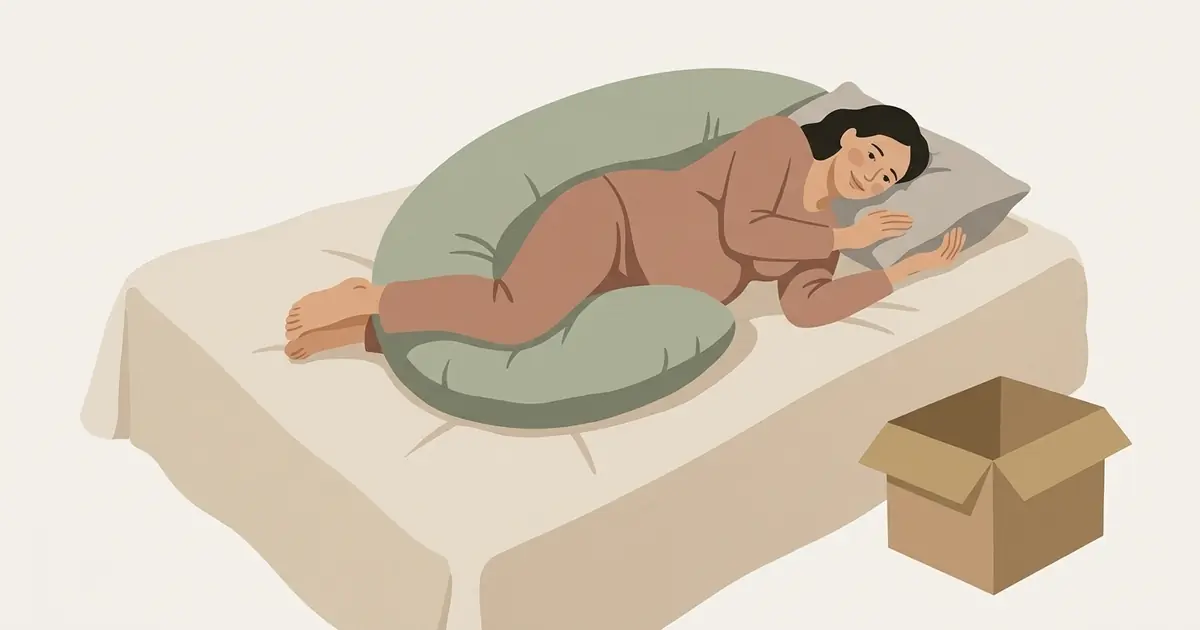 When to start using a pregnancy pillow
: there is no set week, but side sleeping is typically advised from the second trimester and from 28 weeks.
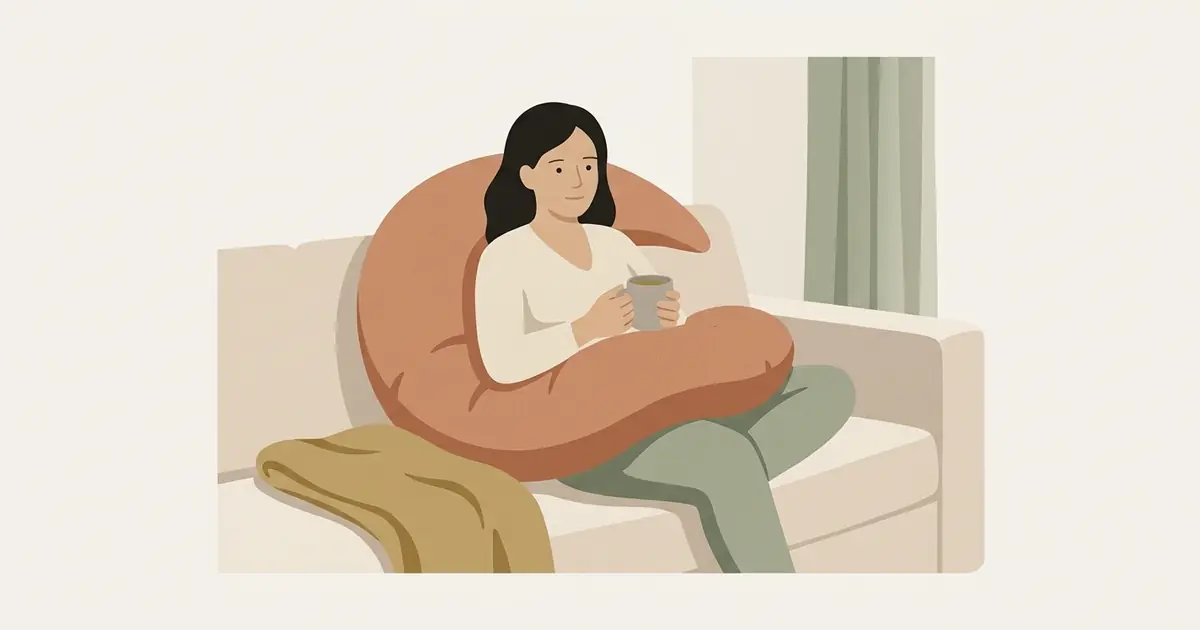 Using your pregnancy pillow after the baby arrives
: back support sitting up, arm support for feeding and side sleeping in the first 8 weeks, and 1 rule.


