
Draft: this guide is waiting for review by a qualified reviewer and is not published yet.
Using your pregnancy pillow after the baby arrives
Using your pregnancy pillow after the baby arrives: back support sitting up, arm support for feeding and side sleeping in the first 8 weeks, and 1 rule.
By Cove editorial team · Updated October 26, 2026 · 4 min read · Editorial standards

Key takeaways
- A pregnancy pillow keeps being useful after the birth, for you, not the baby.
- The NHS suggests using pillows or cushions to get comfortable for feeding.
- ACOG suggests a pillow to support your arms and keeping your back supported.
- Never put a pillow in a baby's sleep space or fall asleep with a baby on one.
- Your 6 to 8 week postnatal check is a time to raise any pain.
Your pregnancy pillow can keep helping after the baby arrives, as support for you. Use it behind your back when sitting up, to rest your arms when feeding, and for side sleeping. The NHS suggests pillows or cushions to get comfortable before a feed1. Never put a pillow in a baby's sleep space.
Safety first
The most important rule: a pillow is for you, not the baby. Do not put a pillow in a cot, Moses basket or anywhere a baby sleeps. Do not leave a baby lying on a pillow, and move the baby to their own safe sleep space if you feel drowsy while feeding. Your midwife or health visitor can explain safe sleep advice in full.
Use 1: back support sitting up
In the early weeks you spend a lot of time sitting: feeding, holding, resting. A body pillow wrapped behind your lower back, with the tips at your sides, keeps your back supported in bed or on the sofa. ACOG suggests keeping your back supported when breastfeeding2.
Use 2: arm support when feeding
Holding a baby for long feeds tires the arms and shoulders. ACOG suggests relaxing your shoulders and using a pillow to support your arms, and bending at the elbows rather than the wrists where possible2. The NHS says your shoulders and arms should be relaxed and suggests pillows or cushions if necessary1.
1. Sit back with your back supported. 2. Bring the pillow around your waist, tips forward. 3. Rest your forearms on it, so you are not holding all the weight. 4. Keep your eyes up where you can; ACOG notes looking down too much can hurt your neck2.
Use 3: side sleeping for you
Many people liked side sleeping with a body pillow in pregnancy and keep doing it. One tip between the knees, the curve to hug. It can be especially welcome while your body recovers.
Use 4: sitting comfortably during recovery
ACOG lists common postpartum symptoms including pain in the back, neck or joints, pain in the perineum, and pain around the incision after a caesarean birth2. Some people find a pillow helps them sit or get up more comfortably [source needed]. Ask your midwife or doctor about your own recovery.
Use 5: on the sofa
A crescent fits along the sofa as a back rest, or across your lap as an arm rest while watching a feed. Choose whichever position keeps your shoulders relaxed.
The uses at a glance
| Use | Position | Who it is for |
|---|---|---|
| Back support | Behind the lower back | You, sitting up |
| Arm support | Around the waist | You, while feeding |
| Side sleeping | Between the knees, hugged | You, in bed |
| Recovery comfort | Wherever is comfortable | You, as advised |
| Sofa rest | Along the back or across the lap | You |
Washing in the early weeks
The early weeks are messy. A spare cover means the pillow is always usable. Wash covers at the label temperature, and let the pillow air out before putting a fresh one on. Spare Cove covers are sold separately.
Your postnatal check
The NHS says you should have a postnatal check 6 to 8 weeks after your baby's birth to make sure you feel well and are recovering properly3. You may be offered an examination of stitches if you had an episiotomy or caesarean section3. Raise any back, neck or other pain you have had, and mention if sitting or feeding positions are uncomfortable.
Back ache after the birth
Back ache that started in pregnancy can carry on. The NHS advice for back ache in pregnancy includes keeping your back well supported when sitting and getting enough rest4. Those habits are still useful afterwards. If pain is severe or getting worse, see your GP.
Which pillow
A crescent or long straight pillow does all five uses. The Cove Pregnancy Pillow is 52 inches tip to tip, and its shredded memory foam fill adjusts through an inner zip, so you can make it softer for sitting against.
Storing it when you are done
When you no longer need it, wash and dry the cover, let the pillow air out, and store it somewhere dry. A large bag or vacuum bag saves space. Many people bring it back out for side sleeping, travel or a future pregnancy.
Questions for your midwife or health visitor
1. Which feeding positions suit my recovery? 2. How should I sit to protect my stitches or incision? 3. When can I go back to sleeping in my usual position? 4. Where should the baby sleep, and how should their space be set up?
Bring the answers into your routine, and adjust the pillow to suit.
Visitors and space
In the early weeks, the bed often becomes the place for feeds, naps and visitors. Keep the pillow on your side of the bed during the day, so it is ready to use, and move it away from any baby who is lying nearby.
Read next
- How to use a pregnancy pillow: 5 positions
- Pregnancy pillow vs regular body pillow
- Sleeping during pregnancy, trimester by trimester
A word for partners
Partners can help most by handling the set-up: bringing the pillow to wherever the feed happens, swapping in a clean cover, and taking the baby to their own safe sleep space when the feed is done. Small jobs like these let the person recovering rest properly.
This guide is waiting for review by a qualified reviewer.
From Cove


Questions
Many people use it to support their arms and back. The NHS suggests using pillows or cushions to get comfortable before a feed, with relaxed shoulders and arms.
No. Never put a pillow in a baby's sleep space or leave a baby on a pillow. Follow safe sleep advice from your midwife or health visitor.
Some people find a pillow helps them sit comfortably [source needed]. ACOG notes pain around the incision is a common postpartum symptom. Ask your midwife or doctor for advice on your recovery.
Many people keep using a body pillow for side sleeping long after the birth. It is the same pillow, just used for different jobs.
The NHS says you should have a postnatal check 6 to 8 weeks after your baby's birth.
Sources
- Breastfeeding: positioning and attachment, NHS. Accessed October 26, 2026.
- Postpartum pain management, ACOG. Accessed October 26, 2026.
- Your 6-week postnatal check, NHS. Accessed October 26, 2026.
- Back pain in pregnancy, NHS. Accessed October 26, 2026.
About the author
The Cove editorial team is the group at Cove that writes our guides. We write them from published guidance and our own product testing, and link every source. About the team
Related guides
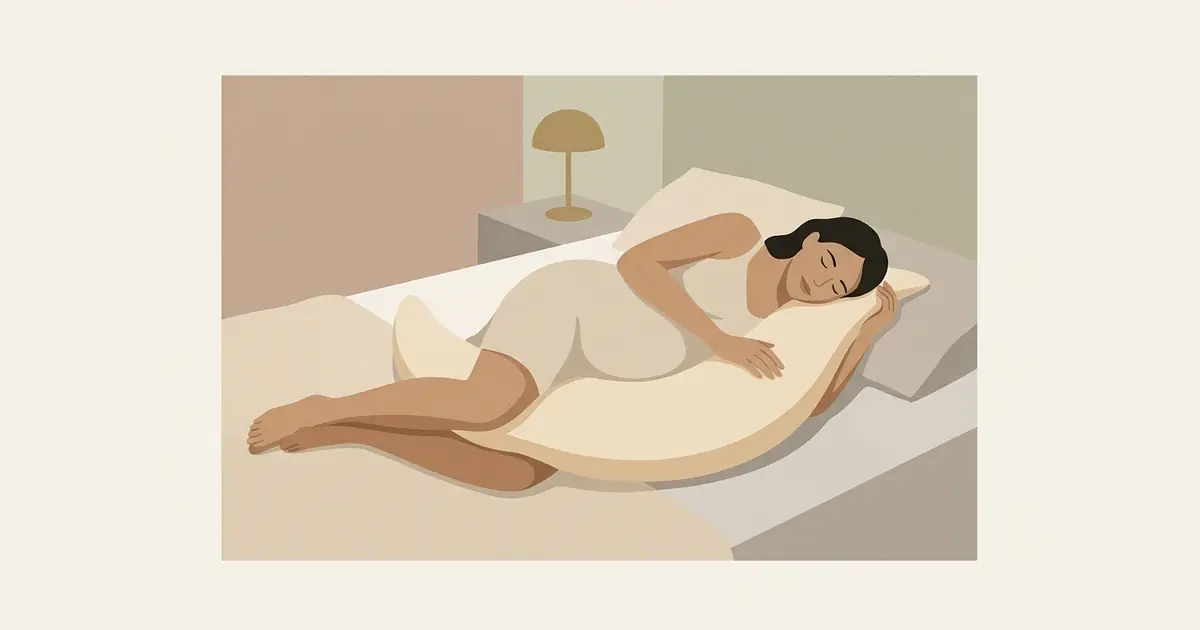 Sleeping during pregnancy, trimester by trimester
: why to move to your side by 28 weeks, what the NHS and ACOG advise, and how pillows help week to week.
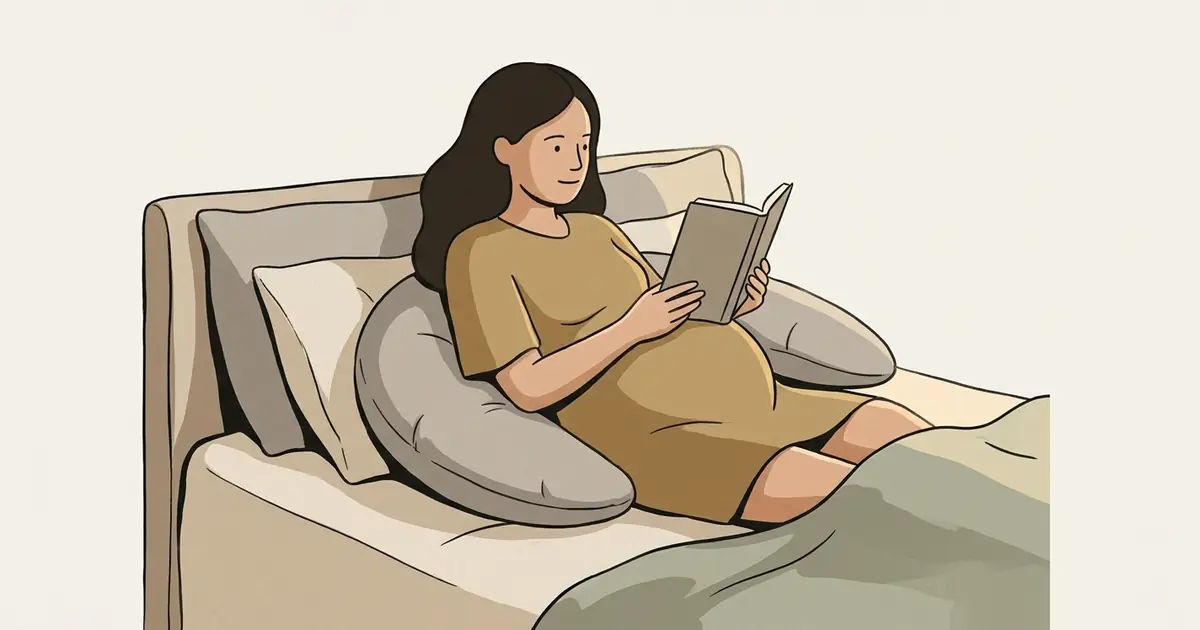 How to use a pregnancy pillow: 5 positions
How to use a pregnancy pillow in 5 positions from about 20 weeks: between the knees, under the bump, behind the back, reclined, and on the lap after birth.
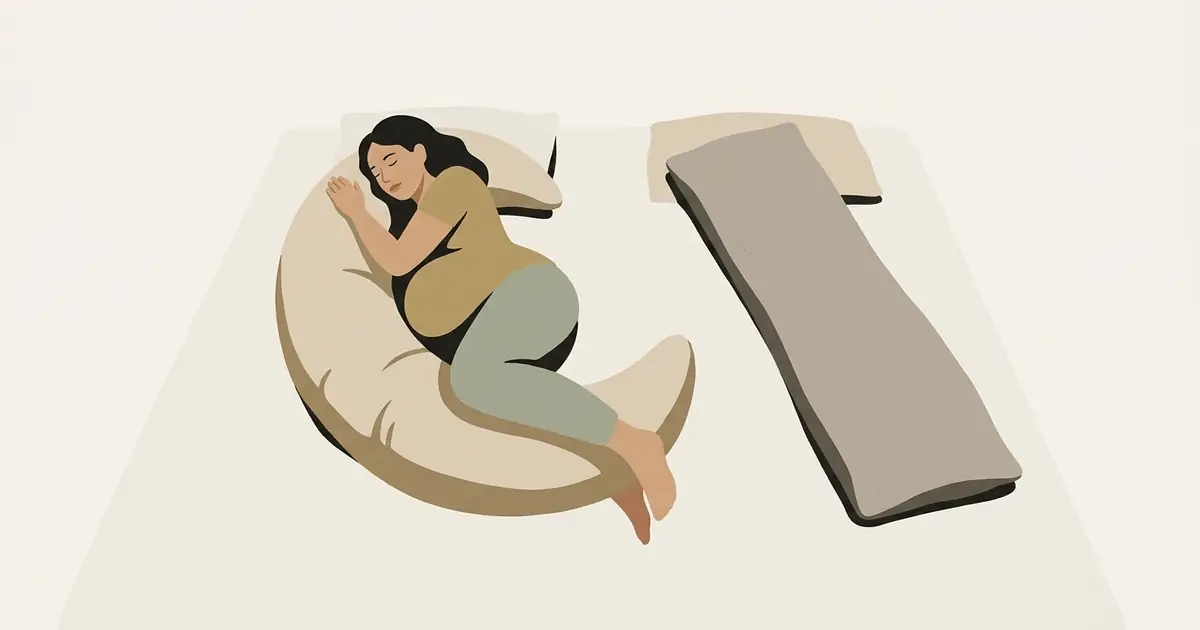 Pregnancy pillow vs regular body pillow
: a 52 inch body pillow and a U shape compared for bump, back and knees in a 6 row table, and which suits later.


