
Draft: this guide is waiting for review by a qualified reviewer and is not published yet.
Pregnancy pillow vs regular body pillow
Pregnancy pillow vs regular body pillow: a 52 inch body pillow and a U shape compared for bump, back and knees in a 6 row table, and which suits later.
By Cove editorial team · Updated October 26, 2026 · 5 min read · Editorial standards

Key takeaways
- ACOG suggests a full-length body pillow may help support side sleeping in pregnancy.
- Pregnancy pillows are usually U, C or J shapes; regular body pillows are straight or crescent.
- U shapes support both sides but take a lot of bed space.
- A crescent can sit between the knees, under the bump and tuck behind.
- A regular body pillow keeps being useful long after the birth.
A pregnancy pillow and a regular body pillow do the same main job: helping you sleep on your side with support between the knees and under the bump. ACOG suggests a full-length body pillow may help1. Pregnancy pillows are often U or J shaped; regular body pillows are straight or crescent shaped and stay useful after the birth.
What both need to do
Later in pregnancy, the NHS advises falling asleep on your side, left or right, after 28 weeks2. ACOG suggests keeping one or both knees bent, with a pillow between the knees and another under your belly, or a full-length body pillow1. Any pillow that does this works.
The shapes
| Shape | Usually sold as | Supports | Bed space |
|---|---|---|---|
| Straight | Body pillow | Knees and front | Narrow |
| Crescent | Body pillow | Knees, bump, front; tips can tuck behind | Medium |
| C shape | Pregnancy pillow | Head, front and knees | Medium to wide |
| J shape | Pregnancy pillow | Head, bump and knees on one side | Medium |
| U shape | Pregnancy pillow | Both sides and the back at once | Wide |
| Wedge | Pregnancy pillow | Under the bump only | Small |
Side by side
| Pregnancy pillow (U or J) | Regular body pillow (straight or crescent) | |
|---|---|---|
| Bump support | Built in | Yes, with the middle or curve |
| Back support | U: both sides; J: one side | Crescent tips can tuck behind |
| Turning over | U: no need to move it | Take the pillow with you |
| Bed space | Large | Medium |
| Sharing a bed | Harder | Easier |
| After the birth | Mainly for sitting | Sitting and side sleeping |
When a U shape suits
- You sleep alone in a queen or king bed.
- You turn over often and dislike moving a pillow.
- You want support on both sides at once.
When a regular body pillow suits
- You share a bed, or have a full or smaller bed.
- You want one pillow to use for years, not months.
- You already like hugging a pillow.
- You want something easier to lift and wash.
Back support
The NHS suggests looking for maternity support pillows for back ache in pregnancy, alongside rest, keeping your back supported when sitting, and a supportive mattress4. A U shape supports the back automatically. With a crescent, tuck one tip behind your back, or add a separate pillow there.
Which side
The NHS says either side is safe to fall asleep on after 28 weeks2. The Sleep Foundation describes the left side as often considered best3. Both pillow types work on either side; straight and crescent pillows flip over easily, and a J shape works best on one side.
Size and weight
U shapes can be very long, and heavy when filled with foam. That matters for making the bed, washing the cover and moving the pillow when you turn. A crescent at 52 inches covers chest to knees for most adults.
Washing
Check the cover zips off fully. Large U-shaped covers can be awkward to remove and to fit in a domestic machine [source needed]. A spare cover helps either way.
After the birth
Many pregnancy pillows end up in a cupboard after the birth. A regular body pillow tends to stay on the bed, because it suits ordinary side sleeping. Both can support your back and arms when sitting up to feed. See using your pregnancy pillow after the baby arrives.
How to choose
1. Measure your side of the bed. 2. Decide whether you want support on one side or both. 3. Think about after the birth: will you keep using it? 4. Check the fill can be adjusted, so the knee and bump sections fit. 5. Look for a trial long enough to judge it.
Costs over time
A pregnancy-specific U shape is often used for a few months, then stored. A regular body pillow is often used for years. When comparing prices, think about how long you will use it, not just the price today.
Questions to ask before buying
1. How much of my side of the bed will it take? 2. Can I adjust the fill under the bump and between the knees? 3. Does the cover zip off fully, and is a spare available? 4. How heavy is it, and can I move it easily when I turn? 5. Will I keep using it after the birth? 6. How long is the trial?
Trying before buying
You can test the idea with pillows you already have. Put one between your knees, one under your bump and one behind your back for a few nights. If you like the support but hate the pillows moving, a single long pillow is the upgrade. If you find you want support on both sides at once, a U shape may suit you better.
A note on travel
A long straight or crescent pillow is easier to take to a hospital bag, a hotel or a relative's house than a large U shape. If you expect to travel late in pregnancy, a smaller pillow with a case may suit you better.
Our pillow
The Cove Pregnancy Pillow is a 52 inch crescent body pillow: one tip between the knees, the curve under the bump, and the other tip can tuck behind. Its shredded memory foam fill adjusts through an inner zip. More on our pregnancy pillow page.
Read next
- How to use a pregnancy pillow: 5 positions
- When to start using a pregnancy pillow
- Sleeping during pregnancy, trimester by trimester
This guide is waiting for review by a qualified reviewer.
From Cove

Questions
No. ACOG suggests a pillow between the knees and another under the belly, or a full-length body pillow. A regular body pillow can do the job.
Mostly shape and marketing. Pregnancy pillows are often U, C or J shaped to support the bump and back at once. Body pillows are straight or crescent shaped.
It supports both sides at once, so you can turn without moving it. It also takes most of a queen bed and can be hard to share.
Yes. Many people keep using it for side sleeping and for sitting support.
Whichever has a cover that zips off fully. Very large U shapes can be hard to fit into a machine.
Sources
- Can I sleep on my back when I'm pregnant?, ACOG. Accessed October 26, 2026.
- Reducing the risk of stillbirth, NHS. Accessed October 26, 2026.
- Pregnancy and sleep, Sleep Foundation. Accessed October 26, 2026.
- Back pain in pregnancy, NHS. Accessed October 26, 2026.
About the author
The Cove editorial team is the group at Cove that writes our guides. We write them from published guidance and our own product testing, and link every source. About the team
Related guides
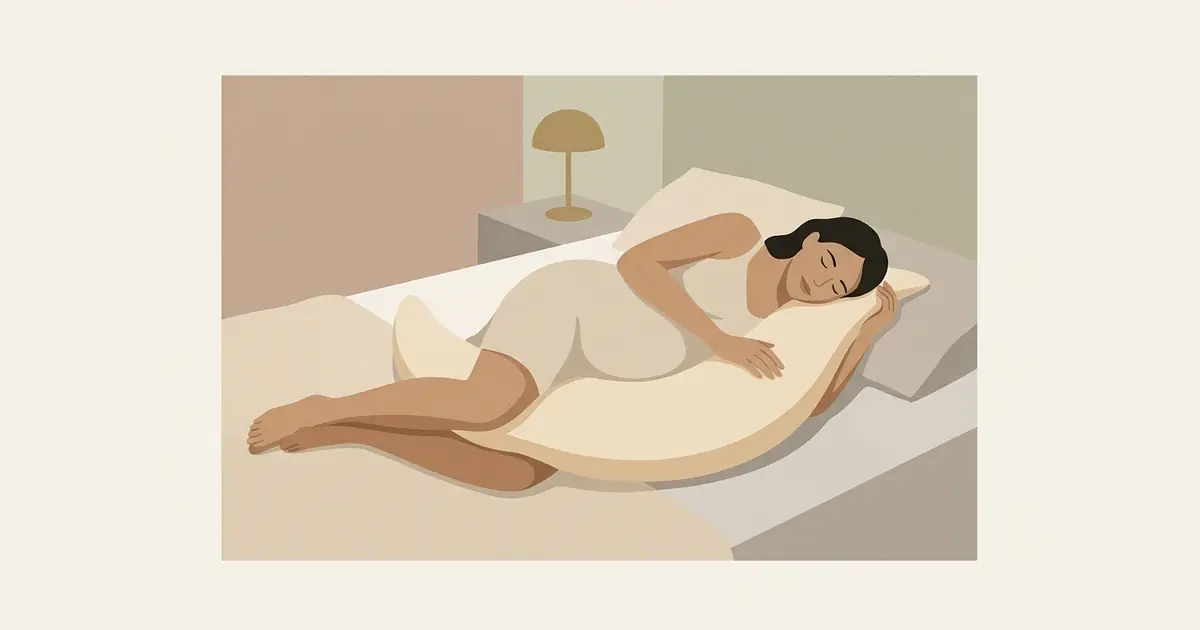 Sleeping during pregnancy, trimester by trimester
: why to move to your side by 28 weeks, what the NHS and ACOG advise, and how pillows help week to week.
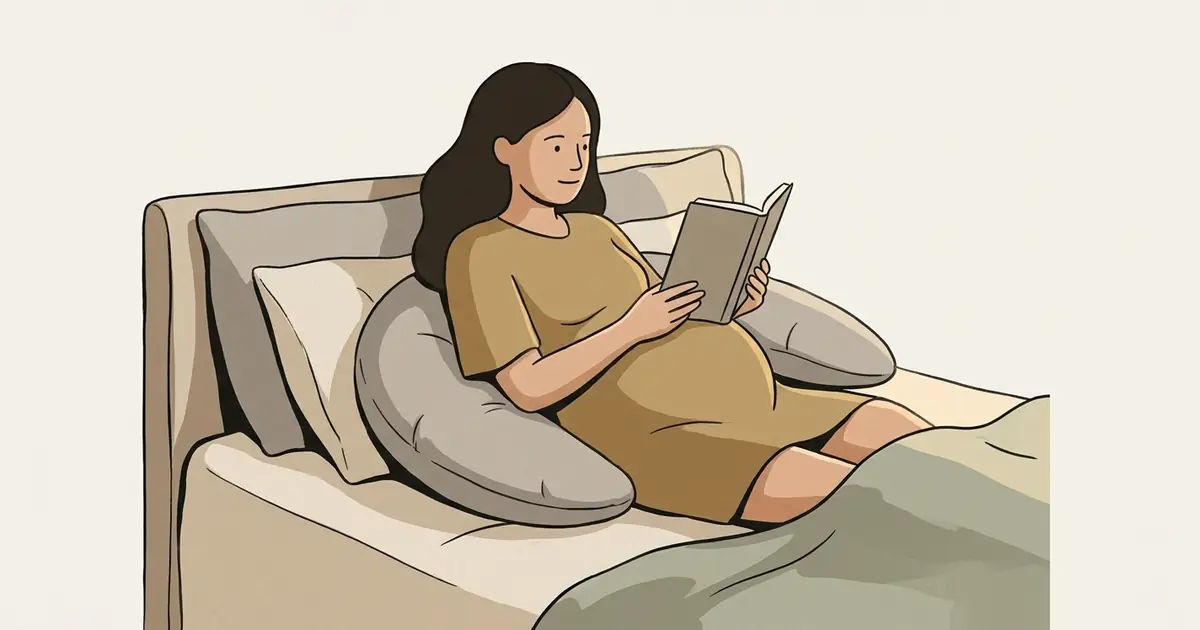 How to use a pregnancy pillow: 5 positions
How to use a pregnancy pillow in 5 positions from about 20 weeks: between the knees, under the bump, behind the back, reclined, and on the lap after birth.
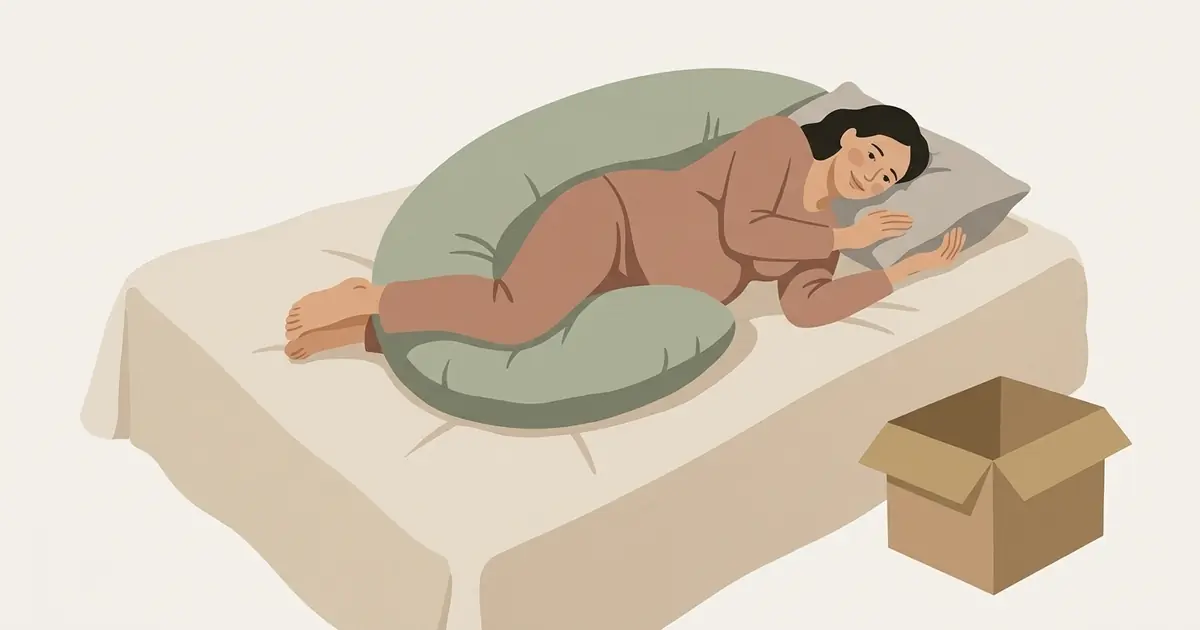 When to start using a pregnancy pillow
: there is no set week, but side sleeping is typically advised from the second trimester and from 28 weeks.


