
Draft: this guide is waiting for review by a qualified reviewer and is not published yet.
When to start using a pregnancy pillow
When to start using a pregnancy pillow: there is no set week, but side sleeping is typically advised from the second trimester and from 28 weeks.
By Cove editorial team · Updated October 26, 2026 · 5 min read · Editorial standards

Key takeaways
- There is no set week to start.
- ACOG suggests side sleeping in the second and third trimesters.
- The NHS advises falling asleep on your side after 28 weeks.
- Starting a few weeks before you need it helps you get used to it.
- Signs it is time: hip ache, back ache, or waking on your back.
There is no set week to start using a pregnancy pillow. Many people start in the second trimester, when ACOG suggests side sleeping may be best1, and well before 28 weeks, when the NHS advises falling asleep on your side2. Starting a few weeks before you need it gives you time to get used to it.
The two dates to know
Two pieces of guidance shape the timing:
| Guidance | Source | What it means for a pillow |
|---|---|---|
| Side sleeping may be best in the second and third trimesters, with knees bent | ACOG1 | Pillows help you stay on your side |
| Fall asleep on your side after 28 weeks, left or right | NHS2 | Be comfortable on your side by then |
Neither says you need a pillow. Both say that later in pregnancy, side sleeping is the goal. A pillow is a way to make that comfortable.
Signs it is time
- You wake with a sore hip from side sleeping.
- Your lower back aches in the morning.
- You keep waking on your back.
- You cannot get comfortable and lie awake shifting.
- Your bump feels heavy and pulls when you lie on your side.
Any one of these is a reason to try a pillow, whatever the week.
Starting early
Some people start in the first trimester, especially if they already sleep on their side or have hip or back ache. There is no harm in using a pillow early if it is comfortable. It also means you are used to it when the bump grows.
Starting in the second trimester
This is the most common time. The bump begins to show, stomach sleeping becomes awkward, and ACOG's advice on side sleeping applies1. ACOG suggests a pillow between your knees and another under your belly, or a full-length body pillow1.
Starting later
It is never too late. If you are past 28 weeks and struggling, a pillow can still help you stay on your side for the remaining weeks. The NHS also says not to worry if you wake up on your back; just turn onto your side2.
What to use
| Option | Cost | Setup | Good for |
|---|---|---|---|
| Pillows you already have | Free | One between the knees, one under the bump, one behind | Trying it out |
| A wedge | Low | Under the bump | Small beds |
| A full-length body pillow | Medium to higher | One piece, knees to chest | Staying put all night |
| A U-shaped pillow | Higher | Surrounds both sides | Large beds, one sleeper |
Our comparison of a pregnancy pillow vs a regular body pillow explains the shapes.
Getting used to it
1. Start with the pillow between your knees only. 2. After a few nights, let the curve or a second pillow sit under your bump. 3. Add support behind your back if you roll. 4. Adjust the fill, if you can, so the knee section is thick enough to keep your top knee level with your hip.
Positions in detail are in how to use a pregnancy pillow: 5 positions.
Back ache and timing
Back ache often prompts people to start. The NHS suggests looking for maternity support pillows, getting enough rest, and using a mattress that supports you properly3. A pillow at night can be part of that.
How long you will use it
Many people use a pregnancy pillow until the birth and keep using it afterwards, for back support when sitting up or for side sleeping. That makes earlier buying better value. See using your pregnancy pillow after the baby arrives.
Buying in time
Order a few weeks before you think you will want it, so it arrives and you have time to adjust it. Our pregnancy pillow page compares the shapes.
The Cove Pregnancy Pillow is a 52 inch crescent with an adjustable shredded memory foam fill and a 100 night trial, which covers most of a second and third trimester.
Left or right
The NHS says the safest position to fall asleep in is on your side, either left or right2. The Sleep Foundation describes the left side as often considered best4. See why sleeping on your left side is recommended in pregnancy.
By trimester
| Trimester | Weeks | Typical pillow use |
|---|---|---|
| First | 1 to 13 | Optional; knee pillow if you already side sleep |
| Second | 14 to 27 | Most people start; knees and bump |
| Third | 28 to 40 | Knees, bump and behind the back, to stay on your side |
| After the birth | From day 1 | Back and arm support when sitting up |
If you are expecting twins or more
The bump grows faster with twins or more, so many people need support earlier [source needed]. Ask your midwife about positions, and consider starting with pillows in the early second trimester.
Signs the pillow is not right
- Your top knee is pushed higher than your hip: the knee end is too thick.
- The bump section pushes you onto your back: it is too thick or too high.
- You wake hot: use a breathable cover, and see our guide on keeping cool.
- It ends up on the floor: choose a longer pillow you can hug.
When to ask for advice
Ask your midwife or doctor if you have pain that keeps you awake, feel breathless or dizzy lying down, or have any concern about your baby's movements. For movements, contact your maternity unit straight away.
This guide is waiting for review by a qualified reviewer. The full picture is in sleeping during pregnancy, trimester by trimester.
From Cove

Questions
There is no set week. Many people start in the second trimester, when ACOG suggests side sleeping, and well before 28 weeks, when the NHS advises falling asleep on your side.
Yes, if it is comfortable. Some people like the knee support early on, especially if they already sleep on their side.
No. A pillow can still help you get comfortable on your side for the remaining weeks and after the birth.
No. ACOG suggests a pillow between the knees and another under the belly, or a full-length body pillow. Pillows you already have can work.
Many people need a few nights to a week. Starting before you really need it gives you that time.
Sources
- Can I sleep on my back when I'm pregnant?, ACOG. Accessed October 26, 2026.
- Reducing the risk of stillbirth, NHS. Accessed October 26, 2026.
- Back pain in pregnancy, NHS. Accessed October 26, 2026.
- Pregnancy and sleep, Sleep Foundation. Accessed October 26, 2026.
About the author
The Cove editorial team is the group at Cove that writes our guides. We write them from published guidance and our own product testing, and link every source. About the team
Related guides
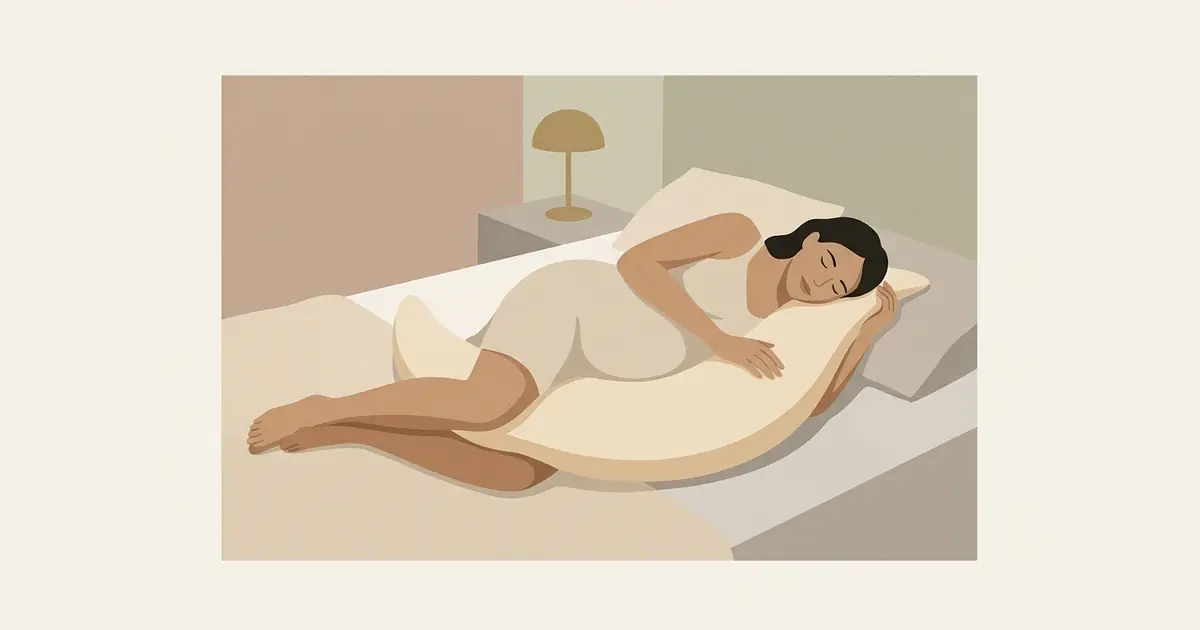 Sleeping during pregnancy, trimester by trimester
: why to move to your side by 28 weeks, what the NHS and ACOG advise, and how pillows help week to week.
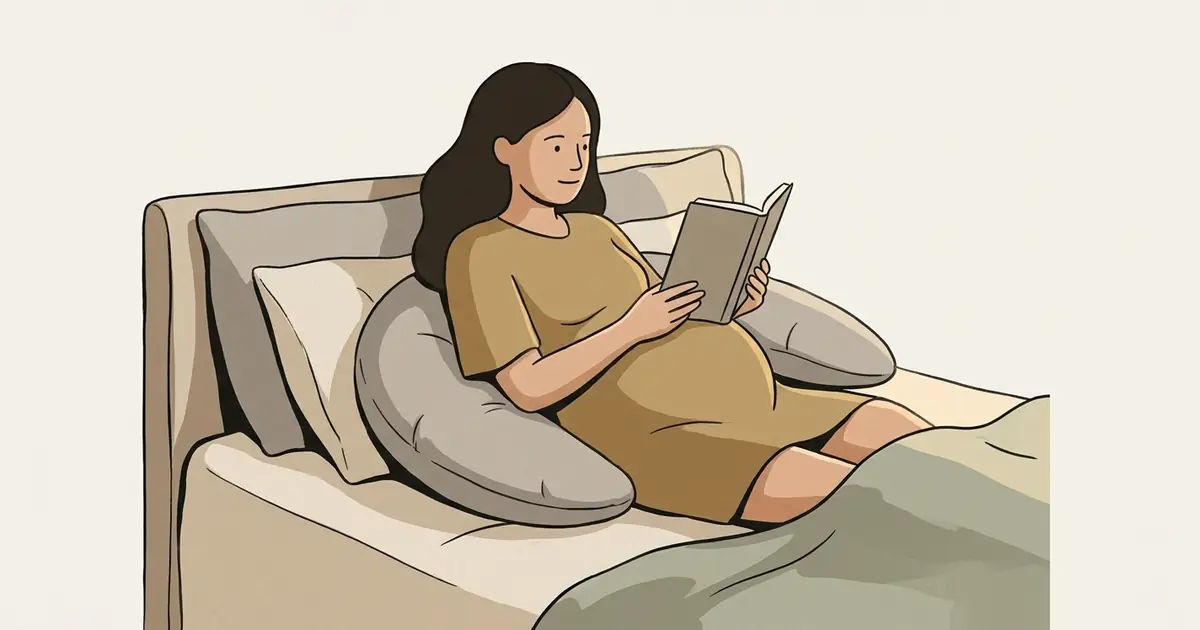 How to use a pregnancy pillow: 5 positions
How to use a pregnancy pillow in 5 positions from about 20 weeks: between the knees, under the bump, behind the back, reclined, and on the lap after birth.
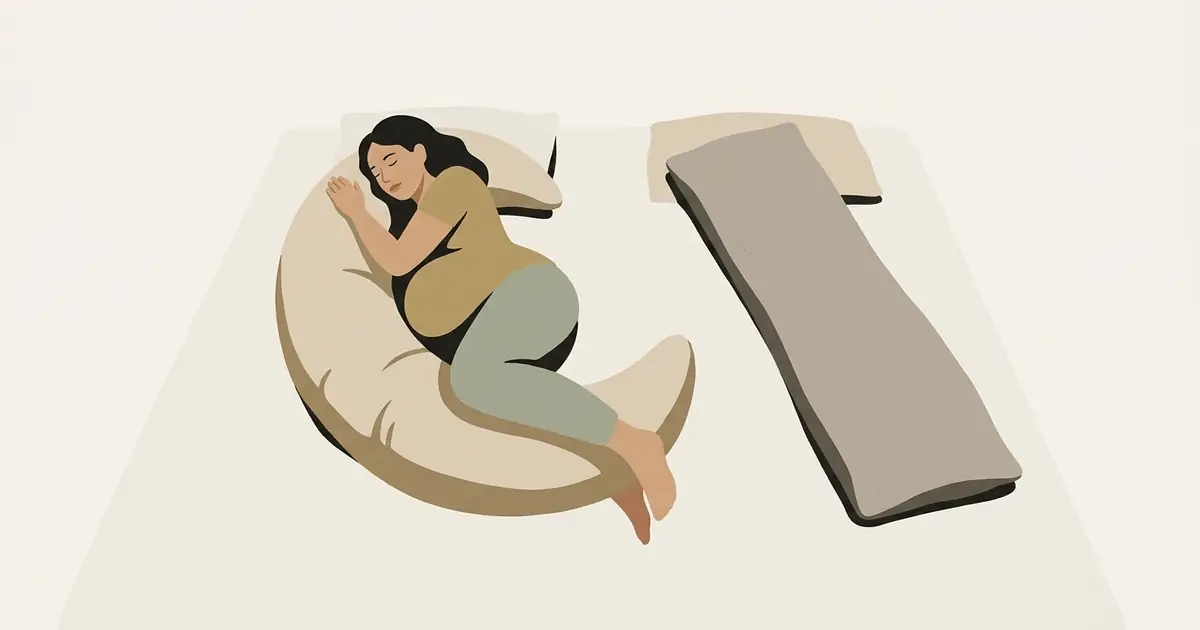 Pregnancy pillow vs regular body pillow
: a 52 inch body pillow and a U shape compared for bump, back and knees in a 6 row table, and which suits later.


