
Draft: this guide is waiting for review by a qualified reviewer and is not published yet.
Why sleeping on your left side is recommended in pregnancy
Why sleeping on your left side is advised in pregnancy, what the NHS and ACOG say from 28 weeks, and 5 tips for staying on your side all night.
By Cove editorial team · Updated October 26, 2026 · 4 min read · Editorial standards

Key takeaways
- The NHS says the safest position to fall asleep in after 28 weeks is on your side, left or right.
- The Sleep Foundation describes the left side as often considered the best position.
- ACOG explains that back sleeping later in pregnancy can press on a major blood vessel.
- The right side is still advised over the back.
- If you wake on your back, turn onto your side.
Sleeping on your left side is often recommended in pregnancy because it is thought to help blood flow to the uterus, as the Sleep Foundation explains2. The key NHS advice is to fall asleep on your side, left or right, after 28 weeks, not on your back1. If you wake on your back, turn onto your side.
What the NHS says
The NHS says research suggests going to sleep on your back after 28 weeks of pregnancy can increase the risk of stillbirth, and that this may be to do with the flow of blood and oxygen to the baby1. It says the safest position to fall asleep in is on your side, either left or right1.
It also says not to worry if you wake up on your back; turn onto your side1. Going to sleep on your side is listed among the steps to reduce the risk of stillbirth, alongside things like reporting any concerns to your midwife straight away1.
What ACOG says
ACOG explains that lying on your back in the second and third trimesters can put pressure on the blood vessel that takes blood to your uterus, which can make you feel dizzy and possibly reduce blood flow to your fetus3. It suggests sleeping on your side during the second and third trimesters may be best3.
Why the left side specifically
The Sleep Foundation describes sleeping on the left side with the legs slightly curled as considered the best sleeping position in pregnancy. It says this position facilitates blood flow to the heart, kidneys and uterus, and improves the delivery of oxygen and nutrients to the fetus2. Its side sleeping guide also notes experts recommend the left side as pregnancy progresses4.
The NHS advice treats both sides as safe to fall asleep on1. So the left is a preference, and the side, rather than the back, is the priority.
The advice at a glance
| Source | Advice |
|---|---|
| NHS | Fall asleep on your side, left or right, after 28 weeks1 |
| ACOG | Side sleeping in the second and third trimesters may be best3 |
| Sleep Foundation | Left side with legs slightly curled often considered best2 |
If the left side is uncomfortable
Some people find the left side uncomfortable because of hip ache, heartburn or simply habit. The right side is still advised over the back. Alternating through the night spreads pressure between both hips.
Five tips for staying on your side
1. Settle on your side at the start of sleep. The NHS advice is about how you go to sleep1. 2. Put a pillow between your knees so your pelvis stays level. 3. Put a pillow or the curve of a body pillow under your bump. 4. Tuck a pillow behind your back to make rolling onto it harder. 5. If you wake on your back, turn onto your side and settle again, without worrying.
Setups in detail are in how to use a pregnancy pillow: 5 positions.
Turning from left to right
Turning with a bump and a big pillow is awkward. Bring your knees together, roll through your back briefly, and continue to the other side, taking the pillow with you. A straight or crescent pillow flips over easily.
Hips and the left side
Long nights on one side can make that hip sore. A pillow between the knees keeps the top leg level, and alternating sides gives each hip a rest. If pain keeps you awake, mention it to your midwife.
Heartburn
Heartburn often gets worse later in pregnancy. Ask your midwife or pharmacist about suitable remedies, and eat your evening meal a few hours before bed [source needed].
Night sweats and feeling hot
If you wake hot or sweating, see night sweats during pregnancy for practical changes and when to get advice.
Your baby's movements
Position advice sits alongside other important steps. If you notice any change in your baby's movements, contact your midwife or maternity unit straight away rather than waiting until the next day.
Left side setups compared
| Setup | Helps with | Notes |
|---|---|---|
| Pillow between the knees | Hip and back ache | The simplest start |
| Pillow under the bump | Bump weight pulling | Add from the second trimester |
| Pillow behind the back | Rolling onto your back | Useful after 28 weeks |
| Crescent body pillow | All three in one | Flip it over to change sides |
Partners
If you sleep on your left and face your partner, a body pillow may sit between you. If you face away, the pillow goes toward the edge of the bed, so check there is room. Some couples swap sides of the bed so the person who sleeps on their left can face the edge with space for a pillow.
Getting used to it
If you have always slept on your back or stomach, side sleeping feels strange at first. Start practising in the second trimester, so it feels familiar by 28 weeks. Begin each night on your left, and do not worry about where you end up; just turn back onto your side when you notice.
A pillow for side sleeping
A crescent body pillow sits between the knees, under the bump and can tuck behind your back. The Cove Pregnancy Pillow is 52 inches tip to tip, with an adjustable fill, and works on either side. More on our pregnancy pillow page.
Read next
This guide is waiting for review by a qualified reviewer.
From Cove

Questions
No. The NHS says the safest position to fall asleep in after 28 weeks is on your side, either left or right. Many sources describe the left as preferred.
The Sleep Foundation says left-side sleeping with legs slightly curled helps blood flow to the heart, kidneys and uterus, and improves delivery of oxygen and nutrients to the fetus.
The NHS advice is to fall asleep on your side, left or right. The right side is advised over the back.
The NHS says not to worry. Turn onto your side and go back to sleep.
The NHS advice to go to sleep on your side applies whenever you go to sleep, including daytime naps [source needed].
Sources
- Reducing the risk of stillbirth, NHS. Accessed October 26, 2026.
- Pregnancy and sleep, Sleep Foundation. Accessed October 26, 2026.
- Can I sleep on my back when I'm pregnant?, ACOG. Accessed October 26, 2026.
- Side sleeping, Sleep Foundation. Accessed October 26, 2026.
About the author
The Cove editorial team is the group at Cove that writes our guides. We write them from published guidance and our own product testing, and link every source. About the team
Related guides
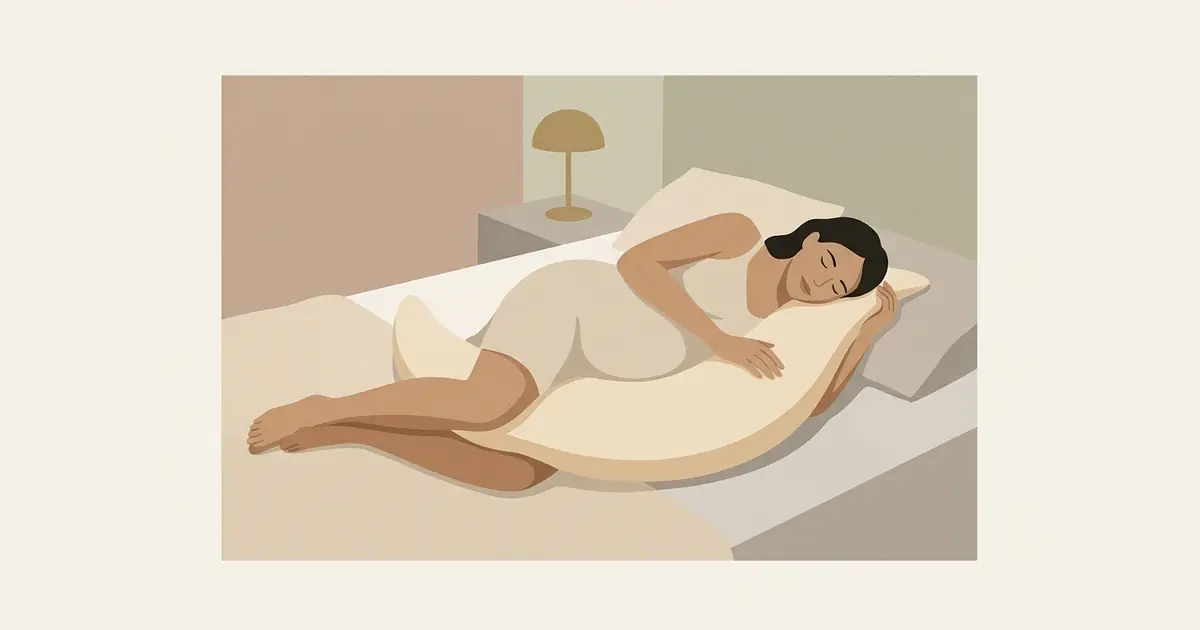 Sleeping during pregnancy, trimester by trimester
: why to move to your side by 28 weeks, what the NHS and ACOG advise, and how pillows help week to week.
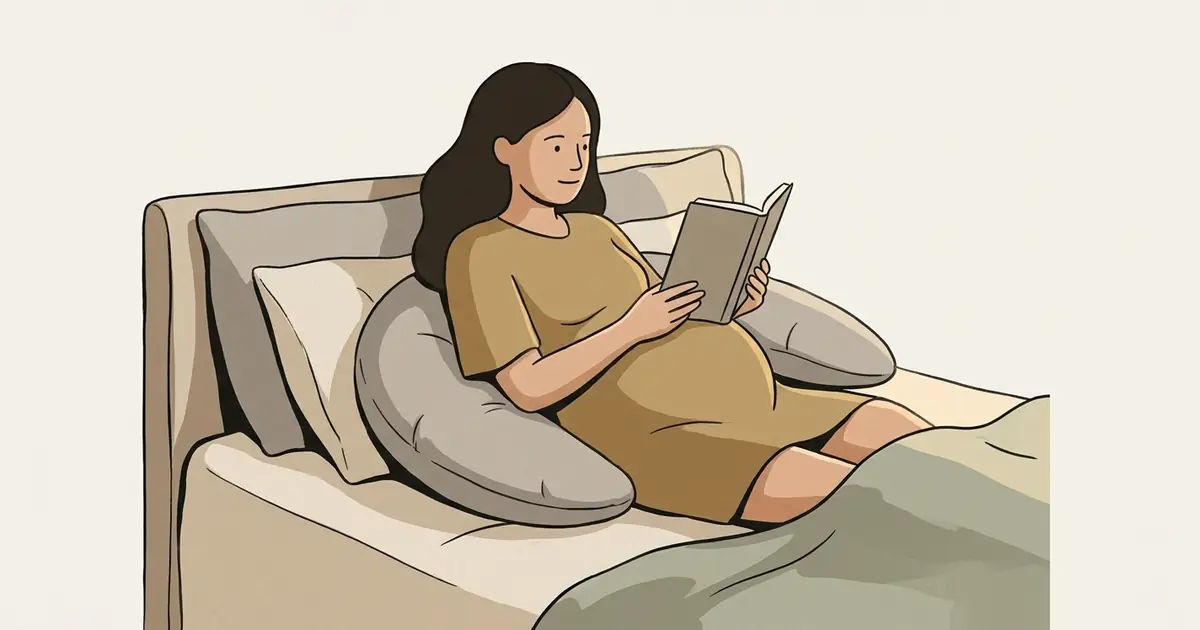 How to use a pregnancy pillow: 5 positions
How to use a pregnancy pillow in 5 positions from about 20 weeks: between the knees, under the bump, behind the back, reclined, and on the lap after birth.
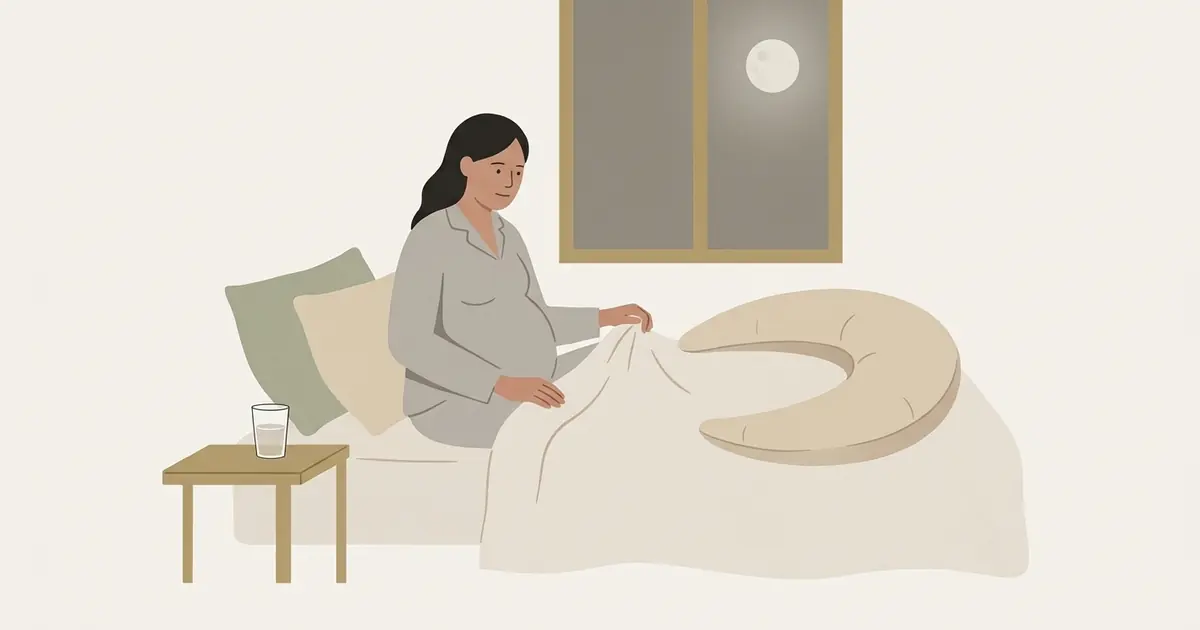 Night sweats during pregnancy: what helps
Night sweats during pregnancy: what the NHS counts as night sweats, when to see a GP, and 6 options for changing bedding, sleepwear and the bedroom.


