
Draft: this guide is waiting for review by a qualified reviewer and is not published yet.
Night sweats during pregnancy: what helps
Night sweats during pregnancy: what the NHS counts as night sweats, when to see a GP, and 6 options for changing bedding, sleepwear and the bedroom.
By Cove editorial team · Updated October 26, 2026 · 4 min read · Editorial standards

Key takeaways
- The NHS defines night sweats as soaking night clothes and bedding even in a cool room.
- Feeling warm is different from soaking night sweats.
- See a GP or midwife if night sweats are regular, wake you, or come with a fever.
- A cool room, layers and breathable fabrics help with comfort.
- Keep spare sleepwear and a spare pillow cover by the bed.
Night sweats in pregnancy can be uncomfortable and are worth mentioning to your midwife. The NHS describes night sweats as sweating so much that your night clothes and bedding are soaking wet, even though the room is cool1. A cool bedroom, thin layers, breathable fabrics and a spare set of sleepwear by the bed all help.
Night sweats or just warm
It helps to tell the two apart.
| Feeling warm | Night sweats | |
|---|---|---|
| What happens | You feel hot and push the covers off | Night clothes and bedding are soaking wet1 |
| Room | Often warm | Can happen even when the room is cool1 |
| What to do | Cool the room, lighter layers | Change, cool down, and mention it to your midwife or GP |
Feeling warm is common and usually responds to changes in the room and bedding. Soaking sweats are worth talking about.
When to get advice
The NHS suggests seeing a GP if you have night sweats regularly that wake you up or worry you, or if you also have a very high temperature or feel hot, cold or shivery1. In pregnancy, contact your midwife or maternity unit too, especially if you feel unwell.
The NHS lists the most common reasons for night sweats as menopause symptoms, anxiety, some medicines, and low blood sugar, among others1. We have not found a reputable source that sets out how common night sweats are in pregnancy specifically [source needed], so we do not give a figure.
Change 1: cool the room
The Sleep Foundation suggests a bedroom around 65 to 68 °F for most people, and explains that the body's temperature naturally drops during sleep2. Close curtains during the day, open a window if safe, and use a fan to move air.
Change 2: layers you can push off
Use a thin sheet as the base layer, with a light blanket you can add or remove. Avoid a single heavy duvet. Layers let you adjust without fully waking.
Change 3: breathable fabrics
The Sleep Foundation explains that bedding and sleepwear can affect how hot you get at night3. Breathable cotton or linen sheets and loose sleepwear help sweat evaporate [source needed].
Change 4: a quick-change kit
Keep these by the bed so a sweat does not mean a full wake-up:
1. A clean set of sleepwear. 2. A small towel. 3. A spare pillowcase and pillow cover. 4. A glass of water. 5. A spare thin sheet to lay over a damp patch.
Change 5: your evening
- Have a lukewarm shower rather than a hot bath before bed.
- Eat your evening meal a few hours before bed.
- Keep drinks cool and caffeine-free in the evening.
Change 6: your pillow setup
Later in pregnancy, the NHS advises falling asleep on your side, left or right4. A body pillow helps you stay there, but it also covers part of your body. Use a breathable cover, keep a spare for wash day, and push the pillow away slightly if you overheat.
The Cove Pregnancy Pillow has a cover that zips off and machine washes cold. Spare covers are sold separately. We make no cooling or moisture claim for the cover fabric.
After a sweat
1. Sit up slowly and change into dry sleepwear. 2. Lay a towel or spare sheet over the damp patch. 3. Drink some water. 4. Settle back on your side. 5. Make a note of the time and how often it happens, to share with your midwife.
Washing
Sweat soaks into pillow covers and sheets. Wash covers more often during weeks with night sweats, at the temperature on the label. Let the pillow itself air out fully before putting a fresh cover on.
Things to avoid
- Do not take medicines to reduce sweating without checking they are suitable in pregnancy.
- Do not pile on extra bedding to stay warm after a sweat; change into dry clothes instead.
- Do not ignore a fever. Contact your midwife or GP.
Read next
- How to sleep cool while pregnant
- Why sleeping on your left side is recommended in pregnancy
- Sleeping during pregnancy, trimester by trimester
A quick comparison of bedding
| Item | Helps with sweats | Notes |
|---|---|---|
| Cotton or linen flat sheet | Light, easy to push off | Wash often |
| Light blanket | Adds warmth you can remove | Keep it folded at the foot of the bed |
| Heavy duvet | Traps heat | Swap for layers |
| Spare pillow cover | Quick change at night | Keep by the bed |
| Towel | Covers a damp patch | Easier than changing sheets at 3 a.m. |
Drinks and food in the evening
Caffeine late in the day can make it harder to settle, and large spicy meals close to bed leave some people warmer at night [source needed]. Keep evening drinks cool and caffeine-free, and eat a few hours before bed if you can.
Keeping track
A simple log helps your midwife or GP. For a week, note the time of each sweat, how wet the bedding was, the room temperature if you know it, and anything else you noticed, such as feeling feverish, anxious or shaky. Bring it to your next appointment. Patterns are easier to discuss than impressions.
Partners and shared beds
If you share a bed, a partner can help by taking the warmer side away from the window, keeping their own heavier blanket, and helping with the quick-change kit. Separate blankets on each side let you keep yours thin without leaving them cold.
This guide is waiting for review by a qualified reviewer.
From Cove


Questions
Many people report feeling hotter at night in pregnancy [source needed]. Soaking night sweats are worth mentioning to your midwife or GP, especially if they are regular.
The NHS describes night sweats as sweating so much that your night clothes and bedding are soaking wet, even though where you are sleeping is cool.
The NHS suggests seeing a GP if you have night sweats regularly that wake you up or worry you, or if you also have a very high temperature or feel hot, cold or shivery.
Thin layers you can push off, and breathable sheets and sleepwear. Keep a spare set by the bed so you can change quickly.
A pillow cannot stop sweating. A breathable, washable cover makes it easier to stay comfortable and change quickly.
Sources
- Night sweats, NHS. Accessed October 26, 2026.
- The best temperature for sleep, Sleep Foundation. Accessed October 26, 2026.
- Why do I get so hot when I sleep?, Sleep Foundation. Accessed October 26, 2026.
- Reducing the risk of stillbirth, NHS. Accessed October 26, 2026.
About the author
The Cove editorial team is the group at Cove that writes our guides. We write them from published guidance and our own product testing, and link every source. About the team
Related guides
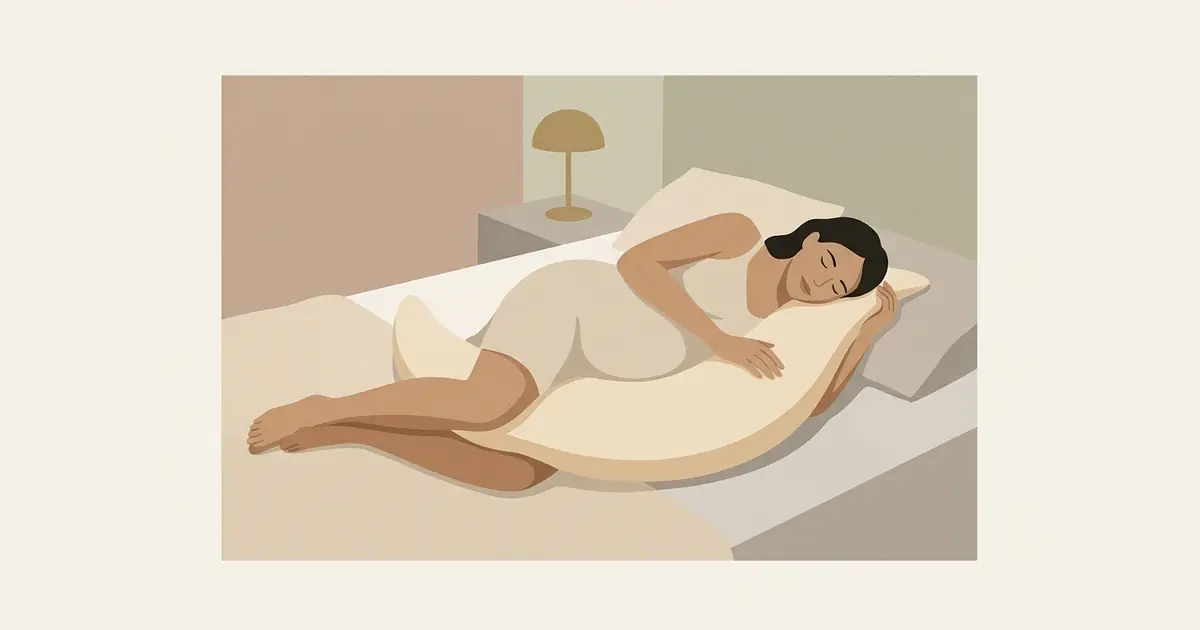 Sleeping during pregnancy, trimester by trimester
: why to move to your side by 28 weeks, what the NHS and ACOG advise, and how pillows help week to week.
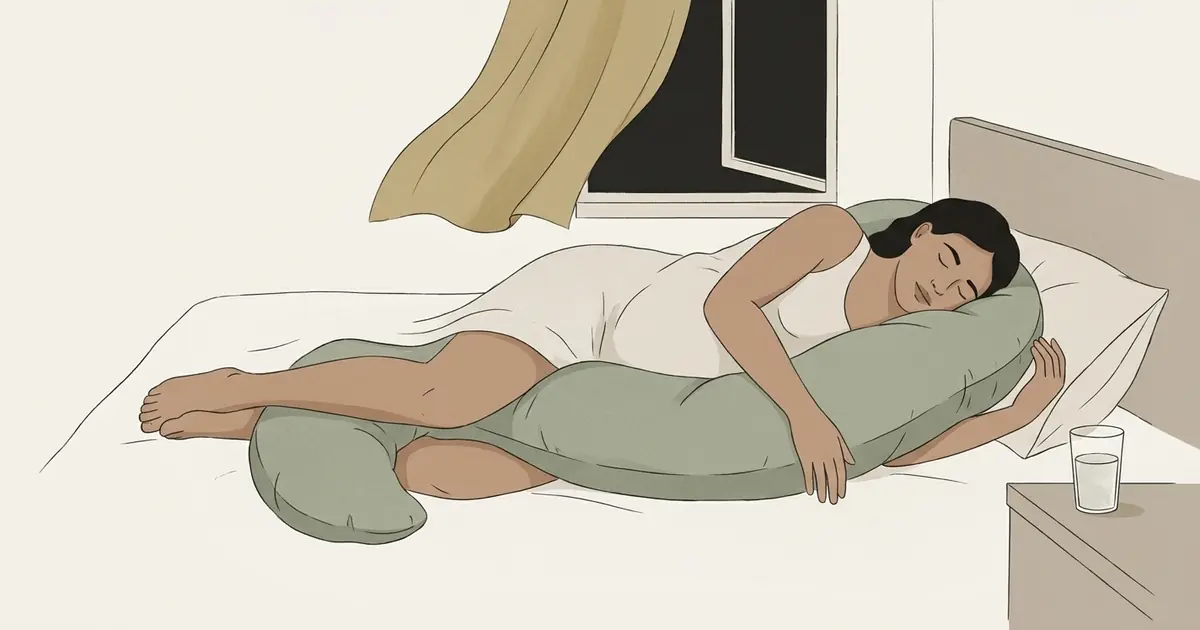 How to sleep cool while pregnant
: a cool room, breathable layers, water by the bed and a light pillow cover. Why you feel hot after 28 weeks, and 5 fixes.
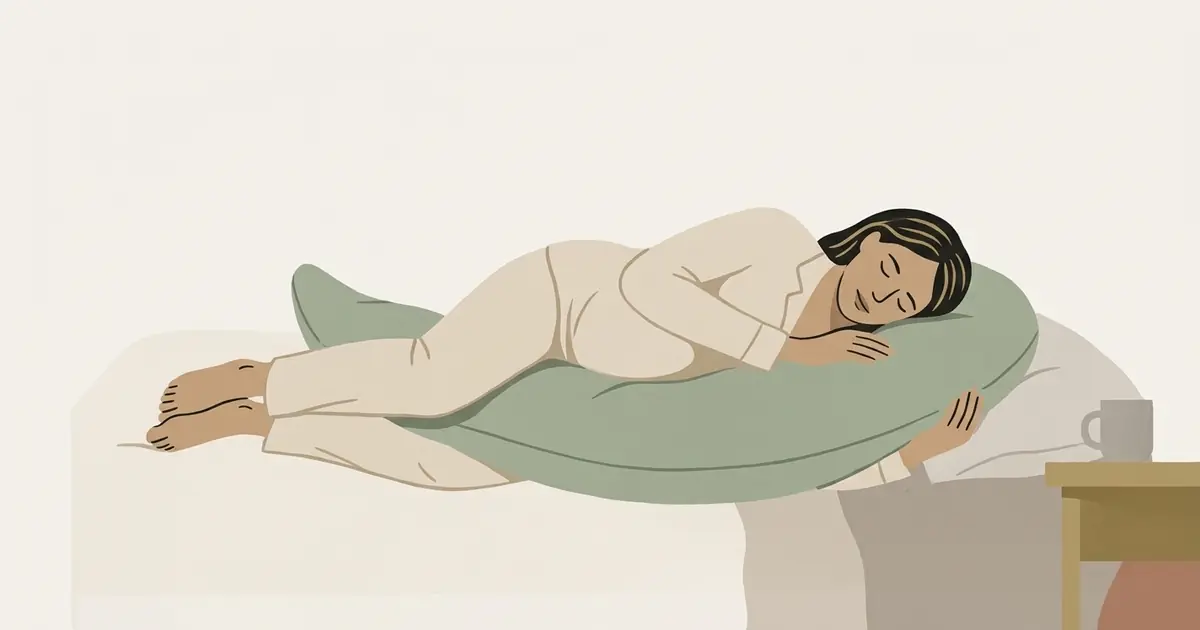 Why sleeping on your left side is recommended in pregnancy
Why sleeping on your left side is advised in pregnancy, what the NHS and ACOG say from 28 weeks, and 5 tips for staying on your side all night.


