
Draft: this guide is waiting for review by a qualified reviewer and is not published yet.
Your baby is sleeping, but you cannot: discussing postpartum insomnia
Postpartum insomnia and broken nights from a newborn are not the same thing.
By Cove editorial team · Updated October 27, 2026 · 7 min read · Editorial standards

Key takeaways
- Postpartum insomnia is not just tiredness from night feeds — it means you cannot sleep even when your baby is settled and you have the opportunity to rest.
- Keeping a brief written record of your sleep pattern before any appointment makes the conversation with your doctor or midwife much more useful.
- Insomnia that persists alongside low mood, hopelessness, or anxiety should be raised promptly rather than waited out.
- Do not start any sleep medicine or supplement without speaking to a clinician first, particularly while breastfeeding.
- Practical sleep-hygiene steps can support recovery, but they are not a substitute for professional assessment when symptoms are significant.
Postpartum insomnia and exhaustion from broken nights look similar, but they are not the same problem. Ordinary newborn sleep disruption is about lost opportunity — feeds and unpredictable wake-ups consume available hours. Postpartum insomnia is an inability to sleep even when a window opens. Separating them matters because each points toward a different response from your care team.
Is this an opportunity problem or a falling-asleep problem?
The first question to ask yourself honestly is whether you are awake because something is keeping you awake, or because your mind and body will not settle even when the house is quiet.
If every time the baby sleeps you are feeding, expressing, or managing other children, your problem is primarily one of insufficient opportunity. That is still serious — sleep plays a major role in mood, memory, and decision-making, and poor sleep in the postpartum period can affect recovery 2 — but it points toward practical help with the load rather than clinical insomnia treatment.
If the baby goes down, the house is still, and you lie awake anyway — watching the clock, unable to quiet your thoughts, or waking after a short cycle and finding it impossible to return to sleep — that is a different pattern. It is worth naming it clearly, to yourself and eventually to your clinician, rather than folding it into general new-parent tiredness.
Some people experience both: disrupted opportunity on some nights, and genuine inability to sleep on others. Keeping a record helps you tell the difference and gives your clinician something concrete to work with.
Record the pattern and associated symptoms
Before raising this at an appointment, spend a few nights noting the basics. You do not need a formal tool — a note on your phone is enough. A structured approach to tracking sleep before appointments is covered in detail in our pregnancy sleep diary to take to your next appointment, which you can adapt for the postpartum period.
Work through this checklist each morning:
- [ ] What time did you lie down with the intention of sleeping?
- [ ] Roughly how long did it take to fall asleep, or did you not fall asleep at all?
- [ ] Did you wake during the night when the baby was settled?
- [ ] If yes, how long were you awake before returning to sleep?
- [ ] What was your mood on waking — anxious, flat, racing thoughts, or relatively calm?
- [ ] Did you feel rested at any point, or persistently unrefreshed?
- [ ] Any other symptoms — low mood, loss of interest in things you normally enjoy, changes in appetite or concentration?
Note the associated symptoms carefully. Sleeplessness that is accompanied by low mood, hopelessness, or loss of interest in everyday activities can be a sign of depression rather than a sleep problem in isolation 1. Those symptoms deserve prompt attention, and recording them alongside the sleep pattern means you arrive at any appointment with a fuller picture rather than trying to reconstruct the last two weeks from memory.
Three or four nights of rough notes is enough to reveal a pattern. If you are waking and lying awake while the baby sleeps, that is the key observation to bring to your clinician.
Share the concern at a postpartum appointment
Postpartum appointments exist precisely for this kind of disclosure, and clinicians expect sleep and mood questions. Many people feel reluctant to raise sleep difficulty because they assume they will simply be told it is part of having a newborn. You are entitled to a more specific conversation than that.
When you do raise it, being concrete helps your clinician direct you toward the right response:
| What to cover | Example of what to say |
|---|---|
| Frequency | "This happened on five of the last seven nights." |
| Sleep-onset difficulty | "It takes me more than an hour to fall asleep even when the baby is settled." |
| Middle-of-night waking | "I wake around 3am and cannot get back to sleep for two hours." |
| Mood symptoms | "I have also felt low and tearful most days this week." |
| What you have already tried | "I have cut out caffeine after midday and kept the room cool." |
Good sleep-hygiene habits form a baseline that supports clinical treatment — they are not a replacement for it 4. Limiting caffeine in the evening, maintaining a consistent wind-down routine, and keeping the bedroom cool are all steps worth mentioning so your clinician knows what you have already tried 1.
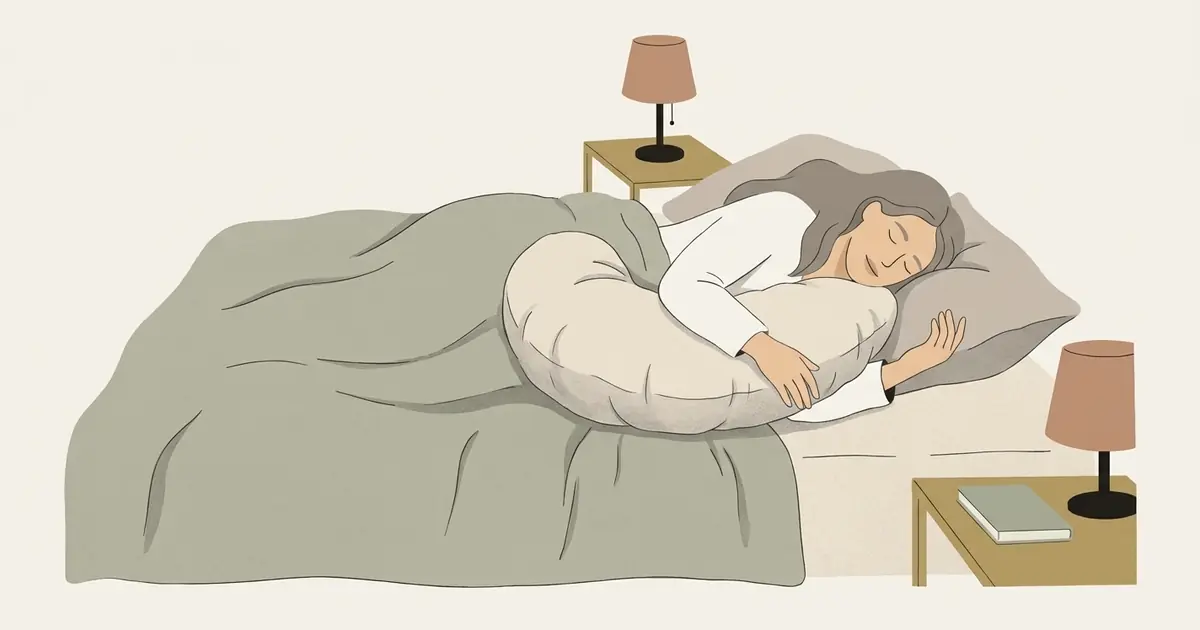
Physical comfort is also part of the picture. Many people continue side sleeping after birth and find that support around the hips and lower back helps them settle into a resting position more easily. The Cove Pregnancy Pillow has a shredded gel memory foam fill you can adjust through an inner zip, allowing you to tailor the loft to your body as it changes postpartum. Comfort alone will not resolve clinical insomnia, but removing a layer of physical restlessness reduces one obstacle to settling. For more on positioning, see our complete guide to sleeping on your side.
Ask about assessment and support options
Once you have described your pattern, ask your clinician directly what assessment or support is available. Depending on your symptoms, they may consider several directions.
**Cognitive behavioral therapy for insomnia (CBT-I).** This is generally considered a first-line approach for chronic insomnia. It addresses the thought patterns and behaviors that perpetuate sleeplessness and does not carry the risks associated with medication.
**Screening for postnatal depression or anxiety.** Because insomnia and mood disorders can be closely linked in the postpartum period, your clinician may use a validated screening tool alongside discussing your sleep. This is routine practice, not a judgment.
**Medication review.** If you are taking any medication postpartum, some types can affect sleep quality or architecture. Your clinician can review whether anything you are already taking might be contributing.
**Sleep environment.Your core body temperature begins to drop around two hours before sleep, and a room that is too hot can interfere with that process 3. Most guidance suggests keeping the bedroom between roughly 65 and 68°F (18–20°C) 3. A fan, lighter bedding, and breathable sleepwear can all help without requiring any change to medication or treatment.
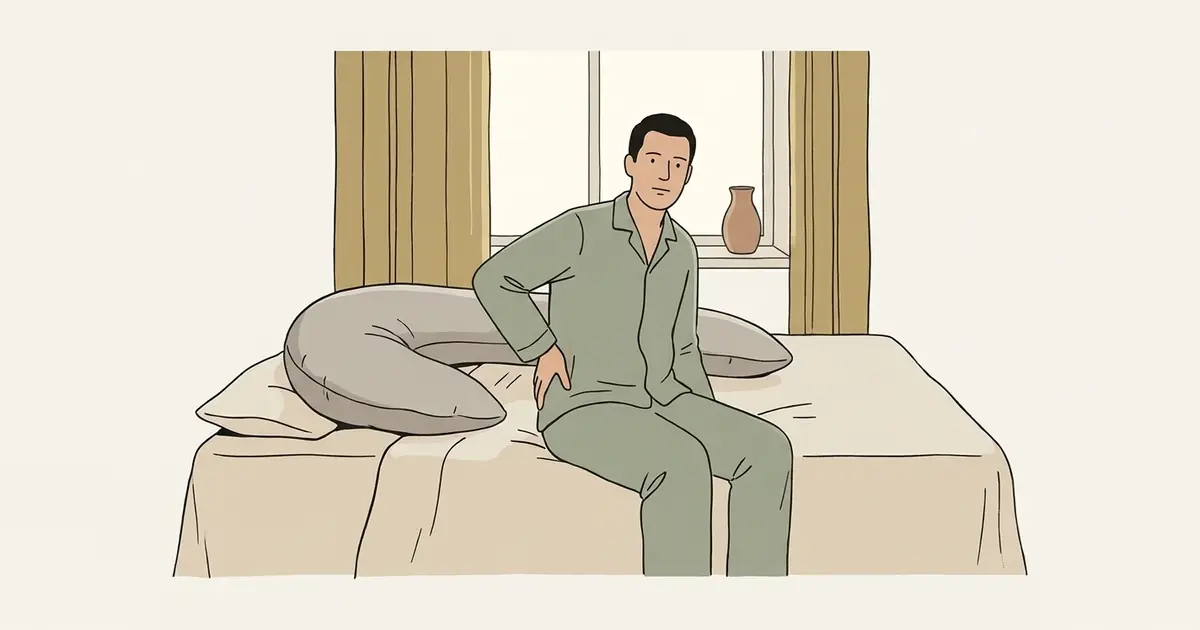
For hip or lower back discomfort that is making it harder to find a comfortable resting position, our guide on how to sleep on your side without hip pain covers practical positioning approaches you can use alongside whatever your clinician recommends.
Know when mood or other symptoms need urgent help
Some symptoms should not wait for a routine scheduled appointment. Contact your doctor or midwife promptly — sooner than your next planned visit — if you experience any of the following:
- Persistent low mood or tearfulness that does not lift across several days
- Feelings of hopelessness, worthlessness, or that your baby or family would be better off without you
- Significant anxiety or panic that is not connected to specific events
- Intrusive or distressing thoughts that you cannot set aside
- Difficulty bonding with your baby alongside the sleep difficulty
- Any thoughts of harming yourself
Sleeplessness accompanied by these kinds of symptoms can indicate postnatal depression, and there is effective treatment available 1. Raising it early consistently leads to better outcomes than waiting to see whether symptoms resolve on their own. The framing does not need to be elaborate — you can simply say that you are not sleeping and that your mood has also been affected, and let your clinician take it from there with follow-up questions.
It is also worth being clear about self-treatment. Many over-the-counter sleep aids, antihistamine-based products, and herbal supplements have not been assessed for safety during breastfeeding. Melatonin is not regulated the same way as a prescription medicine in the United States, and its evidence base in the postpartum context is limited. The safest position is to raise any option with your clinician before trying it, so they can weigh safety against whatever else they may be considering for your care.
Postpartum insomnia is a clinical concern that deserves clinical attention. Naming it accurately, tracking it briefly, and raising it with a doctor or midwife is the clearest path toward the assessment and support that may be available to you. The fact that sleeplessness is common in new parents does not mean your specific pattern of lying awake when you have the opportunity to rest should go unexamined or untreated.
More in this series: start with Sleeping during pregnancy, when worry keeps you awake after birth: how to ask for support and hiring postpartum help: questions about protecting adult rest.
From Cove

Questions
No. Ordinary newborn sleep disruption means your rest is cut short by feeds, settling, and unpredictable wake-ups — your opportunity to sleep is simply limited. Postpartum insomnia is different: your baby is settled, you have a window to rest, and you still cannot fall asleep or stay asleep. Both are exhausting, but they have different causes and may need different responses. If you notice you are lying awake even when nothing is demanding your attention, that pattern is worth documenting and discussing with your doctor or midwife rather than attributing it purely to having a newborn.
Be as specific as you can. Note roughly how long it takes you to fall asleep, whether you wake and cannot get back to sleep, how many nights in the past week this has happened, and whether you feel anxious or low in mood. If you have been keeping a simple sleep log, bring it. Mention any other symptoms — changes in appetite, concentration, or how you feel about daily activities — because insomnia can sometimes accompany postnatal depression or anxiety, and your clinician will want to consider the full picture. The more concrete detail you can provide, the easier it is for them to direct you toward the right assessment or support.
No. Many over-the-counter sleep aids and supplements, including antihistamine-based products and herbal preparations, have not been assessed for safety during breastfeeding, and some carry risks for the postpartum period more broadly. The same applies to melatonin, which is not regulated the same way as a prescription medicine and has limited evidence in this specific context. Always speak to your doctor or midwife before starting anything, so they can weigh up safety alongside any other treatment they may be considering for you.
If you have had multiple nights in the same week where you cannot sleep despite having the opportunity, it is reasonable to bring it up at your next scheduled postnatal appointment rather than waiting to see whether it resolves. If the sleeplessness is accompanied by persistent low mood, feelings of hopelessness, or significant anxiety, do not wait for a routine appointment — contact your doctor or midwife sooner.
Physical comfort can be one piece of the picture. Many people continue using a body pillow after birth to support side sleeping and ease hip or back discomfort. The Cove Pregnancy Pillow is designed for side sleepers and has an adjustable shredded gel memory foam fill so you can change the firmness to suit you after your body has changed postpartum. That said, a pillow addresses comfort — if you have a true difficulty falling or staying asleep, that needs clinical attention alongside any comfort measures.
Yes. Your core body temperature drops in the lead-up to sleep, and a room that is too hot can interfere with that process. Most guidance places the comfortable sleep temperature between 65 and 68°F (18–20°C). Keeping the room cool with a fan, light bedding, and breathable sleepwear can reduce one layer of difficulty, though it will not resolve insomnia on its own if there is an underlying cause.
Sources
- Tiredness and sleep problems in pregnancy, NHS. Accessed October 27, 2026.
- Pregnancy and sleep, Sleep Foundation. Accessed October 27, 2026.
- The best temperature for sleep, Sleep Foundation. Accessed October 27, 2026.
- Sleep hygiene, Sleep Foundation. Accessed October 27, 2026.
About the author
The Cove editorial team is the group at Cove that writes our guides. We write them from published guidance and our own product testing, and link every source. About the team
Related guides
 A pregnancy sleep diary to take to your next appointment
Follow 3 steps to log sleep timing, awakenings, and symptoms over a few nights so your doctor or midwife has something concrete to work with.
 The complete guide to sleeping on your side
How to sleep on your side: line up your head, shoulders and hips, choose the right pillow height, and support your knees and back. Five fixes in 3 minutes.
 How to sleep on your side without hip pain
Side sleeping hip pain often starts with the top knee dropping. A pillow between the knees eases hip pressure. Four setup steps and a 100 night trial.


