
Side sleeping and lower back pain
Side sleeping and lower back pain: how knee and back support keep the spine level, 3 pillow setups to try over 7 nights, and when the NHS says to get help.
By Cove editorial team · Updated October 26, 2026 · 4 min read · Editorial standards

Key takeaways
- On your side, a dropping top knee twists the pelvis and the lower back.
- Knees slightly bent with a pillow between them may take strain off the lower back.
- A mattress that sags lets the waist drop and bends the spine sideways.
- The NHS advises staying active rather than resting in bed for long periods.
- Some back pain needs urgent care; the warning signs are listed below.
Side sleeping can be comfortable with lower back pain if your spine stays level. The Sleep Foundation says sleeping on your side with your knees slightly bent and a small pillow between them may take strain off the lower back1. A pillow behind you stops you rolling back, and a mattress that does not sag keeps your waist level.
How side sleeping strains the lower back
Three things commonly twist or bend the lower back on your side. The top knee falls forward onto the mattress and rotates the pelvis. The waist sinks into a soft or sagging mattress and the spine bends sideways. Or you drift halfway onto your stomach, which arches and twists the lower back at the same time.
Each one is small, but you hold it for hours. That is why back pain from sleep position often feels worst in the first hour after waking, then eases as you move.
Setup 1: knees bent, pillow between
Lie on your side with knees bent about 30 to 45 degrees, stacked one on top of the other. Put a pillow between your knees thick enough to hold your top knee level with your hip. This is the position the Sleep Foundation suggests for taking strain off the lower back1.
If you can, extend the support down to the ankle so the whole top leg is level. Our guide to sleeping with a pillow between your knees covers thickness and options.
Setup 2: support behind your back
If you wake up on your back or halfway onto your stomach, the problem is drift. A pillow wedged behind your back, from shoulder blade to hip, stops the roll backward. One hugged in front of you stops the roll forward.
This is also useful if you are trying to move from stomach sleeping to side sleeping, which many people find easier on the lower back. The Sleep Foundation notes side sleeping can help relieve some pain3.
Setup 3: fill the waist gap
On a firm mattress, people with wider hips can have a gap at the waist, so the spine sags down into it. On a soft mattress the opposite happens and the waist sinks. Either can bend the spine sideways.
1. Lie on your side and slide a flat hand under your waist. 2. If there is a large gap, a thin folded towel under the waist can level it. 3. If you cannot fit your hand at all, the mattress may be sagging.
A towel is a short-term fix. A mattress that sags in the middle usually needs replacing.
The three setups compared
| Setup | What it fixes | What you need | Try first if |
|---|---|---|---|
| Knees bent, pillow between | Pelvis twisting | A knee pillow or body pillow | Your back is stiff on waking |
| Support behind | Rolling back or onto stomach | A pillow behind you | You wake in a different position |
| Fill the waist gap | Spine bending sideways | A thin towel | Your mattress is firm or sagging |
The fetal position
Curling up on your side is common when your back hurts. A gentle bend at the hips and knees is usually fine. Very tight curling, with knees pulled up to the chest, rounds the lower back for hours, and some people find this leaves them stiffer in the morning.
If you like to curl, try a looser version with a pillow between the knees and something to hug. The Sleep Foundation describes the fetal position as a curled-up variation of side sleeping1.
What the NHS suggests for back pain
The NHS advice on back pain focuses on staying active2. It suggests:
- keep moving and continue your daily activities as much as possible
- try exercises and stretches for back pain
- use a heat pack or hot water bottle wrapped in a tea towel to relieve stiffness or muscle spasms
- do not stay in bed for long periods
Position at night supports this but does not replace it. A good setup can mean you start the day less stiff, which makes it easier to stay active.
When to get help
The NHS advises getting an urgent GP appointment or help from 111 if you have back pain and feel hot, cold, shivery or generally unwell, or if the pain is severe and starts suddenly or gets worse quickly2. The same page lists further signs that need emergency care, so read it if your pain is new or unusual. Do not wait to try a new pillow if any of those apply.
For pain that is not urgent but is not improving, a GP or physiotherapist can look for the cause.
Choosing one pillow for all three setups
A crescent body pillow can do setups 1 and 2 at once: one tip between the knees, the curve in front of your chest, and the other tip tucked behind if you roll. The Cove Pregnancy Pillow is 52 inches tip to tip. Its shredded memory foam fill adjusts through an inner zip, so you can make the knee section firmer. It comes with a 100 night trial.
For the rest of the side sleeping setup, including head pillow height, see the complete guide to sleeping on your side.
A one week plan
1. Nights 1 to 3: setup 1 only. 2. Nights 4 to 5: add support behind your back. 3. Nights 6 to 7: check the waist gap and adjust. 4. Day 8: if there is no change, or the pain is worse, see a GP.
Keep reading
From Cove

Questions
For many people, yes. The Sleep Foundation describes side sleeping with the knees slightly bent and a small pillow between them as a position that may take strain off the lower back.
A gentle bend at the knees and hips is usually more comfortable than curling tightly. Very tight curling rounds the back for hours, which some people find makes morning stiffness worse.
The NHS advises not staying in bed for long periods and keeping as active as you can, with exercises and stretches for back pain.
The NHS suggests a heat pack or hot water bottle wrapped in a tea towel to relieve stiffness or muscle spasms. Do not fall asleep with it against your skin.
One that lets your shoulder and hip sink slightly while keeping your waist from dropping. Very soft or sagging mattresses bend the spine; very firm ones push on the hip.
Sources
- What is the best sleeping position?, Sleep Foundation. Accessed October 26, 2026.
- Back pain, NHS. Accessed October 26, 2026.
- Side sleeping, Sleep Foundation. Accessed October 26, 2026.
About the author
The Cove editorial team is the group at Cove that writes our guides. We write them from published guidance and our own product testing, and link every source. About the team
Related guides
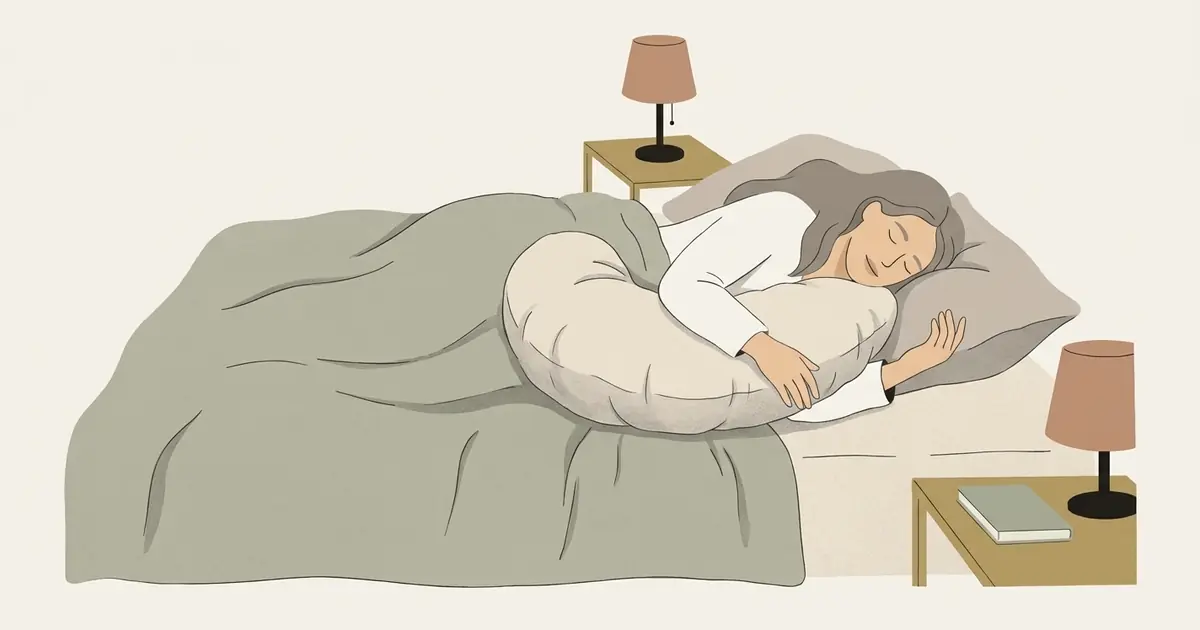 The complete guide to sleeping on your side
How to sleep on your side: line up your head, shoulders and hips, choose the right pillow height, and support your knees and back. Five fixes in 3 minutes.
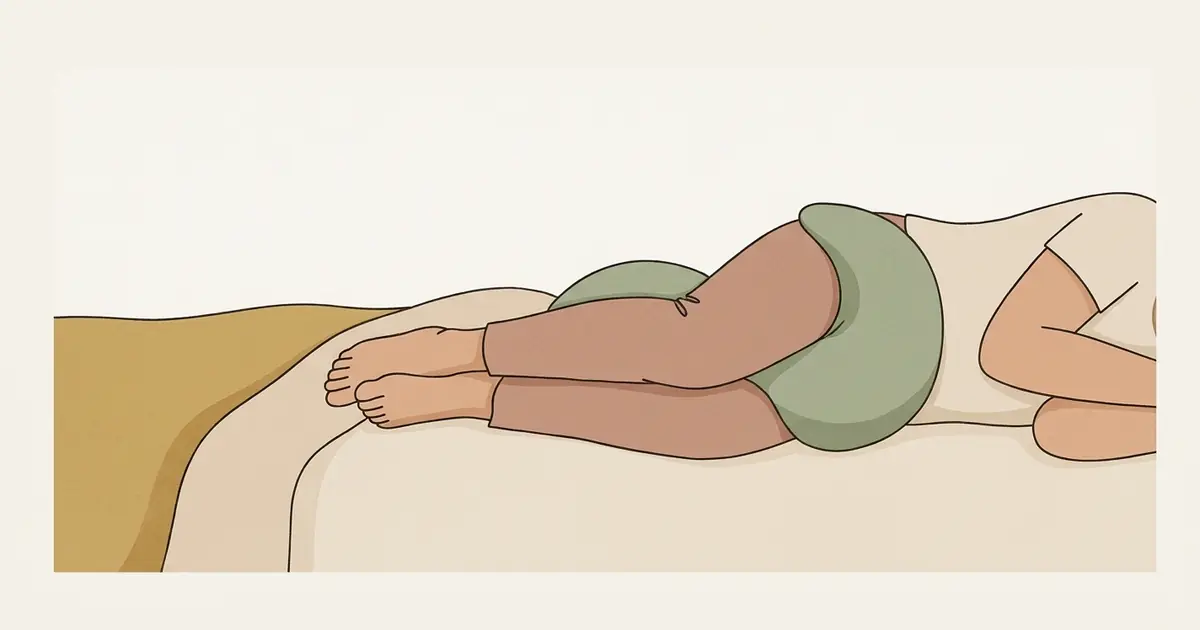 Should you sleep with a pillow between your knees
Sleeping with a pillow between your knees can relieve hip pressure and keep your legs level. Who it helps, how thick it should be, and 3 options.

