
Before buying a heavy body pillow: a handling checklist
Before you buy, run a trial with turning, cover fitting, bed making, and carrying.
By Cove editorial team · Updated October 27, 2026 · 7 min read · Editorial standards

Key takeaways
- Actual filled weight tells you more than a photo or a size description.
- A pillow you can reposition quickly at night matters as much as how it feels when still.
- Cover changes on a long curved pillow take more effort than on a standard pillow — checking the zip style first saves frustration.
- A smaller travel pillow is not automatically lighter, but it is easier to pack and carry between rooms.
- If stairs, limited storage, or frequent travel are part of your routine, size and packability deserve as much thought as firmness.
A heavy body pillow can feel reassuring at first, yet become a daily friction point if it does not suit how you actually move it. Before weight becomes your main deciding factor, consider repositioning in bed, fitting and removing the cover, making the bed, and carrying the pillow between rooms or on a trip.
Check actual filled weight rather than judging by photos
Product photos compress scale. A pillow that looks compact online can measure 52 in [132 cm] along the curve and weigh several pounds once filled — proportions that only become clear when you hold it. When you review a product page, look for the stated filled weight, not just the dimensions.
Fill type affects weight differently from what you might expect. Shredded foam fills tend to be lighter per unit of volume than solid foam or water-based constructions, which is part of why they appear frequently in body pillows designed for regular repositioning. If a pillow lists an adjustable fill — such as the inner zip on the Cove Classic — the stated weight is a maximum. You can remove fill to bring the weight and loft down to a level that suits your handling preferences, which changes both how the pillow feels and how easy it is to shift at night.
Note also that a pillow becomes much heavier when wet 1. If you ever need to wash the entire inner, that wet weight affects how easily you can transfer it from the machine to the dryer. A design with a removable, separately washable cover avoids this problem in routine use 2. Solid memory foam pillow inners should not be machine washed at all, as it can cause the foam to crack or degrade 1, so knowing what type of fill you are buying matters before the first wash day arrives. Shredded memory foam pillows can often be washed, but it is always important to check any instructions provided by the manufacturer 2.
Consider turning and moving the pillow in bed
Side sleepers shift position multiple times a night 3. Each time you turn over, you either move the pillow with you or push it aside — and a pillow that takes real effort to shift will interrupt your sleep in a way that quickly outweighs any comfort it provides when you are lying still.
The relevant questions are practical ones: Can you lift and reposition it with one arm while half-awake? Does the curved shape stay oriented correctly after a quick reposition, or does it need careful re-alignment each time? A crescent has a directionality that a straight pillow does not, so ease of repositioning is worth thinking through before you buy rather than discovering it at 3 a.m.
For a full look at technique as well as shape considerations, see How to turn over comfortably with a body pillow. It covers both what to do in the moment and what to look for when choosing a pillow for this purpose.
If you find a pillow tends to migrate during the night, How to stop a body pillow slipping out of place offers practical fixes that apply regardless of pillow weight.
Think through fitting a cover and making the bed
Changing a cover on a full-length curved pillow is different from changing a standard pillowcase. The curve adds length you cannot simply shove in from one end, and a short zip opening makes the job harder than it needs to be. Spending a few minutes thinking this through before purchase saves a surprising amount of frustration on laundry day.
Use this checklist before buying:
- [ ] Does the zip run the full length of the curve, or only partway?
- [ ] Is the cover designed to be fully removed, or does it unzip and fold back in place?
- [ ] Can you machine wash the cover on its own without washing the entire filled pillow?
- [ ] Is the fabric stretchy enough to allow the cover to go on and come off without a struggle?
- [ ] How does the pillow sit on the bed once covered — does it take up more space than you expected?
- [ ] Do you have enough floor or bed space to lay the pillow flat while fitting the cover?
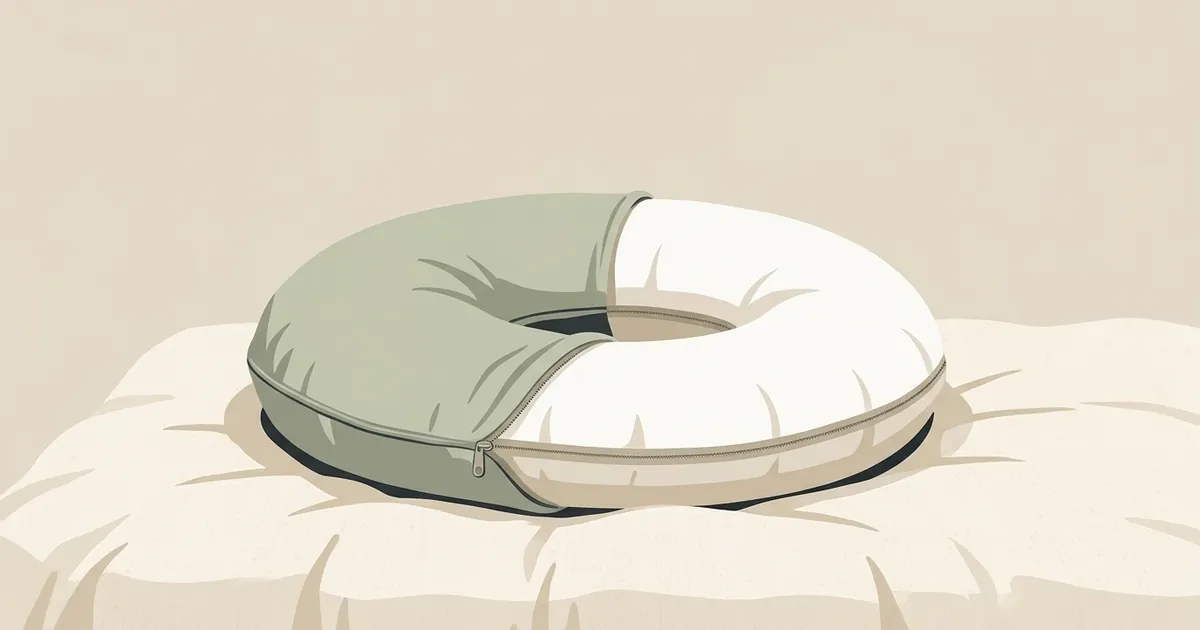
The Cove Classic and Cove Mini both use a zip-off cover that comes away entirely from the inner, so cover changes happen with the filled pillow resting flat on the bed rather than requiring you to wrestle the whole assembly upright. The cover is machine washable cold, which keeps the routine straightforward 2. For a step-by-step approach to the cover-fitting process, see How to put a cover on a crescent body pillow.
For daily bed-making, a long body pillow adds one extra step: you need somewhere to rest it while you straighten the sheets. A pillow that can lean against a wall or fold onto a chair without losing its shape is easier to manage than one that flops awkwardly and requires reshaping before use. This is worth testing if you can visit a showroom, or at minimum worth picturing clearly before you order.
Allow for stairs, storage, and travel
Think about the full range of places your pillow will go over a 100-night trial period. Most people move a body pillow more than they anticipate — between the bedroom and couch, to a spare room for a guest, or into a bag for a trip away from home.
**Stairs:** A full-length crescent measuring around 52 in [132 cm] along the curve is awkward to carry up a staircase with one hand. If your bedroom is on a different floor from your laundry room or living area, consider how often you will be making that trip and whether the size feels manageable given your home's layout.
**Storage:** When the pillow is not in use, it needs to go somewhere. A crescent shape does not stack easily with flat bedding. Before buying, check whether you have a shelf, closet space, or a storage bag that can accommodate the pillow without compressing the fill permanently. Compressed fill takes time to recover its loft, so tight storage is worth planning around.
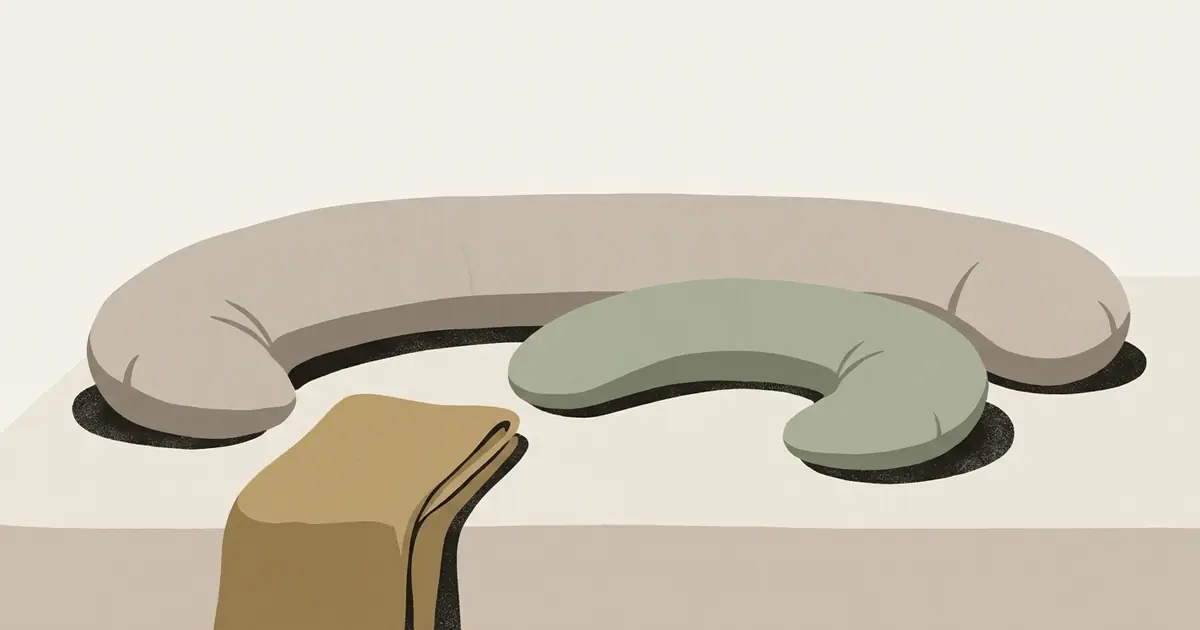
**Travel:** A travel-size crescent — like the Cove Mini — is specifically designed to pack into a suitcase. It also works as a knee pillow, a back support on a couch, or a secondary support when the full-size pillow is too large to bring along. If you travel frequently or want a second pillow for a different room, the size difference is worth comparing directly.
| Scenario | Full-size crescent (e.g., 52 in / 132 cm) | Travel crescent |
|---|---|---|
| Regular side sleeping in bed | Well suited | Fine for some; shorter than full body length |
| Moving between rooms frequently | Manageable but bulky | Easy |
| Packing into a suitcase | Not practical | Designed for this |
| Knee or back support on a couch | Usable but oversized | Better fit |
| Cover changes in a compact space | Requires full bed or floor space | Easier to handle |
For a direct comparison of dimensions across sizes, see What size body pillow do I need.
Choose a size you can comfortably handle
The right size is the one you will actually use consistently — not the largest option or the one with the most fill. A pillow that ends up on the floor because repositioning it feels too disruptive has not improved your sleep, regardless of how supportive it might be when perfectly placed.
Weight preferences are personal, and the checklist above is designed for general use. If you have any ongoing discomfort that affects how you lift or carry objects, speak to your doctor before selecting a fill weight. The guidance here does not cover handling for injuries or mobility limitations and is not a substitute for personal medical advice.
For most people, the practical test is straightforward: picture picking the pillow up one-handed at 2 a.m., turning over, and setting it down on the other side of your body. If that image feels easy with the weight and dimensions you are considering, the pillow is likely a good fit. If it feels like it would wake you fully each time, consider a smaller size or a lower fill level before your trial period begins. Starting with slightly less fill is always easier than discovering mid-trial that the pillow is consistently left untouched because handling it feels like too much work.
More in this series: start with the body pillow buying guide, choosing a sleep mask that works with side sleeping and how to keep your duvet from tangling around a body pillow.
From Cove


Questions
Not necessarily. A denser fill can offer firmer support, but a pillow that is difficult to reposition at night or lift out of a cover becomes a daily inconvenience. What matters is whether the weight suits your handling routine — how often you turn over, whether you wash the cover regularly, and how far you carry the pillow. Choose a fill weight you can move comfortably, not the heaviest option available.
Start with the zip design. A full-length zip that runs the entire curve of the pillow is easier to work with than a short opening at one end. Lay the pillow flat on the bed rather than holding it upright, feed the narrow end in first, then walk the cover down the length. The Cove Classic uses a zip-off cover you remove completely before washing, so the pillow inner stays on the bed while you deal with the cover separately. See the step-by-step walkthrough in our guide on how to put a cover on a crescent body pillow.
A smaller pillow is typically lighter, but the gap can be narrower than you expect if both models use the same fill type and density. The more reliable advantage of a smaller pillow — like a travel crescent — is that it packs into a suitcase, fits on a couch, and moves between rooms without much effort. If portability is your main concern, size and packability matter more than the weight figure alone.
Yes, if the pillow has an adjustable fill. The Cove Classic uses shredded gel memory foam with an inner zip, so you can remove some fill to reduce overall weight and make the pillow easier to turn and reposition. Removing fill also changes the loft and firmness, so make small adjustments and sleep on the result before removing more.
Pillows absorb a significant amount of water during washing and become noticeably heavier and harder to handle wet than dry. This is one reason it is worth checking whether a pillow's cover is removable and machine washable on its own — washing only the cover rather than the entire filled pillow avoids the wet-weight problem in most cases. For the Cove Classic and Cove Mini, the zip-off cover goes in the machine cold while the inner stays dry.
Sources
- How to wash pillows, Sleep Foundation. Accessed October 27, 2026.
- How to wash pillows, Sleep Foundation. Accessed October 27, 2026.
- Side sleeping, Sleep Foundation. Accessed October 27, 2026.
About the author
The Cove editorial team is the group at Cove that writes our guides. We write them from published guidance and our own product testing, and link every source. About the team
Related guides
 How to put a cover on a crescent body pillow
Fit a crescent body pillow cover in 2 minutes with 6 steps: seat each tip first, work hand over hand along the curve, then close the zipper slowly.
 How to turn over comfortably with a body pillow
Change sides in bed without fighting your body pillow: 3 options for moving it, leaving it in place, or resetting it, plus duvet and shared-bed tips.
 What size body pillow do I need
What size body pillow you need depends on your height and bed. A 52 inch crescent suits most adults from 5 ft to 6 ft 4 in; 36 inches suits smaller frames.


