
How to put a cover on a crescent body pillow
Fit a crescent body pillow cover in 2 minutes with 6 steps: seat each tip first, work hand over hand along the curve, then close the zipper slowly.
By Cove editorial team · Updated October 27, 2026 · 6 min read · Editorial standards

Key takeaways
- Open the cover fully before you start and confirm the zipper runs along the inner straight edge of the crescent, not the outer curve.
- Feed one end of the pillow into the cover first and seat it fully into its corner before working along the curve.
- Keep the pillow flat on a supported surface so the fill stays distributed and you have both hands free throughout.
- Never pull on the zipper teeth to force a gap closed — redistribute the fill through the inner zip port first if the cover feels overfull.
- Stop if the seams are pulling tight; the most common cause is a cover sized for a different pillow.
Fitting a cover on a crescent body pillow takes about two minutes once you understand the shape. The zipper runs along the straight inner edge, and the pillow loads tip-first rather than all at once. Getting the first end seated correctly before moving further along the curve keeps the process smooth and the zipper free of strain.
Check the cover orientation and opening
Before you touch the pillow, lay the cover flat on a clean surface — a bed or large table both work — and find the zipper. On covers designed for a crescent pillow, the zipper runs along the inner straight edge, which is the shorter, flatter side of the curve. Open it completely from one end to the other so the cover forms a wide, open tube.
Check inside the cover for a care label. The label will tell you which pillow size the cover fits and may list wash instructions worth noting before your first launder. 1 If you are working with a Cove cover, the removable zip-off cover is machine washable cold, so keeping that in mind will save time later — the full washing steps are in the how to wash a body pillow guide.
Also confirm the cover is right-side out. A cover that looks nearly identical on both faces can still be loaded inside-out if there is a logo or label on the outside face.
The care label is also your first check on whether the cover carries a textile-safety certification. OEKO-TEX STANDARD 100, for instance, tests every component of a textile — including threads and accessories — against a list of over 1,000 harmful substances, with stricter requirements applied when the product has direct skin contact. 3 The pillow certifications guide goes into more detail on what those marks mean.
Place the pillow on a clean supported surface
Set the pillow flat on the same surface so it is fully supported along its length. A crescent pillow — the Cove Classic is about 52 in [132 cm] along the outer curve — is awkward to fit a cover on while you are holding it in the air. A flat surface lets the fill settle evenly and keeps both your hands free to guide the fabric.
If the pillow has been compressed in storage or the fill has shifted, give it a gentle shake to redistribute the shredded fill before you start. A lopsided distribution makes the finished fit look uneven and can put unequal tension on the cover seams.
Work the ends into position without pulling on the zipper
This is the step most people rush, and the source of most zipper problems.
Pick one end of the crescent — either end works, though starting with whichever feels slightly less dense is easier — and guide it into the corresponding corner of the cover. Push the pillow end all the way to the corner seam so the fabric is not bunched. Only once that end is properly seated should you advance along the curve.
Use a hand-over-hand motion: hold the cover fabric with one hand and feed the pillow further in with the other, smoothing the fabric over the curve as you go. Think of it less like stuffing and more like rolling a sleeve up an arm — you are guiding the cover over the pillow rather than pushing the pillow through the cover.
Keep the zipper open and pointing away from you so the fabric can spread freely as you work. Trying to close the zip before both ends are fully seated is the most common cause of a jammed slider.
Here is a summary of the full fitting sequence:
| Step | Action | Watch out for |
|---|---|---|
| 1 | Open zip fully, lay cover flat | Cover loaded inside-out |
| 2 | Lay pillow on a flat surface | Fill bunched at one end |
| 3 | Seat first end fully into corner | Fabric bunching before end is fully in |
| 4 | Work along the curve hand over hand | Pulling on zip teeth to stretch fabric |
| 5 | Seat second end fully into corner | Second corner not filled out |
| 6 | Close zip slowly from one end | Fabric caught in the teeth |
Distribute the inner pillow along the curve
Once both ends are seated and the cover is over the entire pillow, run your hands along the outer curve and the inner edge to check that the fill is even. A shredded fill — such as the shredded gel memory foam in the Cove Classic — can settle toward the middle during fitting, leaving the tips of the crescent feeling flat and thin.
If you notice uneven density, grip a tip of the pillow through the cover and give it a gentle shake so the fill moves outward. You can also use your fingertips to press and loosen any clumps you feel through the fabric. 2 Working shredded fill back into shape after it has bunched is much easier at this stage, before the zip is closed, than trying to redistribute it later through the cover.
The Cove Mini uses the same cover and fill approach in a smaller, travel-ready format, so these same distribution steps apply when fitting a cover to the Mini.
If the fill density is still uneven after redistribution, open the cover, locate the inner fill zip on the pillow itself, and adjust from there. Remove a small amount if the pillow is overfull for the cover, or add some back if the tips feel too flat. Replacing the cover after a fill adjustment usually takes under a minute.
Close gently and stop if seams or the zipper are under strain
With the fill distributed evenly, close the cover zip from one end, moving the slider steadily rather than in jerks. Keep one hand lightly on the fabric just ahead of the slider so you can feel and clear any bunching before the slider reaches it.
Work through this checklist before calling the cover fitted:
- [ ] Zipper closes fully from end to end with no fabric caught in the teeth
- [ ] Both tips of the crescent fill their corners — no visible empty pockets in the cover
- [ ] Outer curve seam sits on the outside edge of the pillow, not twisted inward
- [ ] Inner seam lies flat against the straight edge without puckering
- [ ] No section of the cover fabric is pulled taut enough to distort the seam stitching
- [ ] Zip pull is tucked to the side you prefer, such as toward the mattress
If the zipper will not travel all the way to the end, stop. Check for fabric in the teeth first. If the fabric is clear and the zip still resists, the fill is too dense for the cover at that point: open the inner fill zip, move some fill away from the resistant area, then try the outer zip again. 1 A zip that is forced past resistance can split the seam or bend the slider, which is harder to fix than redistributing fill.
If the cover seams are pulling visibly tight even after redistributing fill, the cover is likely the wrong size for this pillow. The body pillow cover fit guide explains how to match cover dimensions to your pillow before you buy. Forcing the wrong cover onto a pillow will not give a usable result regardless of how much fill you remove.
Once the zip is closed and the checklist is clear, the pillow is ready to use. When it is time to launder the cover, unzip it fully, pull it free using the same tip-first technique in reverse, and follow the care label. The full care steps — including wash temperature and drying guidance specific to the cover material — are in the how to wash a body pillow guide. 2
More in this series: start with the body pillow buying guide, why is my body-pillow cover bunching or twisting? and pillowcase vs pillow protector: do body pillows need both?.
From Cove


Questions
Start with whichever end of the crescent is slightly easier to compress. On the Cove Classic, both ends are similar in diameter, so pick either one. The key is to seat that first end fully into its corner of the cover before advancing along the curve. Trying to feed both ends in at once tends to bunch the fabric and makes the zipper harder to close.
Only if the cover is the correct size for your pillow and the fit is still tight — for example, if you have previously added extra fill through the inner zip port. The Cove Classic uses a shredded gel memory foam fill you can adjust through an inner zip, so you can temporarily remove a small amount, fit the cover, then add fill back until you reach your preferred firmness. Do not remove fill just to force a cover that is the wrong size onto the pillow; a cover meant for a different pillow will never sit properly and will strain the zipper. Check the [size guide](/guides/body-pillow-size) before adjusting fill.
First check that the fabric is not caught in the zipper teeth — run your finger along the seam on both sides and clear any bunching before you try again. If the zipper still resists, the fill is most likely too dense near the zip end: open the inner fill zip and move some fill toward the middle of the pillow, then try closing the outer cover zip again. If it still will not close after redistributing fill, the cover may be the wrong size. Never force a zip that is under tension, as this can split the seam or break the slider.
Functionally the pillow works either way, but most people prefer the zipper pull tucked toward the mattress so it does not press against their body during sleep. Once the cover is fully closed, rotate the pillow so the zip sits along whichever edge you will not be resting against.
The removable cover is designed to make regular laundering practical without having to deal with the inner pillow each time. The Cove Classic and Cove Mini covers are machine washable cold. Wash it as often as the care label inside the cover suggests, and let it dry fully before putting it back on the pillow.
Sources
- How to wash pillows, Sleep Foundation. Accessed October 27, 2026.
- How to wash pillows, Sleep Foundation. Accessed October 27, 2026.
- OEKO-TEX STANDARD 100, OEKO-TEX. Accessed October 27, 2026.
About the author
The Cove editorial team is the group at Cove that writes our guides. We write them from published guidance and our own product testing, and link every source. About the team
Related guides
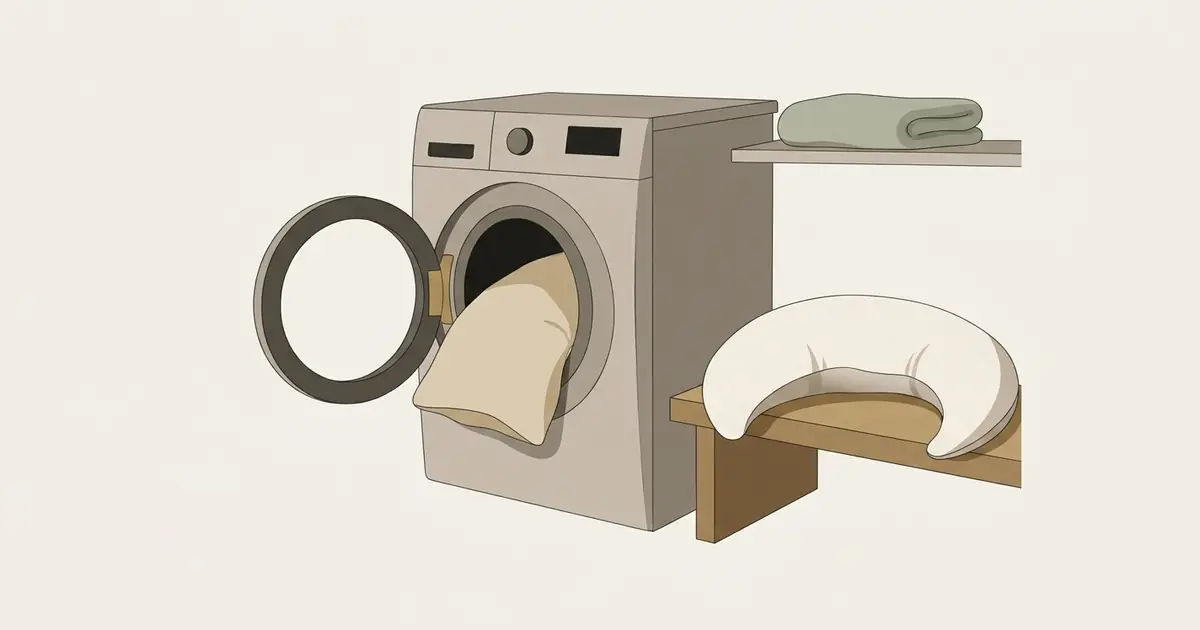 How to wash a body pillow and its cover
: wash the cover cold, spot clean the pillow, dry it fully. Steps for plain, heated and cooled pillows in 5 minutes.
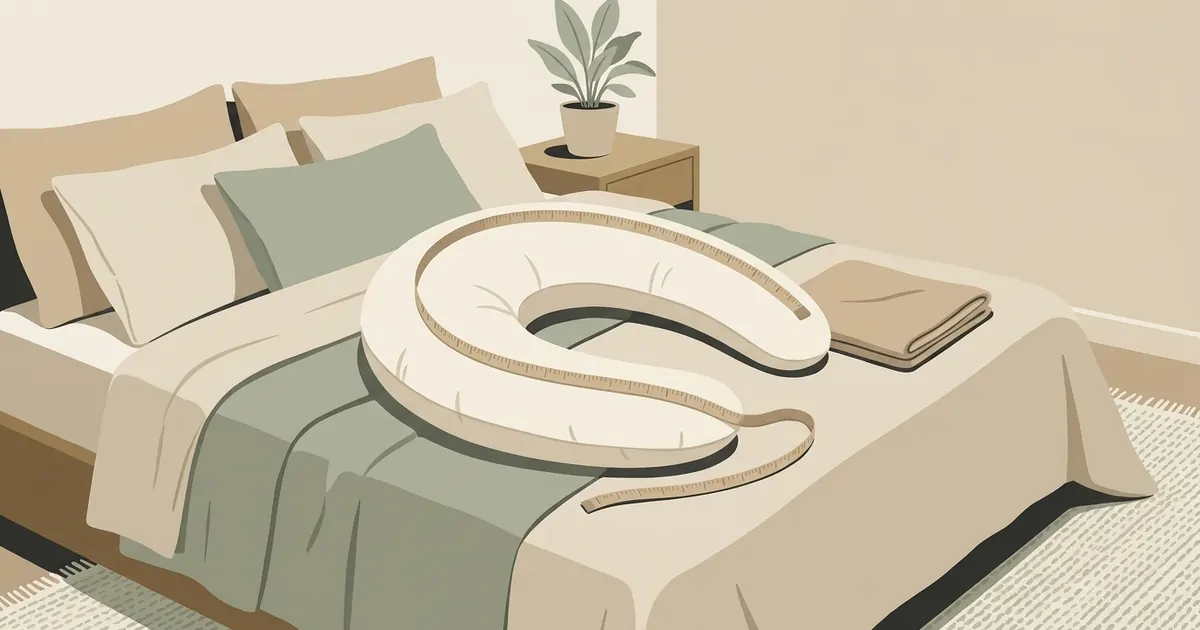 How to choose a cover that actually fits your body pillow
Get the right body pillow cover in 3 steps. Measure the outer curve, confirm shape compatibility and check closure position before you order.
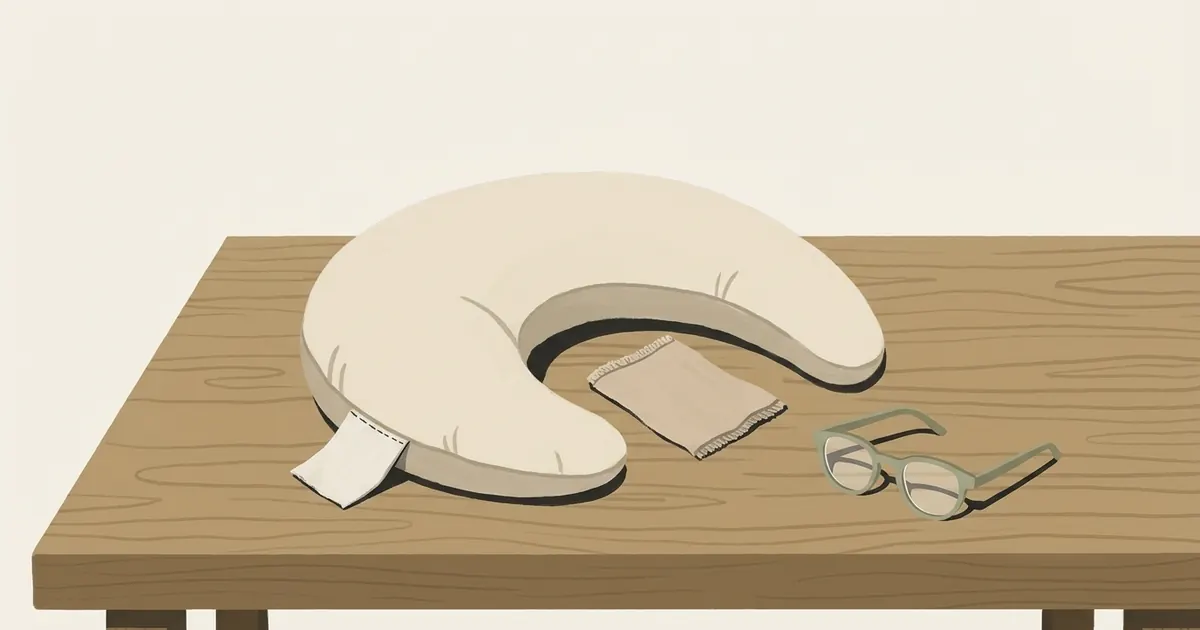 How to read the labels on a body pillow and its cover
A crescent body pillow running 52 inches along the curve needs the right cover size. Learn how to read labels to confirm fit, fill, and care instructions.


