
Why is my body-pillow cover bunching or twisting?
Work through 8 steps to confirm your body pillow cover is the right model, oriented correctly, and fitted without trapped or gathered fabric.
By Cove editorial team · Updated October 27, 2026 · 6 min read · Editorial standards

Key takeaways
- Most bunching happens when the cover is put on in the wrong orientation or the fabric is not smoothed evenly before the zipper is closed.
- A cover designed for one pillow model will not sit correctly on a different model, even if the two look similar in shape.
- Some overnight rotation of a cover is normal and does not indicate a defect.
- Never force a zipper that will not close — clear the fabric from the teeth first, and contact support if it still will not move.
- If the cover consistently twists after correct fitting, it may have a construction issue worth reporting to Cove support.
A body-pillow cover bunches or twists when it is fitted in the wrong orientation, the fabric was not spread evenly before closing the zipper, or the cover belongs to a different pillow model. To fix it, remove the cover, start fresh from the closed end, and smooth the fabric toward the zipper before sealing it.
Check that the cover is the right model and shape
The first thing to confirm is that the cover you are using was made for the pillow you own. The Cove Classic is a full-length crescent measuring about 52 in [132 cm] along the curve. The Cove Mini is smaller and designed for travel, the couch, or use as a knee or back pillow. Each pillow has its own cover, and those covers are not interchangeable.
If a cover is too long for the pillow, the excess fabric will fold back on itself and create ridges that get worse as you move through the night. If it is too short, you will not be able to close the zipper without gathering the fabric at one end. Before troubleshooting anything else, confirm you have the right cover for your specific pillow. How to choose a cover that actually fits your body pillow explains the key variables if you are ordering a replacement.
It is also worth checking the cover when it is laid flat with no pillow inside. A well-made cover should lie without visible puckering near the seams or uneven panels from end to end. If it looks misshapen before you even put it on the pillow, that points to a construction issue rather than a fitting error, and the section on asking for help below explains what to do in that case.
Distribute the pillow evenly before closing the zipper
Uneven fabric distribution at the moment you close the zipper is the single most common cause of bunching. If the cover is gathered slightly at one end when you seal it, that imbalance amplifies over hours of use as you shift position during the night.
The most reliable approach is to lay the pillow and cover flat on the bed rather than trying to fit the cover while the pillow is propped against a wall or standing upright. Work from the closed end of the cover toward the zipper, smoothing the fabric outward with both hands as you go. Once the fabric lies evenly along the full length of the pillow, hold it in place while you close the zipper in one continuous motion rather than pulling it in short stops and starts.
Rushing this step is the most frequent mistake. Taking an extra thirty seconds to smooth the fabric properly before closing the zipper will almost always eliminate the bunching that appears by morning. For a complete walkthrough, see how to put a cover on a crescent body pillow.
Look for reversed orientation or trapped fabric
Many body-pillow covers have a subtle orientation: the curve of the cover is shaped to match the curve of the pillow in one specific direction. Putting the cover on upside-down or back-to-front means the seam allowances sit in the wrong places relative to the pillow's shape, which creates tension that pulls the cover off-center during use.
Check the label or tag on the cover. Labels are usually placed at a seam that is intended to face a particular way — toward the back of the pillow, for instance, rather than against your body. If the label is pressing into you during the night, the cover may be on inside-out or reversed.
Trapped fabric is a closely related problem. Before closing the zipper, run your fingers along the entire zip track and confirm no fabric is folded over the teeth. A single fold of fabric caught at the start of the track creates a fixed gather point that the rest of the cover is pulled toward as the zipper closes, and the tension only increases overnight.
**Step-by-step fitting sequence**
1. Remove the cover completely from the pillow. 2. Turn it right-side out and confirm the label faces away from your body when the pillow is in use. 3. Lay the pillow flat on the bed. 4. Slide the cover on from the closed end, working it along the full length of the pillow smoothly and without bunching. 5. Smooth the fabric from the center of the pillow outward toward each end. 6. Check that no fabric is folded over the zip track at either end. 7. Close the zipper in one continuous motion while keeping light tension on the fabric at the near end. 8. Gently tug the cover so the seam lines sit where you expect them before placing the pillow back on the bed.
Separate normal movement from a fit or construction problem
Some overnight movement of a cover is normal and expected. A crescent body pillow is long and follows your body as you turn during sleep, and the cover naturally travels with it. The seam line may shift by a few inches from where you placed it, and that is not a defect. Sleep often involves more movement than people realize 3, and a cover that hugs a curved surface will respond to that movement.
A genuine fit or construction problem looks different from ordinary rotation. Use the checklist below to separate the two:
- [ ] The cover gathers into thick ridges that you can feel pressing into your body
- [ ] The zipper pulls open on its own during the night
- [ ] One end of the cover slips off the pillow entirely by morning
- [ ] The fabric forms a visible spiral twist along the full length of the pillow
- [ ] The same problem recurs immediately even after re-fitting the cover carefully following every step above
If none of those apply and the cover simply rotates slightly, that is within normal range and does not need a fix beyond re-centering it each morning. If one or more do apply consistently, the issue is more likely with the cover's construction than with how it was put on.
Covers made from smooth or fine fabrics have less grip on the pillow shell beneath them, which can allow more rotation than a more textured fabric would produce 1. This is a design trade-off rather than a fault, but it can be made worse if the inner pillow shell is also smooth. Knowing this helps you set realistic expectations about how much movement is acceptable versus how much points to an actual problem.
Ask for help before forcing a closure
If the zipper will not close after you have cleared the fabric from the teeth, stop. Forcing a zipper that meets resistance can break the pull, damage the tooth chain, or tear the fabric at the seam end 2. None of those outcomes make the cover easier to use, and they can make a replacement claim more complicated.
The same caution applies to any cover that looks visibly misshapen even when laid flat with no pillow inside. A flat cover that already has creases, puckering near the seams, or uneven panels from end to end is unlikely to improve once it is on the pillow. That is a construction issue that Cove support should assess before you invest more time in fitting attempts.
To get help, contact support by email or through the site's help center. Describe which pillow model you have, which cover, how long you have had it, and what the cover looks like when laid flat versus when fitted. A photo taken in good light with the cover laid flat is useful because it lets the support team see whether the problem is in the cover's construction or in how it has been applied. Support can tell you whether the issue warrants a replacement and guide you through the return process if needed.
If your concern is more about keeping the pillow in place on the mattress during the night rather than the cover moving on the pillow, that is a different problem addressed in how to stop a body pillow slipping out of place.
More in this series: start with the body pillow buying guide, pillowcase vs pillow protector: do body pillows need both? and knit vs woven body-pillow covers: why the construction matters.
From Cove


Questions
Some rotation is normal. A long, curved pillow moves with you as you shift position, and the cover can follow that motion. If the twisting is severe enough to bunch fabric under your body or pull the zipper open, check that the cover was put on in the correct orientation and that the fabric was distributed evenly along the full length before you closed the zipper. A cover rushed onto the pillow with fabric already gathered at one end will twist further during the night. See the guide on how to put a cover on a crescent body pillow for a full step-by-step walkthrough.
Yes. A cover made for a full-length pillow will not fit snugly on a shorter travel pillow, and the excess fabric has nowhere to go except into folds and bunches. Always match the cover to the exact pillow it was made for. The Cove Classic and The Cove Mini each have their own covers, and those covers are not interchangeable. If you are unsure which cover fits your pillow, check the size guide before ordering a replacement.
No. Forcing a zipper that will not close can break the zipper pull, damage the teeth, or tear the fabric near the seam. The most common reason a zipper will not close is trapped fabric caught in the teeth. Lay the pillow flat, smooth the cover from the center outward toward the zipper, and confirm no fabric is folded over the zip track before you try again. If the zipper still will not close after the fabric is clear, contact Cove support rather than applying more force.
Post-laundry fit changes are a separate topic covered in the washing guide. For bunching and twisting that happens during normal use rather than after a wash, the cause is almost always orientation or uneven fabric distribution rather than a change in size. If you notice the cover fitting differently immediately after laundering, consult the washing guide for guidance on that specific issue.
A small amount of rotation — where the seam line migrates a few inches from where you placed it — is normal for any long pillow used by a side sleeper who moves during the night. A real fit problem looks different: the cover gathers into thick ridges under your body, the zipper pulls open on its own, or one end of the cover slips off the pillow entirely. If any of those things happen consistently after you have followed the correct fitting steps, contact support to describe what you are seeing.
Sources
- How to wash pillows, Sleep Foundation. Accessed October 27, 2026.
- How to wash pillows, Sleep Foundation. Accessed October 27, 2026.
- How to fall asleep faster and sleep better, NHS Every Mind Matters. Accessed October 27, 2026.
About the author
The Cove editorial team is the group at Cove that writes our guides. We write them from published guidance and our own product testing, and link every source. About the team
Related guides
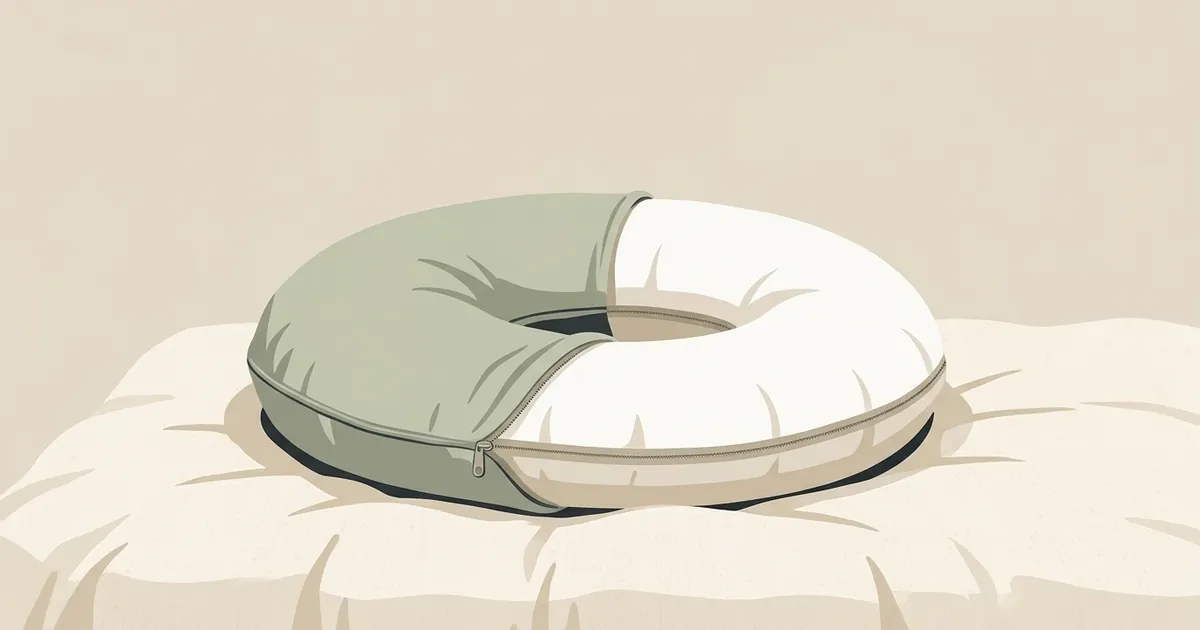 How to put a cover on a crescent body pillow
Fit a crescent body pillow cover in 2 minutes with 6 steps: seat each tip first, work hand over hand along the curve, then close the zipper slowly.
 How to choose a cover that actually fits your body pillow
Get the right body pillow cover in 3 steps. Measure the outer curve, confirm shape compatibility and check closure position before you order.
 How to wash a body pillow and its cover
: wash the cover cold, spot clean the pillow, dry it fully. Steps for plain, heated and cooled pillows in 5 minutes.


