
Draft: this guide is waiting for review by a qualified reviewer and is not published yet.
An overnight hospital stay during pregnancy: questions about rest
Antenatal ward stay coming up? Learn how to ask about checks, sleep positions, and whether a 52 inches body pillow fits in your bay or locker.
By Cove editorial team · Updated October 27, 2026 · 7 min read · Editorial standards

Key takeaways
- Start with your care plan so you understand why you were admitted and what positions or activity limits apply to you specifically.
- Ask the ward team what nighttime checks to expect and roughly how often, so interruptions feel predictable rather than startling.
- Check with staff before bringing in personal bedding or a body pillow, because ward policies on outside items differ.
- Tell a nurse or midwife promptly if discomfort, noise, light or anxiety is preventing you from resting — they cannot help with problems they do not know about.
- Never adjust bed rails, monitoring equipment or IV lines yourself; always ask a member of staff.
An antenatal admission is not the same as arriving in labor. You may be there for monitoring, treatment, or observation lasting days, and rest still matters throughout. Ward routines, shared bays, nighttime checks, and unfamiliar equipment can all disrupt sleep 2, so asking clear questions early — of nurses, your midwife, or doctor — helps you understand what to expect.
Start with the reason for admission and the care plan
Before you think about comfort, understand why you are there and what your clinical team needs from you. Ask the admitting doctor or midwife to walk you through the plan in plain language: what are they monitoring, how long is the stay expected to be, and are there any positions, activities, or movements you should avoid?
This matters for rest because some admissions come with prescribed positions — a specific tilt, a requirement to stay in bed, or a restriction on how long you can sit upright. Knowing these constraints from the start means you can ask for support within them rather than working against your care team later.
If you have an existing sleep difficulty — back pain, hip pressure, restless legs, or anxiety about the admission itself — mention it at this stage 2. It becomes part of the picture your team is managing, not a separate problem to raise at a later round. The more complete the picture your team has from the outset, the better placed they are to help.
If you kept a sleep diary before admission, bring it or a summary. A structured record of what disturbs your rest and when is far more useful at a ward round than a general report of "not sleeping well." See the pregnancy sleep diary to take to your next appointment for a practical format you can adapt for an inpatient stay.
Ask what nighttime monitoring and routines to expect
Antenatal wards vary widely in how often observations happen overnight. On some wards, blood pressure, fetal heart monitoring, or other checks occur every one to two hours; on others, the gap is longer. Knowing the schedule in advance means that when you are woken at 2 a.m. you understand why, which is less disorienting than being woken without context.
Ask specifically:
- [ ] How often will overnight observations happen, and roughly what time does each round begin?
- [ ] Will a light be turned on in the room, or can checks happen with a handheld torch?
- [ ] Is there a quieter period in the night when observations are less frequent?
- [ ] If monitoring equipment is attached to you, what alarms should you expect and what do they mean?
- [ ] Can you be told in advance if an extra check or procedure is likely during the night?
- [ ] Is there a way to note in your records that you would like the minimum light level needed for safety during overnight checks?
None of these questions ask staff to skip observations or reduce clinical care. They are practical questions about what is coming so you can prepare mentally and physically, and so the team knows your preferences are documented.
Discuss permitted personal bedding and comfort items
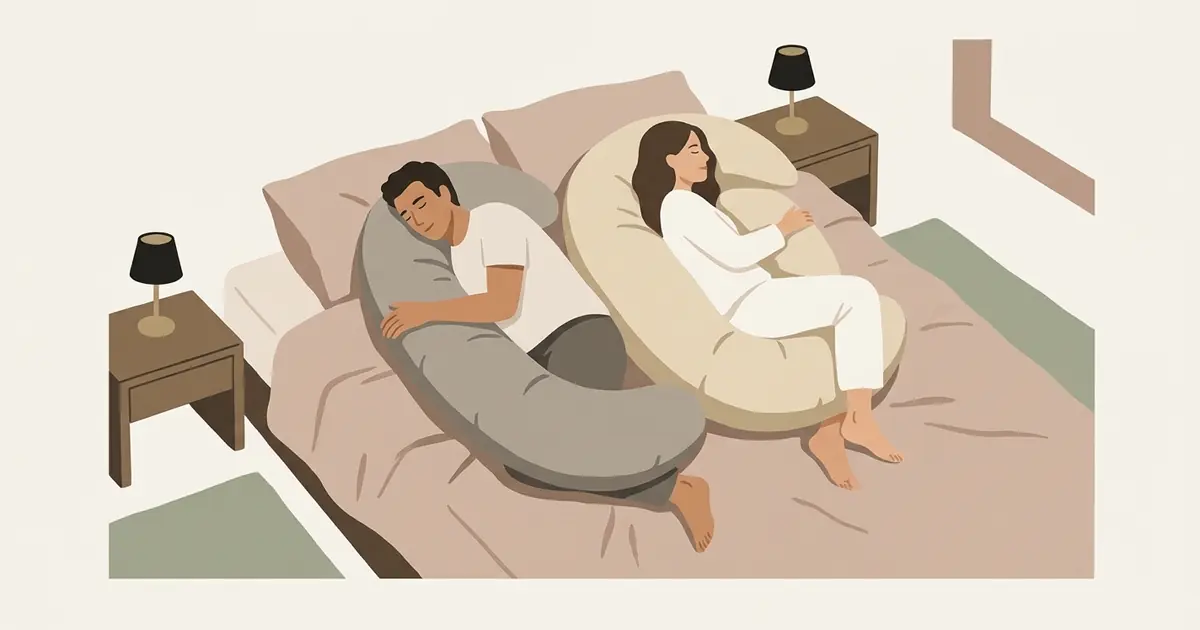
Hospital pillows are functional but rarely shaped for side sleeping during pregnancy. In the second and third trimesters, lying on your side with knees bent is generally considered better than lying flat on your back, which can compress blood vessels and reduce blood flow to the uterus 1. A body pillow between your knees and under your bump can make that position easier to hold through a long night.
Many wards permit personal pillows and bedding, but some have infection-control policies restricting outside soft items, and bay space is often tight. Ask before you pack:
- [ ] Are personal pillows or body pillows permitted on this ward?
- [ ] Are there infection-control rules about covers or materials?
- [ ] Is there space in the bay or a locker for a larger item?
- [ ] If a full-length pillow is not practical, would a smaller support pillow be allowed?
- [ ] Does the ward stock any positioning wedges or foam supports?
If a full-length option is permitted, The Cove Pregnancy Pillow — a crescent-shaped pillow about 52 inches [132 cm] along the curve — is designed for side sleeping and has a removable, machine-washable cover that can be kept clean during a longer stay. If space is limited or you want something that packs more easily, The Cove Pregnancy Pillow Mini is a smaller crescent that works as a knee support or back pillow and fits into a bag or suitcase.
Bring any personal item clean and in a zipped bag, and be prepared to take it home if staff ask you to.
For other items that affect rest — an eye mask, earplugs, a small fan, or a familiar blanket — the same rule applies: ask first. Some wards keep a supply of basic items; others prefer you bring your own. A room-temperature fan directed away from your face can help with the stuffiness that many people notice in shared wards, without requiring any clinical equipment to be changed.
Tell staff what is making rest difficult
Nursing and midwifery staff cannot address a problem they do not know about. If something is preventing you from resting, say so clearly and as soon as possible — not just during a scheduled round, but by using the call buzzer if the issue is active right now.
Useful things to describe:
**Physical discomfort.** Hip or shoulder pressure from the mattress, back ache, difficulty turning over, or leg cramps are all worth naming. Staff may be able to offer foam wedges, extra pillows, or a mattress overlay. For guidance on managing hip and shoulder pressure in side-lying positions more generally, see how to sleep on your side without hip pain.
**Environmental factors.** Light from a corridor, equipment screens, or another patient's television can significantly affect sleep quality 2. Ask whether the door can be partially closed, whether a bay curtain reduces light, or whether the ward has an eye mask you can borrow.
**Noise.** Equipment alarms, staff conversations, and other patients are largely outside your control, but soft foam earplugs are safe during pregnancy and many wards stock them. Ask the nurse at the start of your shift rather than waiting until 3 a.m.
**Anxiety or low mood.** Worry about the reason for your admission — or about how long you may be there — can make it impossible to rest even when the environment is quiet. Mentioning this to staff is not a complaint; it is clinically relevant information. Many antenatal wards have access to a midwife with additional training in emotional wellbeing or can refer you to a perinatal mental health service if needed.
Keeping brief notes about what woke you and when can help you describe the pattern clearly at ward rounds. The same structured approach used in a pregnancy sleep diary works just as well in hospital as it does at home.
Follow ward instructions rather than changing equipment or care
It can be tempting, especially after a few sleepless nights, to adjust things yourself — move a monitor lead that is digging in, lower a bed rail to make turning easier, or prop yourself in a position that was not prescribed. Avoid this.
Bed rails exist for safety; monitoring leads need to stay in contact with the right area; IV lines and catheters follow specific routing for clinical reasons. Adjusting any of these yourself could compromise your monitoring, cause a safety incident, or move you out of a position your team has specifically requested.
If something is uncomfortable or feels wrong, use the call buzzer. Ward staff would rather make a small adjustment several times in a night than have you manage a problem silently. Describe the issue precisely — "this lead is pressing into my hip when I lie on my left side" is more actionable than "I cannot get comfortable."
If you feel your concerns about rest are not being heard through normal channels, you can ask to speak with the shift coordinator or your named midwife. You can also include rest and positioning preferences in your birth plan before any planned or possible admission — see including rest and comfort preferences in your birth plan for a practical framework that travels with you into any care setting.
An antenatal stay is rarely comfortable, but it does not have to be entirely sleepless. Asking direct questions early, communicating problems as they arise, and working within the ward's clinical framework gives you the best chance of resting between the interruptions that are genuinely necessary.
More in this series: start with Sleeping during pregnancy, preparing a shared bedroom for adult rest and a separate baby sleep space and planning postpartum rest in a home with stairs.
From Cove


Questions
It depends on the ward. Many antenatal wards allow personal pillows and bedding, but some have infection-control policies that restrict outside soft furnishings, and others simply lack storage space. Ask before you pack. If a full-length pillow is permitted, a crescent-shaped pillow such as The Cove Pregnancy Pillow can support your bump, back and knees while you lie on your side. If the full-length version is too large for the bay, the smaller The Cove Pregnancy Pillow Mini takes up less space and can double as a knee or back support. Bring any personal item in a clean, zipped bag and be prepared to take it home if staff ask you to.
Tell a nurse or midwife as soon as you notice the problem — do not wait until a scheduled round. They can offer extra pillows or positioning aids, review your prescribed position with the clinical team, and note any ongoing sleep difficulty in your record. If anxiety or low mood is making rest harder, that is also worth mentioning; emotional wellbeing is part of your care during an admission, not a separate issue.
No. Bed rails, monitoring leads, IV lines, call buzzers and the height and angle of the bed should only be adjusted by ward staff. Moving equipment yourself could interfere with your monitoring, create a safety hazard, or put you in a position that your clinical team has specifically asked you to avoid. If the bed position feels wrong or equipment is digging into you, press the call buzzer and explain the problem so a member of staff can help.
In the second and third trimesters, lying on your side with one or both knees bent is generally considered preferable to lying flat on your back, which can compress blood vessels and reduce blood flow to the uterus [^1]. However, your clinical team may have specific position requirements based on the reason for your admission — for example, a prescribed tilt or a position that keeps monitoring equipment in contact. Always confirm which positions are safe for your individual situation with the team caring for you.
Be specific. Note whether the problem is noise (other patients, equipment alarms, corridor activity), light (corridor lights left on, screen glow), physical discomfort (hip pressure, back ache, leg cramps, difficulty turning over), or difficulty settling after observations. The more clearly you describe the issue, the more options staff can offer — such as repositioning aids, an eye mask, earplugs from the ward supply, or a quieter bay if one is available.
You can use a phone for personal use within ward guidelines, but sleep-tracking apps and wearables have real limitations in a clinical setting — equipment alerts, nursing observations and shared-room noise all create patterns that consumer devices cannot interpret accurately. If you want to understand your rest patterns better, a simple written note of when you were woken and why is more useful to share with staff than an app summary. Discuss any concerns about sleep quality directly with your midwife or doctor.
Sources
- Can I sleep on my back when I'm pregnant?, ACOG. Accessed October 27, 2026.
- Pregnancy and sleep, Sleep Foundation. Accessed October 27, 2026.
- Breastfeeding & Safe Sleep, NIH / NICHD Safe to Sleep. Accessed October 27, 2026.
About the author
The Cove editorial team is the group at Cove that writes our guides. We write them from published guidance and our own product testing, and link every source. About the team
Related guides
 Including rest and comfort preferences in your birth plan
Add rest and comfort preferences to your birth plan in 5 steps: choose what matters most, ask about comfort items, name a support person, stay flexible.
 A pregnancy sleep diary to take to your next appointment
Follow 3 steps to log sleep timing, awakenings, and symptoms over a few nights so your doctor or midwife has something concrete to work with.
 Left side vs right side: does it matter
Left vs right side sleeping: either is fine for most people. It matters for acid reflux, heart conditions and a sore hip or shoulder. 4 steps to switch.


