
Spilled a drink on a body pillow? What to do next
Spilled a drink on your body pillow? Use 5 steps: find which layers are wet, read the care label, treat the cover, and ask the maker about the insert.
By Cove editorial team · Updated October 27, 2026 · 6 min read · Editorial standards

Key takeaways
- Act fast: blot and remove the cover before liquid reaches the inner fill.
- Always check the care label before applying any water or cleaner to the cover or insert.
- Memory foam should not be machine washed or submerged, as this can cause the foam to crack or degrade.
- Even if the outer surface feels dry, interior fill can still hold moisture—confirm it is fully dry before reuse.
- Contact the maker when the insert is soaked and instructions are unclear; do not guess at drying methods.
When a drink lands on a body pillow, speed and sequence matter. Blot the liquid right away, unzip and remove the cover before moisture moves deeper, then check how far the spill has spread. Getting those steps right in the first few minutes is what separates a quick clean-up from a pillow that stays damp and may need replacing.
Remove the source of the spill and identify which layers are wet
The first thing to do is stop the spill from spreading. Lift the pillow away from any pooled liquid, then press a clean dry cloth or paper towels firmly against the wet area—blot, do not rub. Rubbing pushes liquid deeper into the fiber and can spread a stain outward.
Next, work out exactly which layers have been reached. Use this checklist before doing anything else:
- [ ] Press your hand against the outer cover. Is it wet on the surface, or does the moisture feel as though it has already soaked through?
- [ ] Unzip the cover and check the inner surface for visible moisture or staining along the seam or fabric.
- [ ] Lift the insert and gently press the foam fill itself to feel for dampness deeper in.
- [ ] Note whether the spill was plain water, a sugary drink, alcohol, or something acidic—this affects how you treat both the fabric and the fill.
- [ ] If the cover was already protecting the insert and caught all the liquid, confirm the insert is dry before setting it aside.
- [ ] If the insert is wet, note how large the damp area is and how long the liquid has been sitting—both matter when you contact the maker.
Knowing exactly how far the liquid has traveled tells you whether you are dealing with a cover-only problem or a fill problem that needs more careful handling.
Check the care instructions before applying water or cleaner
Before you reach for a cloth soaked in cleaner or drop anything into the washing machine, stop and read the label. The first step in proper pillow care is checking the tag for cleaning guidance 1. Labels can say anything from machine-washable to spot-clean only to dry-clean only, and acting before you read them can cause irreversible damage.
For foam fills specifically, the distinction matters a great deal. Solid memory foam should not be machine washed, as this can cause the foam to crack or degrade, and it should not be submerged in water 1. Shredded memory foam can sometimes be hand washed, but even then you need to confirm it with the manufacturer's instructions before proceeding 1.
You can find more detail on interpreting what care symbols and wording actually mean in the guide to how to read the labels on a body pillow and its cover. Getting familiar with what those symbols mean before an accident happens saves time when you need to act quickly.
Treat the removable cover according to its label
Once the cover is off, treat it as a separate item from the insert. If the label permits machine washing, follow the temperature and cycle guidance exactly—most fabric covers do best in cold water on a gentle cycle with a small amount of mild detergent 1. Avoid bleach unless the label specifically allows it.
If the label says spot clean only, dampen a cloth with cool water, add a small amount of mild detergent if needed, and work gently from the outside edge of the stain inward to avoid spreading it. Rinse the spot with a clean damp cloth afterward to remove any soap residue.
For the Cove Classic and Cove Mini, the removable cover is machine washable cold—so a drink spill on the cover alone is a straightforward fix. If you need a refresher on removing and replacing a crescent cover before or after washing, the guide on how to put a cover on a crescent body pillow walks through the full process step by step.
Here is a quick reference for common care label instructions and what they mean for a spill situation:
| Label instruction | What to do after a spill |
|---|---|
| Machine washable | Follow temperature and cycle guidance; wash cover promptly |
| Hand wash only | Gently work with mild detergent and lukewarm water; do not spin |
| Spot clean only | Blot with damp cloth and mild detergent; do not saturate |
| Dry clean only | Blot excess liquid; take to a professional cleaner |
| Do not wash | Blot only; contact the maker for further guidance |
Ask the maker about a wet inner pillow when instructions are unclear
If the spill reached the foam insert and the care label does not give clear guidance on how to handle moisture inside the fill, contact the manufacturer before doing anything else. This is not overcautious—foam fill varies by construction, and applying the wrong method can cause permanent structural damage 1.
When you reach out, be specific: describe the type of liquid, how long it sat before you noticed, and how damp the fill feels. This gives the manufacturer enough information to advise whether air drying is sufficient, whether any hand-washing step is appropriate, or whether the insert needs to be replaced.
If the label does permit hand washing the shredded foam fill, the general approach—used carefully and only when the manufacturer confirms it is safe—involves pressing water gently in and out in a bath of mild detergent solution, then squeezing (never wringing) excess water before drying 1. Wringing or twisting foam can permanently damage its structure 2. Any cleaner you use should be mild and free from harsh chemicals; for covers with certified fabric content, harsh detergents can also affect the integrity of the fiber treatment 3.
If the maker's guidance says to air dry only, resist the urge to speed things up with a hair dryer or any other heat source. Applying concentrated heat to foam fill can cause it to degrade even if the surface looks unaffected. Place the insert in a well-ventilated room, away from direct sunlight or radiators, and give it adequate time.
Decide when reuse is appropriate and when replacement advice is needed
A body pillow is only safe to use again when both the cover and the fill are completely dry. It can take a while for a pillow to fully dry, and additional time is often needed to dry the interior fill even when the outer surface already feels dry 1. Do not cut this process short—returning a damp pillow to your bed is the most common mistake people make after a spill.
For a foam insert, air drying in a well-ventilated spot away from direct heat is the standard approach where no other guidance has been given. Pressing the fill at intervals helps you track whether moisture is still present deep inside. If after extended drying time the insert still feels cool or damp in the center, or if you notice any odor developing, do not put it back on your bed.
Lingering odors on a foam fill—once it is confirmed fully dry—can sometimes be addressed by sprinkling baking soda over the surface, allowing it to sit, and vacuuming it off 2. This can help with mild odors from drinks that have dried completely. However, it is not a substitute for full drying, and it will not resolve odors caused by moisture that is still present inside the fill.
Persistent internal dampness or odor that does not resolve after full air drying is a sign that the spill penetrated further than surface treatment can address. At that point, contact the maker and ask directly whether the insert can be recovered or whether replacement is the more practical option. For routine care steps beyond incident response—including how often to wash and what products to use—the how to wash a body pillow and its cover guide covers ongoing maintenance in full detail.
More in this series: start with the body pillow buying guide, what to do with a body pillow you no longer use and can you use pillow spray on a body pillow?.
From Cove


Questions
No. Solid memory foam should not be machine washed, as this can cause the foam to crack or degrade, and it also should not be submerged in water. Shredded memory foam pillows can sometimes be hand washed, but you should check the manufacturer's specific instructions first before adding any water. When in doubt, contact the maker directly rather than risk permanent damage to the fill.
Avoid it. Concentrated heat from a hair dryer can damage foam fill and may not reach moisture deep inside the pillow anyway. A better approach is gentle air drying in a well-ventilated spot, pressing—not wringing—the insert periodically if hand washing is approved. If you are unsure whether any heat source is safe for your specific pillow, check with the manufacturer before applying it.
A dry cover does not mean the fill is dry. Interior fill can retain moisture well after the surface feels fine, and using a damp pillow can promote bacteria and odors. Continue air drying the insert in a ventilated space, checking the fill by pressing firmly through the outer fabric. If dampness persists or you notice an odor, contact the maker for guidance before sleeping on it again.
Only if the care label permits it. Many fabric covers specify mild detergent and cold water, and bleach or harsh chemicals can damage specialty fibers or set stains rather than lift them. Check the label for any restrictions before reaching for a cleaning product, and when in doubt, start with plain cold water and a gentle blot rather than a chemical treatment.
Once the fill is confirmed completely dry, sprinkling baking soda over the surface, allowing it to sit, and then vacuuming it off can help remove odors from a foam pillow. For the cover, a full machine wash according to its care label is the most effective odor treatment. If odor remains in the insert after these steps, reach out to the manufacturer for advice specific to your pillow's materials.
Sources
- How to wash pillows, Sleep Foundation. Accessed October 27, 2026.
- How to wash pillows, Sleep Foundation. Accessed October 27, 2026.
- OEKO-TEX STANDARD 100, OEKO-TEX. Accessed October 27, 2026.
About the author
The Cove editorial team is the group at Cove that writes our guides. We write them from published guidance and our own product testing, and link every source. About the team
Related guides
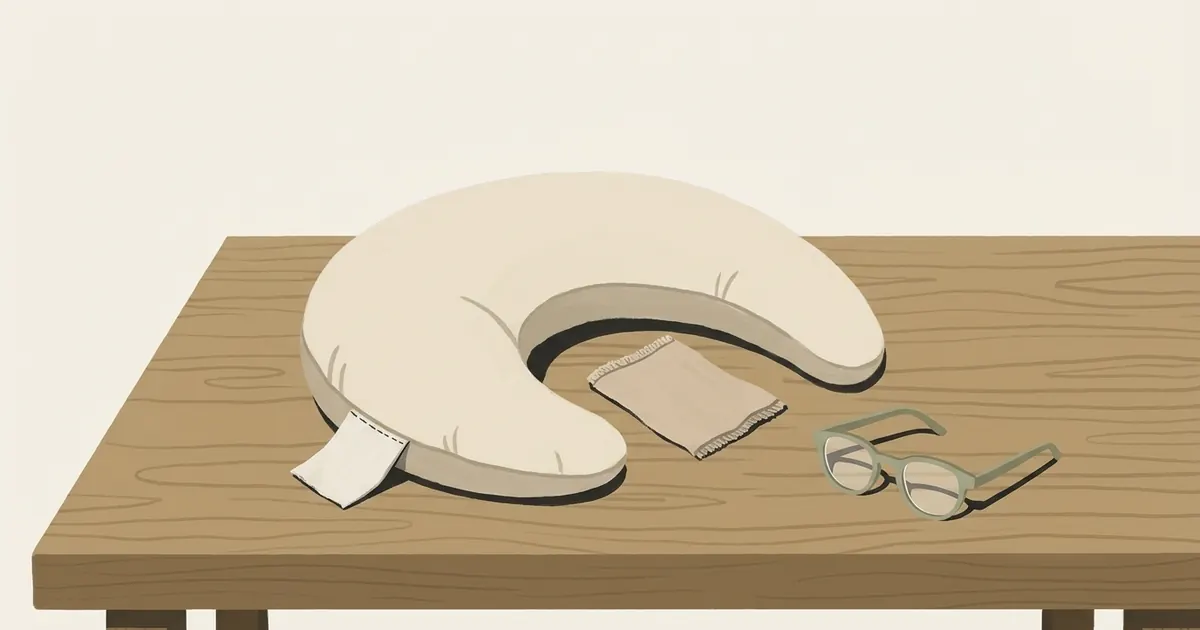 How to read the labels on a body pillow and its cover
A crescent body pillow running 52 inches along the curve needs the right cover size. Learn how to read labels to confirm fit, fill, and care instructions.
 How to choose a cover that actually fits your body pillow
Get the right body pillow cover in 3 steps. Measure the outer curve, confirm shape compatibility and check closure position before you order.

