
What to do with a body pillow you no longer use
This guide covers 6 steps for deciding whether to repurpose, donate, recycle, or dispose of a body pillow based on condition and local options.
By Cove editorial team · Updated October 27, 2026 · 6 min read · Editorial standards

Key takeaways
- Check the pillow's condition before assuming it needs to go—many pillows still have usable life with a fresh cover or an adjusted fill.
- Always contact a donation recipient before dropping anything off; many charities do not accept used bedding.
- Foam fill and fabric covers are different materials and may need to go to different places.
- Curbside recycling rarely accepts foam; specialized foam recyclers or mattress-recycling programs are the more realistic route.
- When no other option works, general waste is the fallback—but verify your municipality's bulk-item rules first.
A body pillow you no longer need can be repurposed, donated, recycled at the component level, or disposed of. The right path depends on the pillow's condition, your local infrastructure, and what nearby organizations accept. Working through those questions in order saves time and avoids rejected drop-offs.
Check condition and whether continued use is realistic
Before deciding the pillow needs to leave your home, spend a few minutes assessing it honestly. Press along the length of the fill and notice whether it still offers even resistance or whether it has developed flat zones that cannot be worked out. For pillows with adjustable shredded fill, you can often redistribute or remove material to restore a more comfortable feel—this is worth trying before writing the pillow off entirely.
If the fill is still functional but the cover is worn or stained, replacing the cover is a low-effort way to extend the pillow's useful life significantly. The Cove Classic and Cove Mini both use removable, zip-off covers that can be swapped out without touching the fill at all, which means a cover issue alone is not a reason to replace the whole pillow.
Also consider whether the pillow could serve a different purpose than the one you originally bought it for. A full-length crescent that you no longer want in bed may still work well on a couch, under a desk for leg support, or in a reading chair. A smaller crescent—the kind designed for travel or use on a couch—can continue doing that job even if it is no longer suitable for overnight sleep support.
If you are unsure whether the pillow's feel can be restored, the guide on memory foam vs polyester body pillows explains how each fill type ages differently, which may help you judge whether adjustment is realistic or whether the material has genuinely reached the end of its useful life.
Ask a recipient or organization before offering a donation
Donation sounds straightforward, but it frequently stalls at the acceptance stage. Many thrift stores and charity shops decline used bedding, including pillows, for hygiene reasons. Policies vary by organization and can change without notice, so checking in advance is not optional—it is the only way to avoid a wasted trip and a rejected load.
Some organizations that may be more open to used bedding in good condition include:
- Local homeless shelters or transitional housing programs
- Animal shelters, where foam fill can provide comfort even when it no longer meets human sleep standards
- Community free-stores or mutual-aid groups that operate without standard charity restrictions
- Freecycle or local buy-nothing groups where individuals can choose to accept used items on their own terms
Before contacting any of them, wash the pillow and its cover. Solid memory foam should not be machine washed or submerged, as this can cause the foam to crack or degrade.1 Shredded memory foam can often be hand washed with care, but you should follow the manufacturer's instructions and check the care label first.2 Allow the pillow to dry fully before handing it over—tumble drying may need considerably more time than you expect, since the interior fill can remain damp even when the outer cover feels dry to the touch.1
See the full guidance in how to wash a body pillow and its cover before you start, so you do not accidentally damage the fill during cleaning.
Identify cover, fill, and other components
Understanding what your pillow is made of is the practical step that determines which recycling or disposal routes are open to you. Most body pillows have at least two separable components: the outer cover and the fill inside. Some also have an inner liner or casing around the fill that can be separated once the zip-off cover is removed.
Use the care label to identify materials. If you need help interpreting the symbols and fiber content listings, the guide on how to read the labels on a body pillow and its cover walks through what each element means in plain terms.
| Component | Common materials | Likely end-of-life channel |
|---|---|---|
| Outer cover | Woven or knit textile blend | Textile recycling bank, donation, or general waste |
| Shredded foam fill | Memory foam pieces | Foam or mattress recycler (verify locally) |
| Solid foam core | Memory foam block | Foam or mattress recycler (verify locally) |
| Inner liner or casing | Cotton or polyester fabric | Textile recycling or general waste |
Keeping the components separate matters because each material type needs its own channel. A textile recycler may accept the cover fabric but will not process foam. A foam recycler will want the fill, not the fabric wrapped around it. Mixing them together just means everything ends up in one bin when parts of it could have gone somewhere more useful.
Verify local recycling or disposal acceptance
This is the step that most guides skip, and it is where plans most often fall apart. Foam is not accepted in standard curbside recycling in most areas. Specialized programs that accept foam do exist—some mattress-recycling facilities take foam fill, and a small number of foam manufacturers or processors run take-back or drop-off schemes—but availability is local and subject to change without announcement.
Use the following numbered workflow to confirm what is actually available to you before making any trip:
1. Search your municipality's waste-management website for "foam recycling" or "mattress recycling" and check when the page was last updated. 2. Call or email your local recycling center directly and ask whether they accept polyurethane or memory foam, and whether loose fill requires any preparation. 3. Check whether any mattress-recycling programs in your state accept foam fill without a full mattress attached—some do, some do not. 4. For the cover and fabric components, search for textile recycling banks near you; many clothing drop-off bins also accept household textiles such as pillow covers. 5. If a specialized route exists, confirm whether you need to deliver material yourself or whether a scheduled pickup is available, and whether there is a fee. 6. If no verified route is confirmed after those steps, treat the pillow as general household waste and follow your municipality's rules for bulk or oversized items—these often require a scheduled pickup or a trip to a transfer station rather than standard curbside collection.
Do not assume that because a recycling option exists in one city it exists in yours. Programs differ significantly between municipalities, and services open and close regularly without wide notice.
Choose the option that is actually available to you
Once you have checked condition, confirmed donation interest, identified components, and verified local recycling acceptance, the decision becomes straightforward: take the highest-value option that is genuinely confirmed as available to you.
A pillow with good fill and a worn cover is worth keeping or re-covering rather than replacing. A pillow in clean, usable condition with a confirmed recipient is worth donating. A pillow whose components can go to verified recycling channels is worth separating before disposal—taking a few extra minutes to unzip the cover and remove the fill can make a meaningful difference to where each part ends up.
A pillow where none of the above applies goes to general waste. That is a legitimate outcome; not everything has a recycling path in every location. The goal is to make a realistic decision rather than to cycle through options that turn out not to be available, which wastes time and often results in the pillow sitting unused for months.
If you are weighing whether to repair the current pillow versus replacing it, the guide on memory foam vs polyester body pillows covers how each fill type ages differently, which may help you set a reasonable threshold for replacement. And if you are considering a secondhand replacement rather than buying new, what to check before buying a secondhand body pillow covers the inspection steps worth running before you commit to someone else's used pillow.
More in this series: start with the body pillow buying guide, can you use pillow spray on a body pillow? and did your body-pillow cover shrink? How to check the fit.
From Cove


Questions
In most areas, no. Curbside recycling programs are designed for materials like paper, cardboard, glass, and certain plastics. Foam—including memory foam—is typically excluded because it cannot be processed in standard sorting facilities. Some specialized foam recyclers and mattress-recycling programs do accept it, but you need to check what is available in your specific area before assuming any channel will take it.
Policies vary widely and change over time. Many thrift stores and donation centers decline used bedding, including pillows, for hygiene reasons. Some shelters or community organizations may accept them if the pillow is in genuinely clean, undamaged condition. The only reliable way to find out is to contact the organization directly before you bring anything in. Never drop off unannounced.
Yes, and separating them is often the practical approach. A fabric cover made from a textile blend may be accepted by clothing or textile recycling banks, while the foam fill needs a different channel. Check whether your local textile recycler accepts mixed-fiber fabrics, and check whether a foam or mattress recycler in your area takes loose fill. Keeping the components separate gives each one the best chance of going somewhere useful.
Look at the fill and the cover separately. If the fill has gone flat or developed lumps that cannot be redistributed, support is compromised. If the cover is stained or worn but the fill is still comfortable, a replacement cover may extend the pillow's life considerably. A pillow with adjustable shredded fill has an advantage here because you can remove or add material to restore the feel before deciding to replace it entirely.
Washing before donation is a reasonable step and expected by most recipients. For shredded memory foam pillows, check the care label first—solid memory foam should not be machine washed or submerged in water, as this can cause the foam to crack or degrade.[^1] A removable, machine-washable cover can usually be laundered separately on a cold or gentle cycle. Allow everything to dry completely before packing the pillow, since even a cover that feels dry on the outside may hold moisture inside the fill.[^1]
Sources
- How to wash pillows, Sleep Foundation. Accessed October 27, 2026.
- How to wash pillows, Sleep Foundation. Accessed October 27, 2026.
- Insomnia, NHS. Accessed October 27, 2026.
About the author
The Cove editorial team is the group at Cove that writes our guides. We write them from published guidance and our own product testing, and link every source. About the team
Related guides
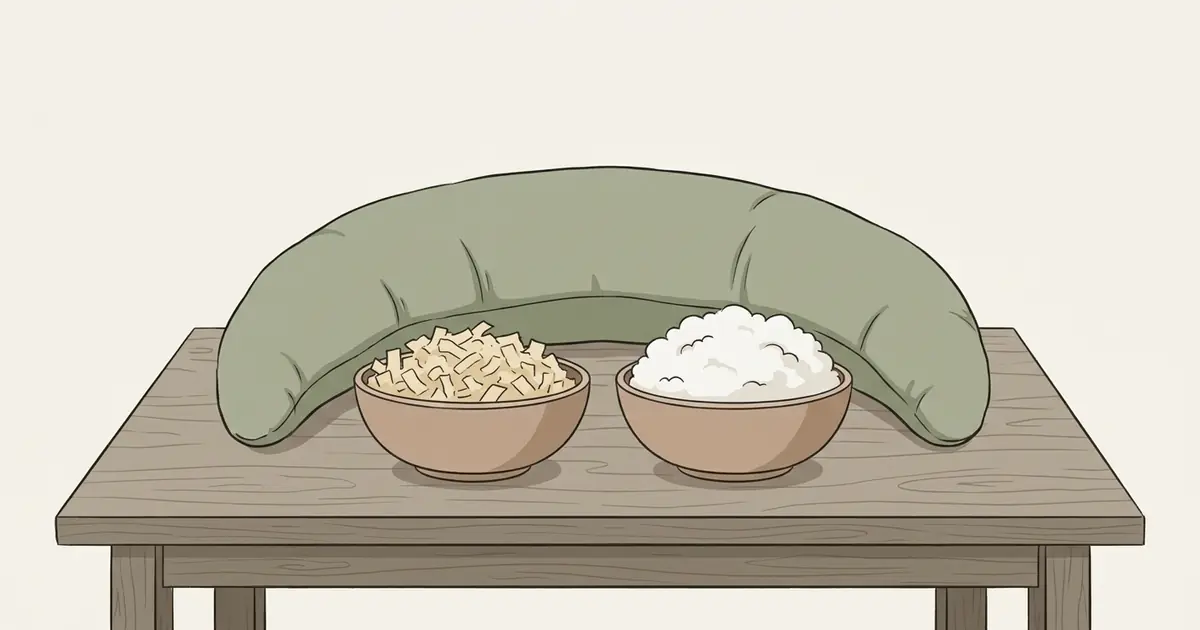 Memory foam vs polyester body pillows
: support, weight, warmth, washing and lifespan compared, with the 1 to 2 years the Sleep Foundation gives a pillow.
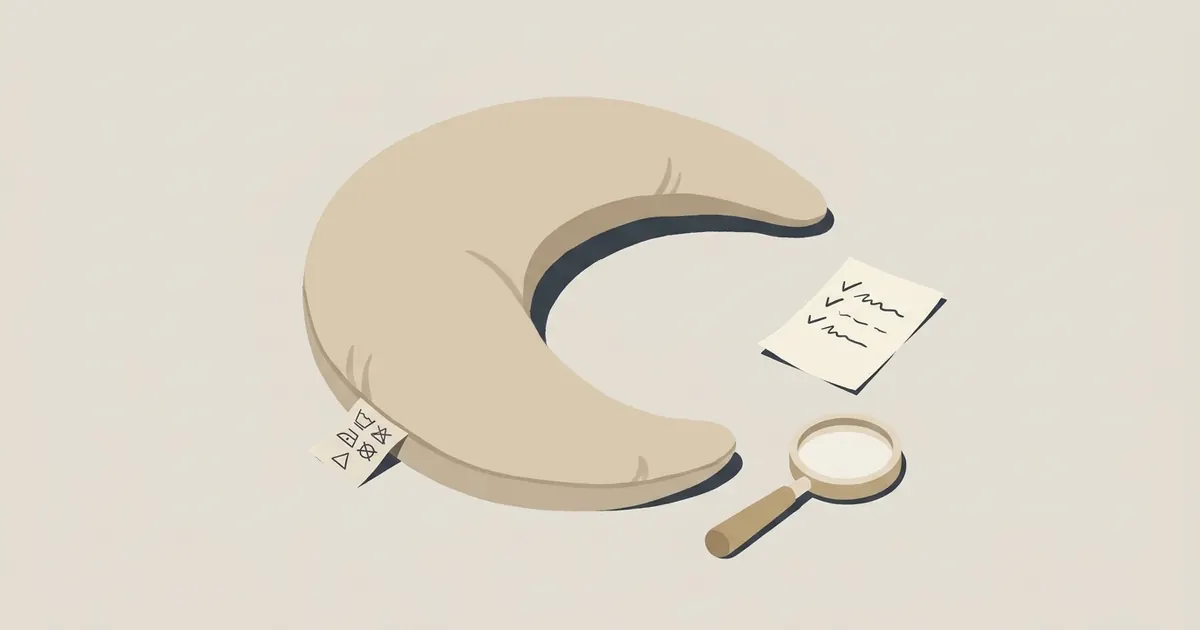 What to check before buying a secondhand body pillow
A used body pillow comes with gaps no inspection closes. Check fill type, age and hygiene history before you buy, and know your trial period options.

