
Draft: this guide is waiting for review by a qualified reviewer and is not published yet.
Pregnancy pillow vs nursing pillow: do you need both?
At 52 inches along the curve, a full length pregnancy pillow supports adults during sleep.
By Cove editorial team · Updated October 27, 2026 · 6 min read · Editorial standards

Key takeaways
- A pregnancy pillow supports an adult's back, hips, and knees during sleep; it is not designed or validated as an infant-feeding aid.
- A nursing pillow is a labeled infant-feeding product with its own instructions; always read those instructions before use.
- An adult body pillow behind your own back during a feed supports you, not the baby—that use is separate from the infant-positioning role of a nursing pillow.
- Never place a baby on or near a soft pillow for sleep; safe infant sleep requires a firm, flat, clear surface with the baby on their back.
- If a caregiver falls asleep while feeding on a sofa or armchair, the risk to the baby increases significantly—plan a safe transfer before you sit down.
A pregnancy pillow supports your body during sleep, keeping hips, knees, and lower back more comfortable through the night. A nursing pillow positions an infant at breast or bottle during a feed. The two products have distinct intended uses, and one does not automatically substitute for the other.
Read intended use before comparing shapes
Both products curve around a body, which is where the visual similarity ends. A full-length pregnancy pillow—like The Cove Pregnancy Pillow—runs about 52 inches [132 cm] along the curve and is sized to support an adult from shoulder to knee. A nursing pillow is much smaller, typically shaped to wrap around an adult's waist so an infant can rest on it during a feed.
The label and product instructions tell you what a product is designed to do. Before comparing two items on price or shape alone, read what each one is actually for. If the instructions do not describe infant positioning, the product has not been designed or tested for that purpose.
Sleep during pregnancy changes significantly from the first trimester onward. Back pain, hip discomfort, and difficulty finding a comfortable position become more common as the pregnancy progresses, and at least half of pregnant people are believed to experience insomnia at some point. 1 A body pillow addresses those adult sleep needs. It does not address the separate challenge of supporting an infant during a feed.
For a broader look at how to assess fill, size, and cover materials for your own comfort, the body pillow buying guide is a useful starting point before you commit to any pillow.
Separate adult back and arm support from infant support
There are two kinds of support involved in feeding a newborn, and keeping them distinct makes purchasing decisions much cleaner.
**Your support.** Holding an infant during a feed can strain your arms, shoulders, and lower back, particularly in the early weeks when feeds are frequent and long. Anything that supports your own posture—a firm chair with armrests, a pillow behind your lower back, or your body pillow propped beside you on the bed—is adult body support. You can absolutely use a pregnancy body pillow this way while you are awake and alert.
**The infant's support.** How the baby is positioned during a feed is a separate matter governed by the infant-feeding product's own instructions and by guidance from your doctor or midwife. An adult body pillow has not been validated for that role and should not be used as a substitute for a purpose-built nursing product.
Keeping these two categories separate means you can use a pregnancy pillow to reduce your own physical strain without conflating that use with the infant-positioning function of a nursing pillow.
Many people also find the body pillow continues to be useful well after the baby arrives—for their own sleep comfort during postpartum recovery, when side sleeping remains common and back and hip soreness can persist. The how to sleep on your side without hip pain guide covers positioning adjustments that apply whether you are pregnant or not.
Check the instructions for any feeding product
Before you buy a nursing pillow, look at the instructions, not just the packaging. The checklist below covers the main things to verify:
- [ ] Is there a stated age and weight range for the infant?
- [ ] Does the label describe specifically how the product should be used during a feed?
- [ ] Are there warnings about unsupervised use or sleep?
- [ ] Does the product carry certifications relevant to infant safety?
- [ ] Have you asked your doctor or midwife whether they have guidance on nursing support products?
If a product's instructions do not address a specific use—such as propping an infant for sleep—do not assume that use is safe. Nursing pillows are feeding aids, not sleep surfaces. The same caution applies in reverse: a pregnancy pillow's instructions describe adult sleep support, not infant positioning.
It is also worth reading the care and maintenance instructions for any pillow you buy. The fill type, cover material, and washing method all affect how long a pillow holds its shape and stays hygienic, which matters more once you are using it through a pregnancy and into the months that follow.
Decide what you need without assuming one product does both
Once you understand what each product does, the buying decision becomes more straightforward. The table below maps common needs to the relevant product.
| Need | Relevant product |
|---|---|
| More comfortable side sleeping during pregnancy | Pregnancy body pillow |
| Hip or knee support at night | Pregnancy body pillow |
| Lower back support while seated and feeding | Your own body pillow or any firm back cushion |
| Positioning an infant at breast or bottle | A purpose-built nursing pillow, per its instructions |
| A compact option for the couch or travel | The Cove Pregnancy Pillow Mini (for your own comfort) |
Some people find they want both products for genuinely different reasons. Others find that a body pillow handles their own sleep and seated comfort, and they manage feeding position without a dedicated nursing pillow. Neither answer is wrong; it depends entirely on what you find useful in practice.
Side sleeping is widely recommended during pregnancy, with the left side preferred as the pregnancy progresses. 2 A full-length crescent body pillow supports that position by giving you something to tuck between your knees and hug in front, which can ease pressure on the hips and lower back. 1 The guide on sleeping with a pillow between your knees explains how that single change affects spinal alignment and pressure distribution through the night.
Body temperature tends to run higher during pregnancy, which can make sleep harder. 1 Keeping the bedroom cool—using breathable layers, a fan, or lowering the thermostat toward the 65–68°F [18.3–20°C] range that tends to support good sleep—can help alongside any pillow changes you make. 3 Lighter bedding and good airflow are practical adjustments that can make a real difference across the third trimester.
Keep every pillow out of infant sleep spaces
This applies to both pregnancy pillows and nursing pillows: neither is a safe infant sleep surface, and neither should be placed in or near a baby's sleep area.
Safe infant sleep means placing a baby on their back on a firm, flat, clear surface—a safety-approved crib or bassinet with no soft objects, loose bedding, or pillows in the sleep area. A hot sleep environment also raises risk for infants, so keeping the room at a comfortable temperature and avoiding over-bundling matters. 3 If you are unsure what your baby's sleep space should look like, your doctor or midwife is the right person to ask.
One specific risk worth naming: if you sit down on a sofa or armchair to feed at night and fall asleep, that is a significantly more dangerous environment for the baby than a prepared safe sleep surface. This is not a reason to avoid feeding in those spots altogether, but it is a reason to decide in advance where the baby will go if you do fall asleep. Having a plan—a crib or bassinet within reach—reduces the chance that a drowsy transfer becomes an unsafe one.
For your own sleep, a body pillow stays in your sleep space. It is an adult comfort product, and its job is to help you sleep more comfortably on your side through pregnancy and beyond. That job is real and worth addressing on its own terms—separately from anything to do with feeding or infant care. If you are still working out which size or fill type suits you, the body pillow buying guide walks through each of those decisions in a practical order.
More in this series: start with Sleeping during pregnancy, pregnancy pillows when you are expecting twins: focus on your own fit and what does "pregnancy-safe" mean on a pillow product page?.
From Cove


Questions
No. A pregnancy pillow is designed and sized to support an adult body during sleep. It is not validated as an infant-positioning product. A nursing pillow is a separate category with its own design, dimensions, and instructions for positioning an infant during a feed. Using a product outside its labeled purpose means you are without the guidance and safeguards that product was built around. If you want support for infant feeding, look for a product specifically designed and labeled for that purpose, and follow its instructions.
Yes. Placing a body pillow or any firm pillow behind your own back while you are seated and awake is a way to support your lumbar spine and reduce strain on your arms and shoulders during a feed. This is adult body support, not infant positioning. The pillow is supporting you, not the baby. Keep the baby supported by your arms or a product designed for that purpose, and make sure the baby's airway stays clear at all times.
No. Neither a pregnancy pillow nor a nursing pillow is a safe infant sleep surface. Safe infant sleep guidance calls for placing babies on their back on a firm, flat, clear surface—such as a safety-approved crib or bassinet—with nothing soft in the sleep space. A bedroom that is too hot also raises risk for infants, so keep the room at a comfortable temperature and avoid over-bundling. [^3] If you are unsure about your setup, speak with your doctor or midwife.
Read the product label and instructions before purchasing. Check what age and weight range the product is designed for, how the manufacturer says it should be used, and whether it carries any relevant safety certifications. Never assume a product is safe for infant positioning just because it is sold near infant products. Your doctor or midwife can also advise on feeding support options.
Many people find a body pillow most helpful from the second trimester onward, when a growing belly makes it harder to stay comfortable on their side. Side sleeping is commonly recommended during pregnancy, particularly on the left side as pregnancy progresses, and support between or under the knees can reduce strain on the hips and lower back. [^1] [^2] Starting earlier is also fine if you find it comfortable.
Sources
- Pregnancy and sleep, Sleep Foundation. Accessed October 27, 2026.
- Side sleeping, Sleep Foundation. Accessed October 27, 2026.
- The best temperature for sleep, Sleep Foundation. Accessed October 27, 2026.
About the author
The Cove editorial team is the group at Cove that writes our guides. We write them from published guidance and our own product testing, and link every source. About the team
Related guides
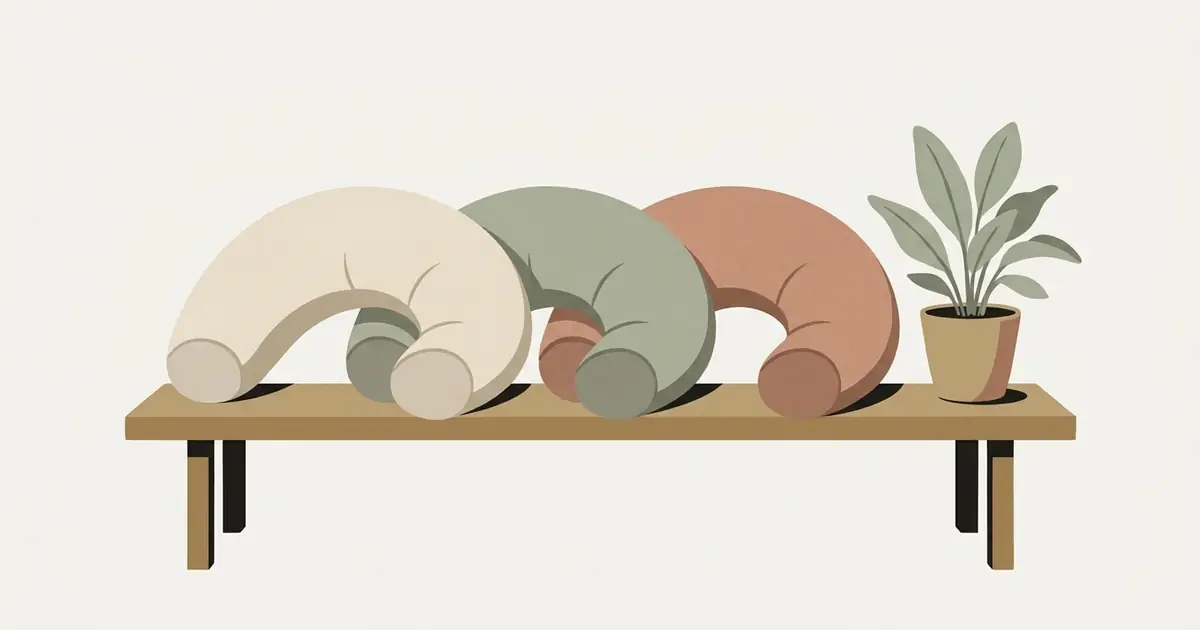 Body pillow buying guide
How to choose a body pillow: shape first, then length, fill and cover. What each choice changes for side sleepers, and why a 100 night trial helps.
 How to sleep on your side without hip pain
Side sleeping hip pain often starts with the top knee dropping. A pillow between the knees eases hip pressure. Four setup steps and a 100 night trial.
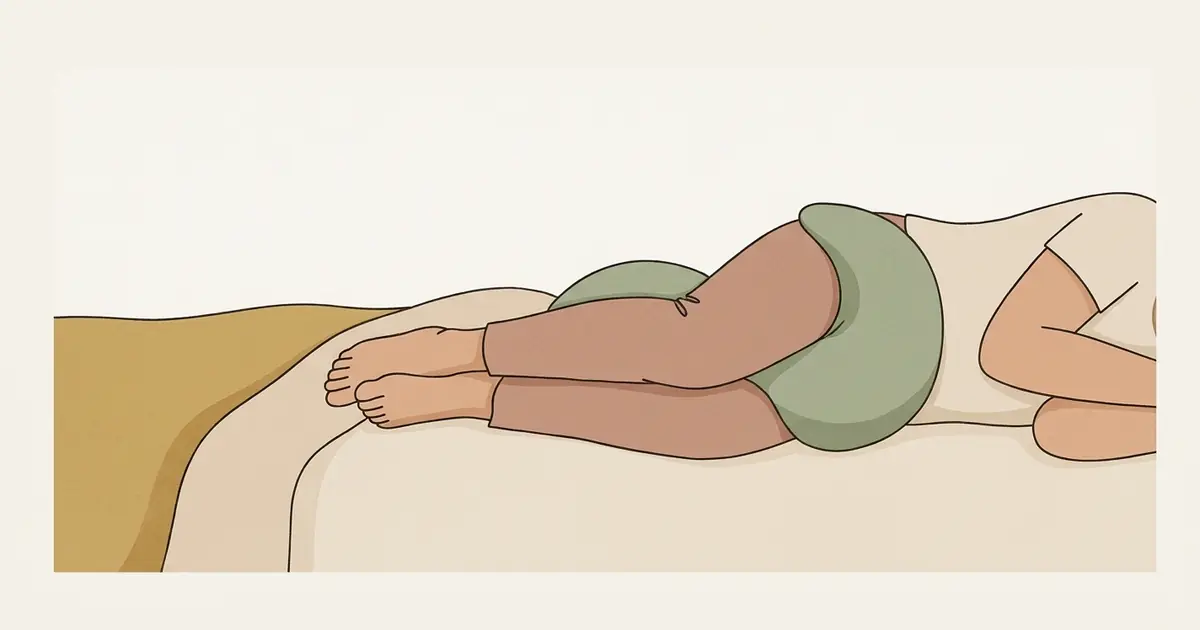 Should you sleep with a pillow between your knees
Sleeping with a pillow between your knees can relieve hip pressure and keep your legs level. Who it helps, how thick it should be, and 3 options.


