
Planning pregnancy rest when your partner is away
Plan rest while your partner is away during pregnancy in 5 steps: list tasks, line up backup contacts, simplify evenings, keep care numbers, set check-ins.
By Cove editorial team · Updated October 27, 2026 · 6 min read · Editorial standards

Key takeaways
- Write down specific tasks you will need covered before your partner leaves, not a general request for help.
- Name at least two backup contacts and confirm they are available before the solo period begins.
- Keep your care provider's after-hours line saved and accessible, not just stored in an old email.
- Agree on a check-in schedule with your partner that suits your time zones and energy level.
- Simplify the evening routine before they leave so the first night alone is as low-effort as possible.
When your partner is away, the support you usually rely on disappears. Planning ahead—deciding who handles what, simplifying your evening routine, and keeping care contacts within reach—means you are not starting from scratch when you are already tired. Most of what helps is decided before they leave, not once the solo stretch has begun.
List the tasks you may want help with
Before your partner travels, go through a typical day and mark the moments where having a second person matters. These are usually more specific than they first appear.
Common categories to work through:
| Category | What to consider |
|---|---|
| Meals | Batch cooking before they leave, or asking someone to drop food off on specific evenings, is easier to arrange than a general promise of help. Heartburn and fatigue are common during pregnancy, so late or heavy cooking may not be realistic.3 |
| Transport | If you have a prenatal appointment during the solo period, confirm who can drive you or whether you are comfortable going alone. ACOG advises knowing in advance where care is accessible and how to reach it.1 |
| Physical tasks | Lifting, carrying groceries, or changing heavy bedding may be tasks you want covered. Name them specifically rather than hoping someone offers. |
| Overnight company | If you would feel more comfortable having someone in the house on certain nights, ask directly and early—not at the last minute. |
| Urgent backup | Identify one person who is close enough to reach you in person quickly if needed, separately from your phone-based support network. |
Writing these down—not just thinking through them—makes it easier to match tasks to specific people and to spot gaps before your partner has already left.
Arrange named backup contacts
A general offer of help is hard to act on when you are exhausted at 10 p.m. Named contacts with confirmed availability are more useful.
Aim for at least two people who know they may hear from you:
- [ ] Contact person 1: name, phone number, what they have agreed to cover
- [ ] Contact person 2: name, phone number, what they have agreed to cover
- [ ] Partner's direct number and an alternative method if they are unreachable
- [ ] Care provider's main line and after-hours number
- [ ] A neighbor or nearby friend who can respond quickly in person if needed
If family lives far away, neighbors, colleagues, or community group members are legitimate options. You do not need to explain your full situation. A clear, bounded request—'Could you be my check-in contact this week?'—is enough for most people to say yes or no clearly.
For longer solo periods, it helps to distribute the ask. Two or three people each covering a couple of evenings is less of a burden on any one person than one friend covering the whole stretch.
Simplify the evening before the solo period
The first evening alone often sets the tone for the whole stretch. If you spend it sorting out food, bedding, and logistics, you start the solo period behind on rest.
The evening before your partner leaves:
- Prepare at least two days of easy meals or confirm delivery options for the nights you do not want to cook.
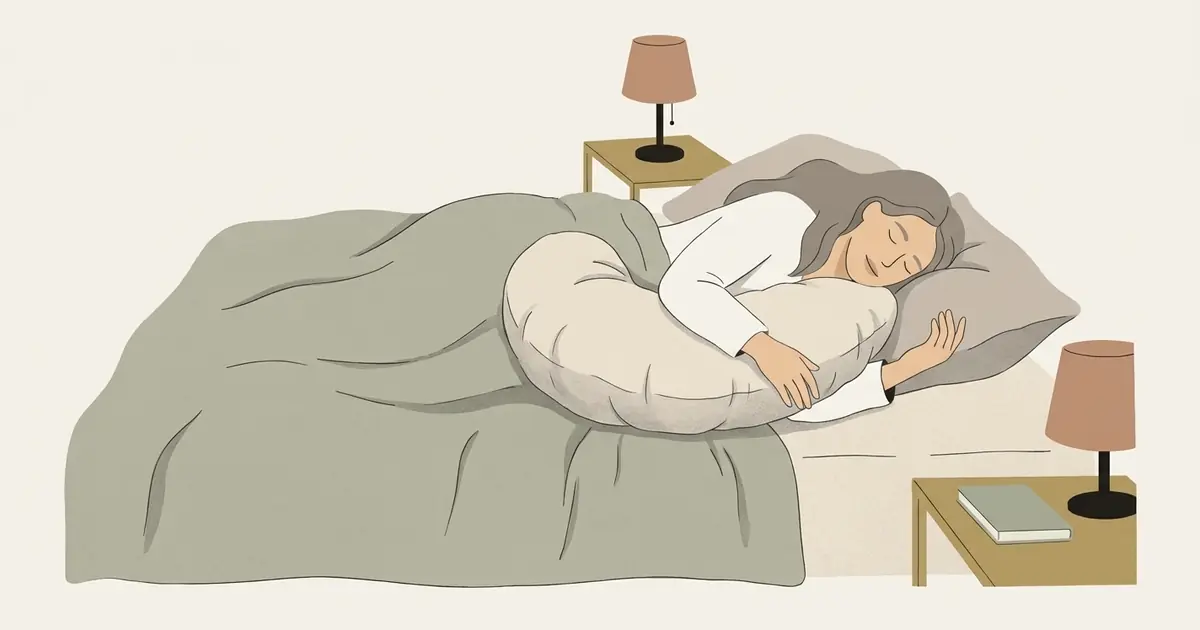
- Wash the body-pillow cover so it is clean and ready. If you use The Cove Pregnancy Pillow, the zip-off Tencel lyocell blend cover is machine washable cold—run it through and have it back on the pillow before they go.
- Charge your phone and place it where you can reach it from bed without getting up.
- Put the care provider's after-hours number somewhere visible—on a sticky note on the fridge and saved in your phone under a name you will find at speed.
- Confirm the next day's plan with at least one backup contact so you are not making those calls on day one.
Side sleeping becomes more important as pregnancy progresses, and disrupted nights are common.3 If repositioning through the night is breaking your sleep, adjusting the fill in a full-length pillow can help. The Cove Pregnancy Pillow's shredded gel memory foam fill is adjustable through an inner zip, so you can add or remove fill to suit your hip and back comfort on a given night without starting from scratch each time. For more on positioning, see the complete guide to sleeping on your side.
If you travel during pregnancy or your partner's trips mean you occasionally stay in unfamiliar places, The Cove Pregnancy Pillow Mini uses the same cover and fill approach in a smaller crescent that packs into a suitcase—useful if you end up staying with a friend or family member during the solo period.
Keep your usual care contact details accessible
Your care provider's specific advice about what to watch for and how to reach them after hours is more useful than any general list, because it applies to your pregnancy. If you have not asked for this at a recent appointment, ask at your next one.
ACOG recommends knowing in advance what symptoms require immediate attention and having those contact details ready.1 The NHS similarly advises carrying maternity records when away from home, so that any clinician who sees you has the relevant information quickly.2 The same logic applies at home during a solo period: if a helper needs to assist you, they should know where your records or a care summary are kept.
A practical approach:
- Write the after-hours line on paper and put it in two places—the fridge and beside the bed.
- Note any symptoms your care provider has specifically told you to act on immediately, in your own words.
- If you have a printed care summary or maternity record, put it somewhere a helper could find it without searching.
- Keep your insurance card or coverage details with that paperwork.
This is not a substitute for your provider's instructions—it is a way of making those instructions actionable when you are home alone and possibly not thinking at full capacity.
Agree on check-ins that suit you
Check-ins with a traveling partner work best when the format is agreed in advance rather than improvised. Without an agreement, one person may be waiting for a call that the other assumes is optional.
**Frequency.** A short message or call once a day is usually enough to confirm everything is fine without becoming a scheduling burden on either side. More frequent contact can feel reassuring early in the solo period and taper off as you find a rhythm.
**Format.** A brief text—'All good, heading to bed'—requires less energy than a phone call at the end of a tiring day. Agree what counts as a check-in so neither person is left uncertain.
**Time zone adjustment.** If there is a significant difference, pick a window that does not fall in the middle of either person's night. Write the agreed local times down for both sides before they leave, not after.
**Missed check-in.** Agree in advance what happens if a check-in does not arrive. This means your partner does not panic over a delayed reply, and you are not fielding worried calls when you are simply asleep.
**Flexibility.** Some days will be harder than others. Agreeing in advance that either of you can request a longer call—without it signaling an emergency—means you can use that option without overthinking it.
Keeping the traveling partner informed also means they can adjust their own availability—rearranging a dinner, stepping out of a meeting—if you need more support on a particular day.
---
For planning beyond the immediate solo period, the guide to building a postpartum rest-support plan when you are parenting solo applies the same principles after birth. If you use a sleep tracker during pregnancy, sleep trackers during pregnancy: useful patterns and important limits explains how to interpret what you see without reading too much into a single night's data.
More in this series: start with Sleeping during pregnancy, hosting overnight guests late in pregnancy: protect your rest and caffeine during pregnancy: reading labels before your evening drink.
From Cove


Questions
Think in categories: meals, transport, overnight company, and physical tasks like lifting or driving to appointments. Ask specific people to cover specific slots rather than issuing an open call. If the travel coincides with a period when your energy is lower or movement is harder—common after 28 weeks—ask for more coverage during evenings and mornings rather than midday when you may feel steadier. ACOG notes that travel complications are easier to manage when care is identified in advance, and the same principle applies to home support: know the plan before you need it.
Neighbors, colleagues, friends, or members of a community group you already belong to can fill in when family is not nearby. Your care provider's office may also know of local doula or community support services that offer non-clinical visits. The key is to confirm availability before the solo period, not to call someone for the first time when you need them. A clear, bounded request—'Could you be my check-in contact this week?'—is easier for people to agree to than an open-ended offer of help.
You do not need to explain why you need help or disclose anything about your pregnancy status or health. A direct, bounded request works better: 'Could you bring dinner on Tuesday and Thursday?' or 'Are you free to drive me to an appointment on Wednesday morning?' Specific asks are easier for people to agree to or decline, and they do not require you to share more than you want to. If someone presses for a reason, 'I have a busy week and want to plan ahead' is a complete answer.
It is worth mentioning at your next appointment, particularly if the solo period is long or if you are in a later trimester. Your doctor or midwife can confirm what symptoms warrant an immediate call versus a routine message, and can make sure you have the correct after-hours number. ACOG advises discussing what symptoms to watch for and having care contact details to hand whenever normal support structures are disrupted—the same logic applies whether you are traveling or your partner is.
Lower the bar for the evening routine. Prepare simple meals or batch-cook before your partner leaves, and avoid eating late if heartburn is an issue. If side sleeping has become uncomfortable, a full-length body pillow can help you stay in position without rearranging cushions repeatedly through the night. The Cove Pregnancy Pillow has a shredded gel memory foam fill you can adjust through an inner zip, so you can tune the firmness to what your hips and back need on a given night.
Agree on a fixed window rather than ad-hoc calls, so neither of you is waiting or waking at an unpredictable time. A short message at the same time each day—confirming you are fine—requires less energy than a long call and still provides a daily touchpoint. Write the agreed local times down for both sides. If a check-in is missed, agree in advance what that means and who the backup contact is, so your partner is not alarmed by a delayed reply and you are not fielding worried calls when you are simply asleep.
Sources
- Travel during pregnancy, ACOG. Accessed October 27, 2026.
- Travelling in pregnancy, NHS. Accessed October 27, 2026.
- Common health problems in pregnancy, NHS. Accessed October 27, 2026.
About the author
The Cove editorial team is the group at Cove that writes our guides. We write them from published guidance and our own product testing, and link every source. About the team
Related guides
 The complete guide to sleeping on your side
How to sleep on your side: line up your head, shoulders and hips, choose the right pillow height, and support your knees and back. Five fixes in 3 minutes.
 Building a postpartum rest-support plan when you are parenting solo
A solo parent guide to mapping real support contacts, making specific asks, and keeping a handover note that takes under 5 minutes to update.
 Sleep trackers during pregnancy: useful patterns and important limits
Learn how sleep trackers work during pregnancy, why readings shift after 28 weeks, and what patterns are worth raising with your doctor or midwife.


