
Left side vs right side: does it matter
Left vs right side sleeping: either is fine for most people.
By Cove editorial team · Updated October 26, 2026 · 4 min read · Editorial standards

Key takeaways
- For most healthy adults, either side is fine, and switching sides is normal.
- Left-side sleeping may help people with acid reflux, according to the Sleep Foundation.
- Some people with heart conditions may prefer the right side; ask your doctor.
- Pain usually decides it: sleep on the side that does not hurt.
For most people it makes little difference whether they sleep on the left or right side, and switching during the night is normal. It matters in a few cases. The Sleep Foundation notes that left-side sleeping may help people with acid reflux, while some people with heart conditions may prefer the right side1.
The short answer for most people
If you are healthy and have no reflux or pain, choose whichever side is comfortable. Most people move between sides several times a night without waking. Switching spreads pressure between both hips and both shoulders, so it can be a good thing.
What matters more than the side is the setup: head pillow height, knee support and arm support. Those are covered in the complete guide to sleeping on your side.
Case 1: acid reflux and heartburn
The Sleep Foundation notes that left-side sleeping may benefit people who experience acid reflux1. A common explanation is the shape and position of the stomach, which sits mostly to the left. On the left side, the junction between the stomach and the food pipe sits higher than the stomach contents.
Position is only one part of managing reflux. The NHS suggests these changes2:
- Raise the head of your bed by around 10 to 20 cm, using wood, bricks or books under the legs, so your chest and head are above your waist.
- Do not try to get the same effect by stacking extra pillows under your head, which can bend you at the waist.
- Do not eat within 3 or 4 hours of going to bed.
- Avoid clothes that are tight around the waist, and food or drink that triggers your symptoms.
If reflux keeps you awake regularly, speak to a GP or pharmacist about it.
Case 2: heart conditions
The Sleep Foundation notes that right-side sleeping may be preferred by people with some heart conditions1. This is an area for your cardiologist or GP, not a guide. If you have a heart condition and notice that one side feels uncomfortable or makes you breathless, mention it at your next appointment.
Case 3: pain on one side
Pain usually decides it. If one hip or shoulder is sore, sleep on the other side, with support so the sore side is held level rather than hanging. The NHS suggests seeing a GP if shoulder pain has not started to feel better after 2 weeks4.
- Sore top hip: a pillow between the knees keeps the leg level. See how to sleep on your side without hip pain.
- Sore top shoulder: rest the arm on a pillow at chest height. See why your shoulder hurts when you sleep on your side.
- Sore lower back: knees slightly bent with a pillow between them. See side sleeping and lower back pain.
Left vs right at a glance
| Situation | Side often suggested | Source |
|---|---|---|
| No health concerns | Either, switching is fine | Sleep Foundation3 |
| Acid reflux | Left | Sleep Foundation1 |
| Some heart conditions | Right, on medical advice | Sleep Foundation1 |
| Pain in one hip or shoulder | The side that does not hurt | Common practice |
How to stay on the side you choose
Choosing a side is easy. Staying on it for 7 hours is harder, because the body moves freely in sleep. A few things help:
1. Put a pillow behind your back to block the roll onto your back. 2. Hug a pillow in front of you to block the roll onto your stomach. 3. Put the bed against the wall on the side you want to avoid facing, if that suits your room. 4. Make the side you want more comfortable than the alternative, with the right head pillow height.
A crescent body pillow handles points 1 and 2 at once, because the curve sits in front of you and the tips can tuck behind. The Cove Classic is 52 inches tip to tip and works on either side. Flip it over when you switch.
Switching sides on purpose
If one side is sore, deliberate switching can help. Start the night on the side that hurts least, and if you wake up, turn to the other side rather than lying awake on the sore one. Keep a pillow between your knees on both sides so the top leg stays level whichever way you face. Over a week, note which side you wake on and how each hip and shoulder feels, so you can see whether the switching is helping. Small, steady changes usually beat one big change.
Sharing a bed
If you share a bed, the side you sleep on also decides whether you face your partner or face away from them. Many couples end up back to back, which suits a body pillow in front of each person. If you are on the left side of the bed and want to sleep on your left side, you will face the edge of the bed, so check there is room for a pillow on that side.
Does it change how well you sleep
There is no strong evidence that one side gives better sleep quality for healthy adults. The Sleep Foundation's general advice is to choose a position that keeps your spine in a neutral line and lets you sleep without pain3. If you sleep well on your right side, there is no need to change.
Keep reading
From Cove

Questions
For most people there is no clear winner. The Sleep Foundation notes left-side sleeping may help with acid reflux, and right-side sleeping may be preferred by some people with heart conditions.
The Sleep Foundation says left-side sleeping may benefit people with acid reflux. The NHS also suggests raising the head of the bed by 10 to 20 cm and not eating within 3 or 4 hours of bed.
Most people do without noticing. Switching spreads pressure between both hips and shoulders, which can help if one side gets sore.
Usually the side that does not hurt, with the sore arm resting on a pillow in front of you so the shoulder does not roll forward.
Sources
- Side sleeping, Sleep Foundation. Accessed October 26, 2026.
- Heartburn and acid reflux, NHS. Accessed October 26, 2026.
- What is the best sleeping position?, Sleep Foundation. Accessed October 26, 2026.
- Shoulder pain, NHS. Accessed October 26, 2026.
About the author
The Cove editorial team is the group at Cove that writes our guides. We write them from published guidance and our own product testing, and link every source. About the team
Related guides
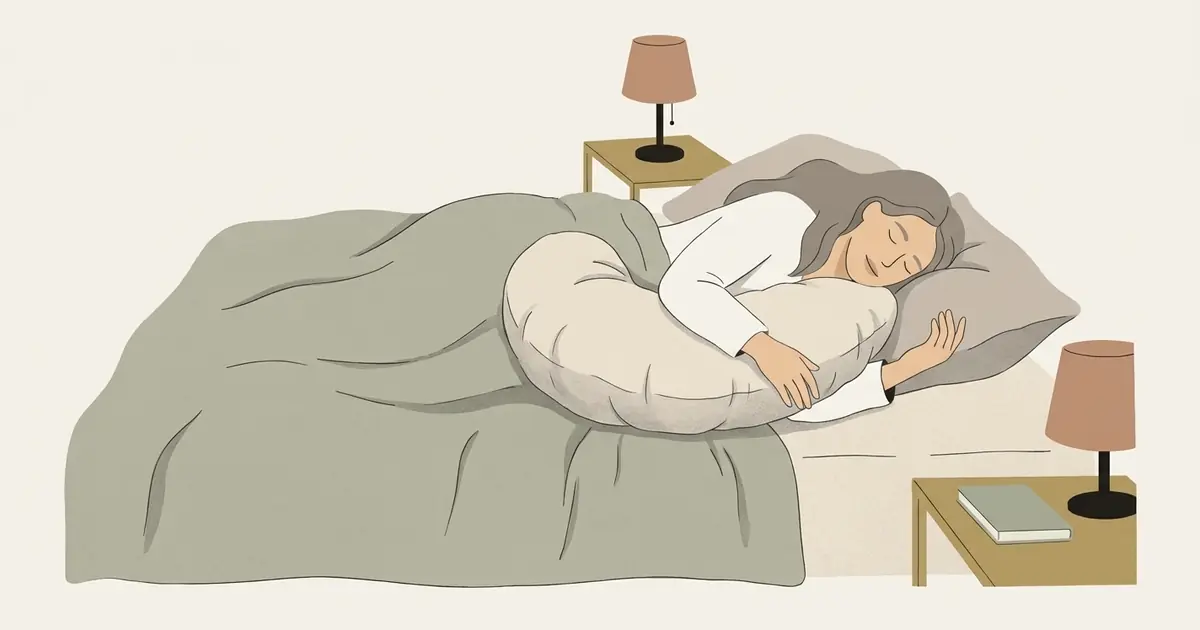 The complete guide to sleeping on your side
How to sleep on your side: line up your head, shoulders and hips, choose the right pillow height, and support your knees and back. Five fixes in 3 minutes.
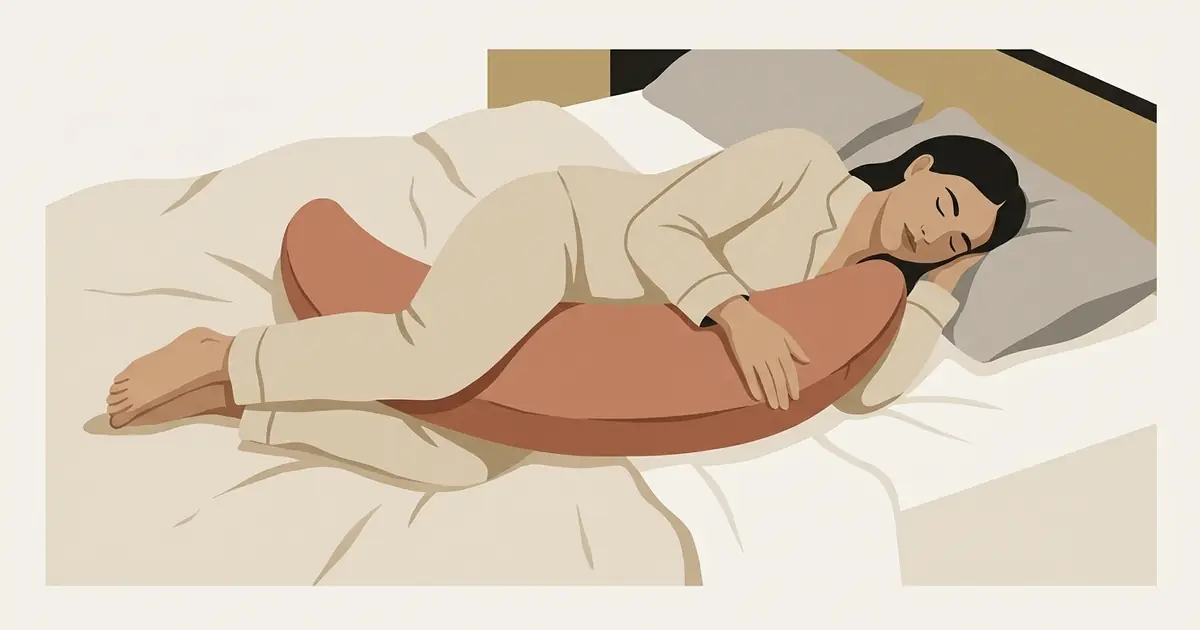 Why your shoulder hurts when you sleep on your side
Why your shoulder hurts on your side and the pillow changes that help: lower arm position, head pillow height and 3 setups. See a GP after 2 weeks of pain.

