
How to pack a body pillow for a trip
Learn how to protect your body pillow in transit, compress fill safely, and allow at least 60 minutes for it to recover its shape on arrival.
By Cove editorial team · Updated October 27, 2026 · 6 min read · Editorial standards

Key takeaways
- A full-length crescent body pillow is about 52 in (132 cm) along the curve, so check bag dimensions before assuming it will fit.
- Shredded memory foam can be compressed gently by hand for packing, but avoid aggressive vacuum packing, which can damage the foam structure.
- Removing the cover and packing it separately in a sealed bag keeps it clean and makes washing easy on arrival.
- Moisture is the main risk during transit; keep the pillow and its fill dry by using a breathable but sealed outer bag.
- At your destination, unzip the fill compartment and fluff the shredded foam before use so loft has a chance to recover.
Packing a body pillow well comes down to three things: understanding whether its size and fill can handle compression, protecting it from dirt and moisture in transit, and giving the fill time to recover when you arrive. Get those right and you can sleep just as comfortably away from home as you do in your own bed.
Decide whether to take the full pillow or a smaller option
Before you start packing anything, measure the space you have. The Cove Pregnancy Pillow is a full-length crescent body pillow measuring about 52 in (132 cm) along the curve. That puts it well beyond the interior length of most large suitcases, so it usually needs to travel separately in a duffel or an oversized bag rather than inside checked luggage.
If you are flying, driving a compact car, or keeping luggage to a minimum, The Cove Pregnancy Pillow Mini is the more practical choice. It is designed to pack into a suitcase and works as a knee pillow, back support, or side-sleeping pillow when you arrive. The Mini travel case is also available if you want dedicated protection without improvising a solution.
For a longer trip where you have car space or are checking a large bag, taking the full pillow is manageable. For anything where luggage space is tight, the smaller pillow tends to be the right call. If you are still deciding which pillow suits your usual sleep setup, our guide to body pillow sizing covers the key factors in one place.
Think about the trip as a whole before you commit. A two-night stay in a hotel with a decent pillow selection is a different calculation from two weeks in a rental where you have no idea what the beds are like. If sleep quality matters to you and you have the luggage allowance, taking your own pillow is worth the minor inconvenience of carrying it.
Check the fill before compressing anything
Not all fills respond the same way to compression, and getting this step wrong can leave you with a pillow that does not recover its shape properly.
Shredded memory foam can be compressed gently — for example, by pressing air out by hand before sealing a storage bag — but it does not tolerate prolonged heavy compression well. Aggressive vacuum packing can mat the pieces together and prevent the fill from lofting back up.1 The Cove Pregnancy Pillow and Cove Mini both use shredded gel memory foam with an inner zip that lets you access and adjust the fill. This means you can press the pillow down to a manageable size without a vacuum by opening the inner zip, redistributing the fill toward one end, and then closing it again before you pack it.
Polyester fiber fills are generally more forgiving under compression and tend to recover more readily, but shredded foam still needs gentler handling.1
The practical rule: compress by hand, not by machine. If the manufacturer's label does not list vacuum compression as an acceptable method, do not use one. When in doubt, a lightly packed duffel with some give around the pillow is safer than a rigid bag that keeps it under constant pressure throughout a long journey.
For a broader look at how fill types differ in feel and care requirements, the memory foam vs polyester body pillows guide is a useful reference.
Protect the pillow with a clean bag
A body pillow loose in a bag or the back seat of a car will pick up dust, odors, and whatever else is in the surrounding space. A few minutes of preparation before you leave the house makes a real difference.
- [ ] Remove the cover and seal it in a zippered laundry bag or clean carrier bag
- [ ] Spot check the inner fill casing for any marks and let it air for a few minutes before packing
- [ ] Place the compressed pillow in a large drawstring bag, a zippered duffel, or a dedicated travel case
- [ ] If you are checking luggage, add the bagged pillow inside a hard-shell case or wrap it in a layer of clothing to buffer against hard knocks
- [ ] Pack the cover separately so it stays clean until you are ready to put it back on
- [ ] Label or tag the bag if it is going into a shared luggage hold so it is easy to identify on arrival
Removing the cover also means you can machine wash it cold on arrival if it picked up anything during transit. Both Cove pillow covers are removable with a zip and machine washable cold, so this is a quick step rather than a chore. Our body pillow washing guide covers the full process, including what to do if the fill itself needs attention.
Keep it dry during the journey
Moisture is the main risk for any foam or fiber fill during transit. A damp fill takes a long time to dry fully, and inadequately dried foam can develop odors.1 Preventing moisture from getting in is far easier than dealing with it after the fact.
| Transport method | Recommended protection | Fits full-length pillow? |
|---|---|---|
| Car boot or back seat | Drawstring or duffel bag | Yes, if space allows |
| Checked hold luggage | Waterproof outer bag inside hard case | Mini only, typically |
| Carry-on or personal item | Dedicated travel case | Mini only |
| Overhead bin | Sealed storage bag | Mini only |
**In a car:** Keep the pillow out of direct sun through a window on a hot day, which can trap humidity inside a sealed bag. If the car interior is damp from rain before loading, dry the surface before placing the pillow there.
**In checked luggage:** Airport environments are not always dry, and bags can sit on wet tarmac. A waterproof outer bag or a large zip-lock style bag over the whole compressed pillow gives an extra layer of protection at minimal cost.
**In a carry-on:** Most full-length body pillows will not fit in overhead bins, but a Mini can. Keep it in its travel case or a sealed bag to avoid contact with other items in the bin.
If you are traveling somewhere with high humidity, consider slipping a small desiccant sachet into the bag alongside the pillow fill to absorb any condensation that builds up during a long journey. These are widely available from hardware and homeware stores and take up almost no space.
Unpack and check it at your destination
Once you arrive, give the pillow time to recover before you expect it to feel like it does at home. Rushing straight to bed with a still-compressed pillow will give you a worse night's sleep than waiting an hour.
Open the inner zip and loosen the shredded fill by hand, breaking up any pieces that have shifted or compressed together during transit. Lay the pillow on a flat surface or hang it in a ventilated spot for 30 to 60 minutes. The adjustable inner zip on The Cove Pregnancy Pillow and Cove Mini means you can also add or remove fill at this stage if the loft seems off after it has settled — useful if you have redistributed the fill unevenly while compressing it for the journey.
Take the cover out of its bag, check for anything that needs spot cleaning, and wash it if you have laundry access. The covers are machine washable cold, so this is straightforward if your accommodation has a machine. Once the fill has lofted back and the cover is on, the pillow should feel close to normal.
If you notice a faint smell from the foam after compression, leave the inner casing unzipped and the pillow uncovered for an hour or so before putting the cover back on. This is a normal response when memory foam has been packed tightly for an extended period and is not a sign of damage.1
For help putting the cover back on neatly once you have unpacked, see the guide on how to put a cover on a crescent body pillow. Getting the cover aligned properly from the start saves you from having to re-do it once you are already tired from traveling.
More in this series: start with the body pillow buying guide, recreating your body-pillow setup in a hotel and how to choose one pillow setup for two homes.
From Cove


Questions
It depends on the fill. Polyester fiber can usually tolerate vacuum compression and bounces back reasonably well. Shredded memory foam is more sensitive — aggressive vacuum packing can mat the pieces together and slow or prevent full loft recovery.[^1] A gentler hand-squeeze to remove excess air, without a vacuum, is a safer approach for shredded foam pillows. Always check the manufacturer's care instructions before compressing any pillow.
A full-length body pillow is unlikely to fit in a standard checked suitcase. The Cove Pregnancy Pillow measures about 52 in (132 cm) along the curve — longer than most large suitcases. A smaller option like The Cove Pregnancy Pillow Mini is designed to pack into a suitcase and is the more practical choice if luggage space is limited. If you want to take a full-length pillow, a dedicated duffel or lightly compressed storage bag carried separately is usually the better approach.
Taking the cover off and packing it separately is generally the better option. Loose in a bag, a covered pillow can pick up dirt, moisture, and odors. Removing the cover lets you seal it in a clean bag or laundry sack, then wash it on arrival if needed. It also makes the pillow easier to reshape and fit into your packing arrangement. Covers with a zip-off design make this process quick.
A large zippered duffel, a lightly compressed storage bag (not vacuum-sealed), or the pillow's own travel case works well. The goal is to keep the pillow away from moisture, spills, and general bag debris. For checked luggage, a sturdy drawstring bag inside a hard-shell case offers extra protection. If you are traveling with The Cove Pregnancy Pillow Mini, the dedicated Mini travel case is a straightforward solution.
Once you arrive, unzip the inner compartment and break up any compressed or clumped pieces by reaching in and loosening them by hand. Lay the pillow flat or prop it in a ventilated spot for 30 to 60 minutes before use. Shredded fill pillows with an adjustable inner zip — like The Cove Pregnancy Pillow and The Cove Pregnancy Pillow Mini — make this easier because you can access and redistribute the fill directly.
If the cover is machine washable and your accommodation has laundry access, yes. The Cove Pregnancy Pillow and Cove Mini both have removable covers that are machine washable on cold, which makes washing during a longer trip straightforward. If laundry is not available, spot cleaning and air drying is a reasonable alternative for a short trip. Pack the cover in a sealed bag during transit to keep it as clean as possible before you get a chance to wash it.
Sources
- How to wash pillows, Sleep Foundation. Accessed October 27, 2026.
- How to wash pillows, Sleep Foundation. Accessed October 27, 2026.
- How to fall asleep faster and sleep better, NHS Every Mind Matters. Accessed October 27, 2026.
About the author
The Cove editorial team is the group at Cove that writes our guides. We write them from published guidance and our own product testing, and link every source. About the team
Related guides
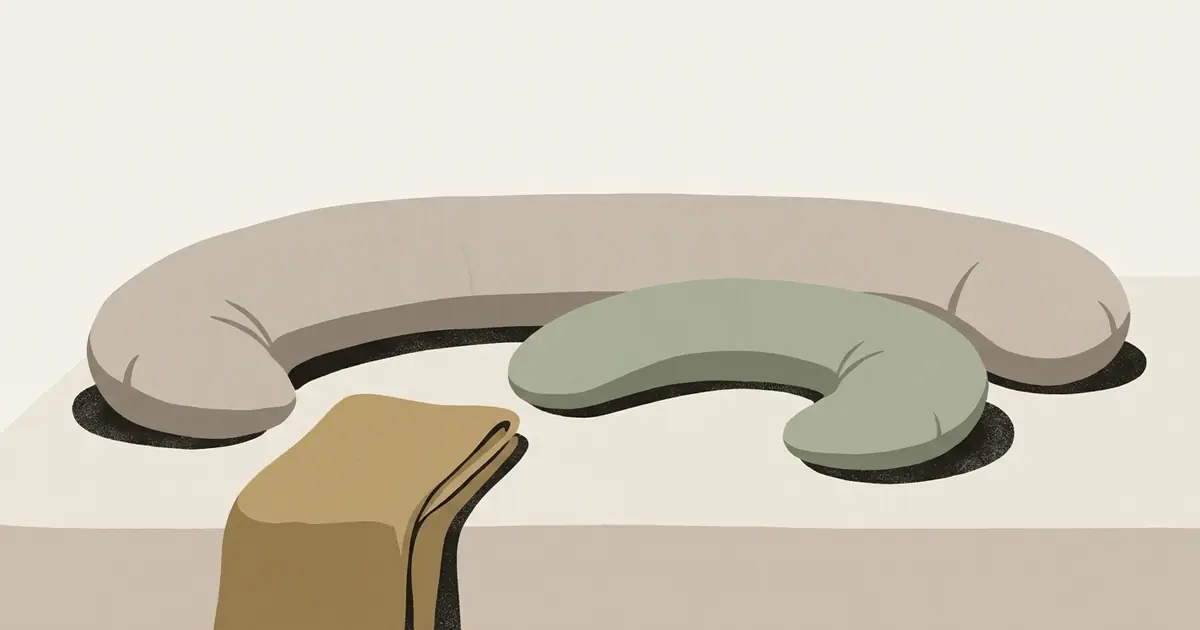 What size body pillow do I need
What size body pillow you need depends on your height and bed. A 52 inch crescent suits most adults from 5 ft to 6 ft 4 in; 36 inches suits smaller frames.
 Body pillow buying guide
How to choose a body pillow: shape first, then length, fill and cover. What each choice changes for side sleepers, and why a 100 night trial helps.

